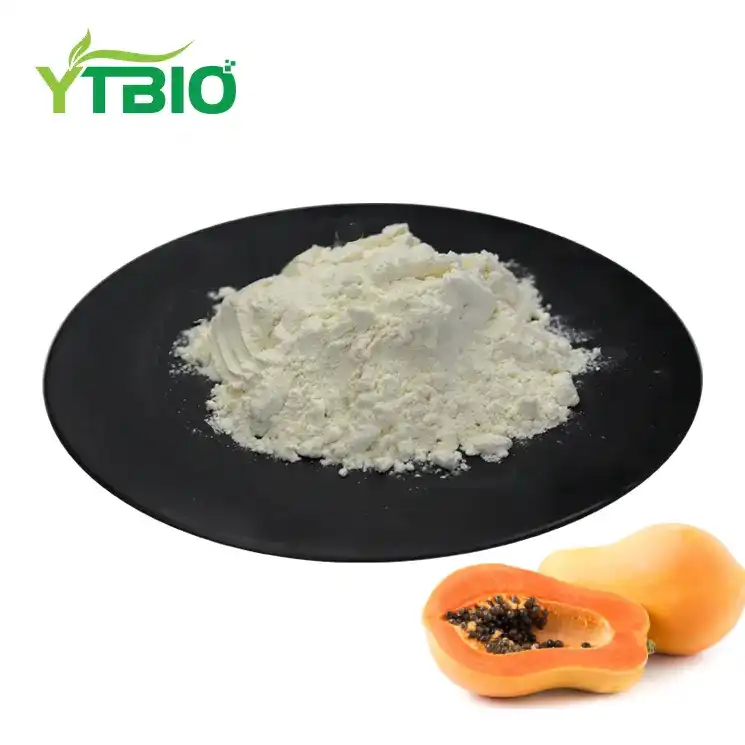
Papaya Extract Enzyme
Specification: 200,000 / 100,000 u/g
Appearance: White to light yellow powder
Storage: Cool, Dry, Away From Light
Payment: T/T,VISA,XTransfer,Alipay......
Shipping Speed: 3-5 days
Certification:cGMP,ISO22000,ISO9001,Kosher,BRC,Halal
MOQ:25KG
- Fast Delievery
- Quality Assurance
- 24/7 Customer Service
Product Introduction
Premium Papain Extract Papain Supplier | 100,000 U/g & 200,000 U/g
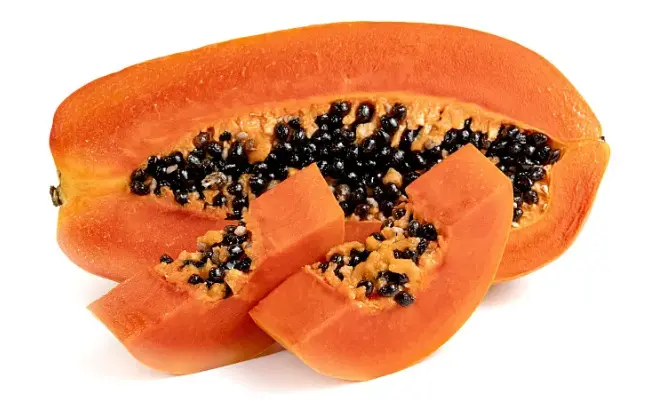
Papaya Extract Enzyme (papain ) is a sulfur-based protease derived from papaya (Carica papaya). This enzyme is mainly found in the latex, roots, stems, and leaves of unripe papayas. As a broad-specific proteolytic enzyme, papain can efficiently degrade proteins and polypeptide chains. With its strong enzyme activity, good thermal stability, and natural safety, papain has wide applications in food, medical, feed, daily chemical, leather, and textile industries. For example, in food processing, it is often used in protein hydrolysis, meat tenderization, wine clarification, and biscuit texture improvement.
As a professional supplier of plant extracts and health ingredients, YTBIO offers food-grade papain in 100,000 U/g and 200,000 U/g formulations, to support the development and production of your health products.

Why Choose YTBIO?
✔ Diverse Product Supply: YTBIO offers a variety of food-grade enzymes, including papain, neutral protease, bromelain, flavor protease, and cellulase. Contact us for a product list.
✔ Guaranteed Product Quality: Advanced production processes and quality control systems ensure enzyme activity, purity, and batch stability.
✔ Professional Technical Support: We provide selection and dosage recommendations based on different protein raw materials and production processes.
✔ International Certifications: Established for 12 years, YTBIO owns its own factory and has obtained international certifications such as cGMP, ISO9001, ISO22000, FSSC22000, BRC, Kosher, and Halal.
✔ One-Stop OEM/ODM Service: In addition to raw materials, YTBIO also provides OEM/ODM customization services for dietary supplements and functional foods.
Core Functions and Applications of Papaya Extract Enzyme
Food Sector:
Meat Processing: Papaya Extract Enzyme improves meat tenderness by degrading connective tissue and myofibrillar proteins.
Dairy Processing: Papain helps optimize the texture and flavor of cheese.
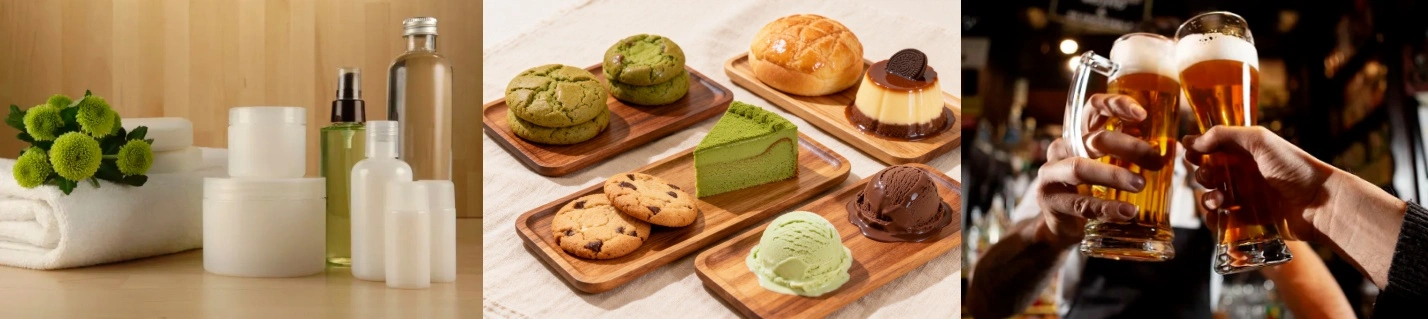
Beverage Clarification: Papain hydrolyzes cloudy substances (such as pectin and protein) in fruit juices, enhancing clarity. In beer production, it breaks down proteins that cause turbidity, improving product stability and flavor maturation.
Baking Products: Papain can moderately hydrolyze gluten proteins, reducing dough toughness and elasticity, improving processing performance, and aiding in the production of crisp cookies or soft bread.
Seafood Processing:Papain promotes protein hydrolysis, increasing raw material utilization.
Sugar Industry:Papain is also used in the starch saccharification process, improving saccharification efficiency.
Pharmaceuticals and Healthcare:
Digestive Aid:As a protein digestion promoter, papain helps improve digestive function.
Inflammation Management:Utilizing the anti-inflammatory properties of papain helps alleviate inflammatory responses; it can be used as a dietary supplement to support healthy inflammatory regulation mechanisms.
Personal Care:
Skincare Applications: Gently removes dead skin cells and has potential antioxidant effects, contributing to improved skin tone; it may also participate in the regulation of protein and lipid metabolism, but its practical application requires rigorous scientific validation.
Safety: Papain is generally considered a safe biological agent, but it is still important to note that some people may be allergic to papain.
Main Production Processes of Papaya Enzyme
Papaya Extract Enzyme is typically extracted and processed from the latex of unripe papaya fruits. Common production methods include:
Hot air drying: Simple and fast process, but the product purity is low and contains many impurities.
Spray drying: The extract is purified by centrifugation and then spray-dried, which can improve the product's color and purity, but enzyme activity is easily lost during the drying process.
Membrane separation combined with freeze-drying: Currently a more advanced process. The extract is first efficiently purified using membrane separation technology, and then the finished product is obtained through freeze-drying. This method can maximize enzyme activity, but the production cost is relatively high.
To improve extraction efficiency, ultrasonic-assisted extraction technology can be used in production, increasing enzyme activity to approximately 1.7 times that of traditional methods. The purification step can also be combined with ammonium sulfate fractionation precipitation and column chromatography to obtain high-purity enzyme preparations with a purity exceeding 99%.
How Does Papaya Extract Enzyme Work In Skincare?
Papaya Extract Enzyme achieves gentle exfoliation through biocatalytic hydrolysis. Unlike traditional chemical exfoliants (such as glycolic acid and salicylic acid) that rely on acid hydrolysis, papain specifically recognizes and cleaves the peptide bonds of aged keratinocytes in the stratum corneum, precisely degrading inactive keratin and promoting the shedding of dead skin cells. It also generally has low irritation, making it a suitable natural source for sensitive skin or individuals with low tolerance to chemical exfoliation.
Papain's mechanism of action is based on its optimal enzymatic activity under microenvironmental conditions similar to those on healthy skin (pH 5.0–7.0, temperature 40–60°C). By hydrolyzing the desmosome core protein between keratinocytes, it weakens cell junctions, promotes keratinocyte exfoliation, and thus improves skin smoothness. Studies show that even low concentrations (e.g., 0.5%) of papain can effectively promote keratinocyte renewal and have lower irritation to the active epidermis than traditional chemical exfoliants (such as 10% glycolic acid).
In addition, papain possesses anti-inflammatory and soothing repair properties. It can break down and remove damaged protein fragments, reduce micro-inflammatory states, help soothe acne, reduce redness, and create better conditions for the absorption of subsequent active ingredients (such as vitamin C and niacinamide). In cleansing products, its proteolytic ability can also help break down the protein components in sebum and dirt, deeply cleansing pores and helping to prevent blackheads and whiteheads.
However, papain also faces certain challenges in cosmetic additives. Its activity is easily affected by temperature, pH, metal ions, and preservative systems. Therefore, modern formulation technology often uses microencapsulation or freeze-dried powder formulations to isolate adverse environments and maintain enzyme activity.
Usage Recommendations
It is recommended to use products with a concentration not exceeding 5% once or twice a week to avoid over-exfoliation. It should also be avoided when using with strong acids, strong alkalis, or certain antioxidants to prevent inactivation. Sensitive skin is advised to perform a patch test first. After exfoliation, the skin is more sensitive to ultraviolet rays, so sun protection measures must be strengthened.
Choose Ytbio, Choose Efficient And Stable Raw Materials
As a professional supplier of bioactive ingredients, YTBIO provides high-quality papain. Contact us now to obtain samples and detailed technical information, and explore the unlimited potential of papain together.
Tel:86-029-86478251 / 86-029-86119593
Whatsapp:8617782577059
Email:sales@sxytorganic.com