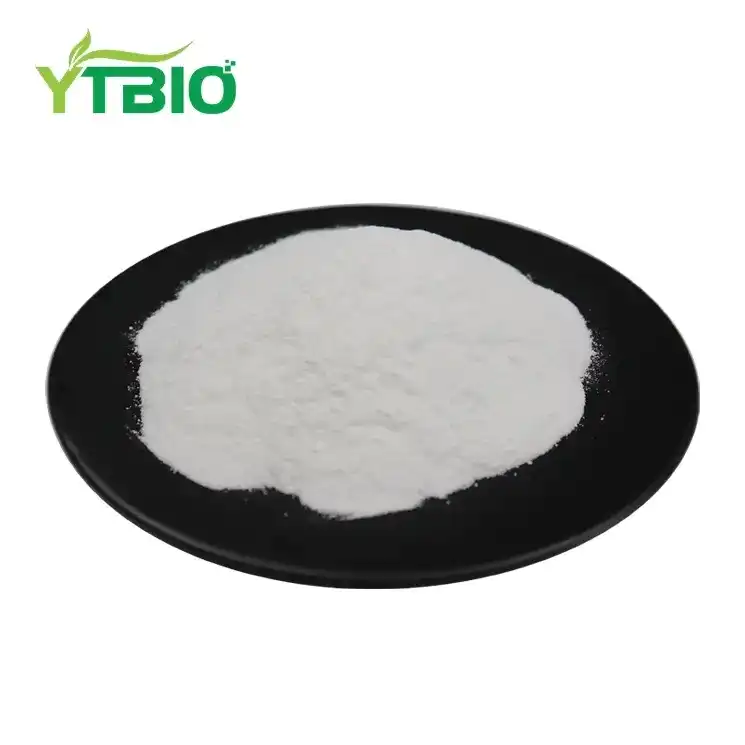
Gluconic Acid Liquid
Appearance: Light yellow or yellow liquid
Specification: 50%
Packaging: 25kg/drum
Storage: Cool, Dry, Away From Light
Payment: T/T,VISA,XTransfer,Alipay......
Shipping Speed: 3-5 days
Certification:cGMP,ISO22000,ISO9001,Kosher,BRC,Halal,FSSC22000
- Fast Delievery
- Quality Assurance
- 24/7 Customer Service
Product Introduction
Gluconic Acid : Overview
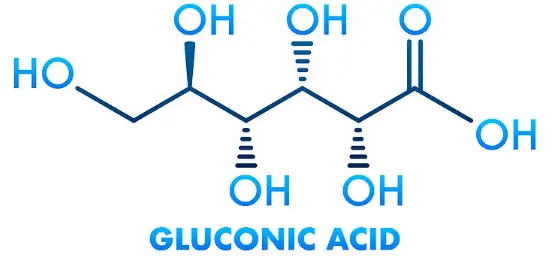
Gluconic acid liquid is a naturally occurring organic acid produced from glucose through mild oxidation or biological fermentation. At room temperature, it typically appears as a colorless or pale yellow liquid; it possesses mild properties, causes no irritation to the skin or mucous membranes, and does not affect blood glucose levels during metabolic processes within the body. It is now widely utilized in fields such as nutritional supplements, the food industry, and daily chemical products.
High-quality nutritional supplements are crucial to your health journey. YTBIO specializes in providing high-quality Gluconic Acid liquid.
| Item | Details |
|---|---|
| Product Name | Food-grade Gluconic Acid |
| Batch No. | 20260410 |
| Manufacturing Date | 2026-04-10 |
| Expiry Date | 2028-04-09 |
| Quality Standard | Q/ANXZ 0004S-2022 Food-grade Gluconic Acid |
| Inspection Items | Standard | Examination Result |
|---|---|---|
| Sensory Index | Light yellow or yellow liquid, no crystals, odorless, slightly sour taste, no visible impurities, no foreign body | Coincidence |
| Gluconic Acid Content (as C₆H₁₂O₇, %) | 50~52 | 50.46% |
| Reductive Material (as D-Glucose, ω/%) | ≤0.5 | <0.5 |
| Sulfate (as SO₄²⁻, ω/%) | ≤0.024 | <0.024 |
| Chloride (as Cl⁻, ω/%) | ≤0.035 | <0.035 |
Why Choose YTBIO's Gluconic Acid?
10,000 m² Wholly-Owned Facility: Ensures long-term, stable supply backed by a rigorous quality control system.
Fermentation Process: We utilize advanced microbial fermentation techniques, resulting in minimal byproducts and a clear, transparent product.
Flexible Packaging: Tailored to meet the diverse scale requirements ranging from pilot-scale trials to full-scale mass production.
Gluconic Acid: Functions
Gluconic acid itself does not possess direct metabolic or physiological activity. Its primary health value lies in its role as a highly efficient chelating agent; its associated health functions are specifically manifested in the following aspects:
When it binds with minerals such as calcium, zinc, and iron to form gluconates (e.g., calcium gluconate), it significantly enhances the solubility and bioavailability of these minerals within the intestinal tract. This effectively facilitates the human body's absorption of essential nutrients, thereby laying a foundation for bone health, immune support, and the maintenance of various other physiological functions.
As a weak acid, it assists in maintaining the body's acid-base buffering system during metabolic processes. In the food industry, it is frequently utilized as an acidulant and preservative; it gently regulates pH levels and inhibits the proliferation of harmful microorganisms, thereby indirectly safeguarding the nutritional value and safety of food products without introducing harsh or deleterious ingredients.
The health benefits conferred by gluconic acid are primarily characterized as indirect, functional support. By enhancing mineral absorption, assisting in metabolic processes, and serving as a safe food additive, it provides fundamental and vital support for maintaining the body's overall health, rather than generating direct pharmacological or therapeutic effects.
Gluconic Acid: Application Value
The value of Gluconic acid liquid and its derivatives (such as gluconates) stems from its dual characteristics as a highly water-soluble, mild organic acid and an excellent chelating agent. This allows it to act like a "master key," providing crucial solutions to specific needs in various industries. Its applications extend far beyond food and medicine, penetrating into multiple core aspects of industrial production.
Nutrition and Pharmaceutical Industry
This is its most well-known application. By forming salts such as calcium gluconate, zinc gluconate, and ferrous gluconate, it can convert minerals into highly soluble and easily absorbed forms, significantly improving the bioavailability of these essential trace elements in the human body, making it a cornerstone of efficient dietary supplements.
In pharmaceutical formulations, it can be used as a stabilizer or as a component of targeted delivery systems to improve drug performance.
Food Industry
As an acidulant, pH regulator, and preservative, it gently improves the flavor of beverages and dairy products and extends their shelf life.
In traditional soy products (such as lactone tofu), it acts as a key protein coagulant.
It serves as a carrier for mineral nutrient fortification in the development of functional foods.

Industrial and Construction Fields
Construction Concrete: As an efficient retarder, it can delay cement setting, improve the workability and pumpability of concrete, and reduce later shrinkage cracks, which is crucial for modern large-scale projects.
Water Treatment and Cleaning: With its strong chelating ability, it is used as a water stabilizer and metal cleaning agent, effectively preventing pipe scaling and removing metal surface oxides without corroding the substrate. Household Chemicals and Personal Care: Used as a pH regulator and chelating agent in skincare products and shampoos to maintain product stability and mildness.
Agriculture and Environmental Science
Agriculture: Used as a chelating agent in micronutrient fertilizers to improve the availability and plant uptake of zinc, iron, and other elements in the soil.
Environmental Protection: Used in soil remediation to immobilize or extract heavy metal pollutants; in wastewater treatment, it can serve as an easily degradable microbial carbon source to promote the biodegradation of pollutants.
Gluconic acid : Common Gluconate Salts
The following is a detailed introduction to several common gluconate salts, all of which use gluconic acid as an organic carrier to exert specific functions by improving solubility and bioavailability.
1. Calcium Gluconate
Core Characteristics and Applications: This is one of the most widely used gluconate salts, mainly as a highly effective and mild calcium supplement.
Functions:
Pharmaceutical field: Used to prevent and treat calcium deficiency, such as osteoporosis; also used as an emergency medication, intravenously injected to correct severe hyperkalemia or as an antidote for magnesium poisoning.
Food industry: Added to food and beverages as a nutritional fortifier.
Advantages: Good water solubility, less irritation to the gastrointestinal tract, and better absorption rate than inorganic calcium such as calcium carbonate.
2. Zinc Gluconate
Core Characteristics and Applications: One of the most common forms of dietary zinc supplementation.
Functions:
Nutrition and Health: Used to correct zinc deficiency, support immune system function, promote wound healing, and maintain normal taste and smell.
Over-the-counter medication: Commonly used in cold tablets or lozenges; studies show that it may help shorten the duration of the common cold.
Advantages: High bioavailability, better taste, and easy to accept.
3. Magnesium Gluconate
Core Characteristics and Applications: A high-quality organic magnesium supplement.
Functions:
Health Supplement: Used to supplement magnesium, helping to maintain normal nerve and muscle function, relieve muscle cramps, support heart health, and improve sleep.
Suitable for: Especially suitable for people with insufficient dietary intake or those with specific needs (such as athletes, people under stress). Advantages: Compared to forms such as magnesium oxide and magnesium sulfate, it has better absorption, resulting in a lower risk of diarrhea as a side effect.
4. Ferrous Gluconate
Core Characteristics and Applications: A common divalent iron supplement used for iron supplementation.
Function:
Main Use: Used to prevent and treat iron-deficiency anemia.
Comparative Advantages: Compared to ferrous sulfate, its gastrointestinal side effects (such as nausea and constipation) are usually milder, and it is better tolerated, but the iron content is relatively lower.
Food Applications: Also used as a food additive (such as a black food coloring and nutritional fortifier).
5. Sodium Gluconate
Core Characteristics and Applications: This is the most widely used form of gluconate in the industrial field, rather than as a nutritional supplement.
Function:
High-Efficiency Chelating Agent: Can strongly bind to metal ions such as calcium, magnesium, and iron.
Main Applications:
Construction Industry: Used as a high-efficiency water-reducing agent and retarder in concrete to improve construction performance.
Water Treatment: Used as a corrosion inhibitor and scale inhibitor to prevent scaling in pipes and equipment.
Cleaning Industry: Used in the preparation of high-efficiency cleaning agents for metals and glass, capable of removing rust and scale without damaging the surface.
Features: High safety, biodegradable, and an important green chemical.
6. Copper Gluconate
Core Characteristics and Applications: Primarily used for copper supplementation under special circumstances.
Function:
Nutritional Supplement: Used under medical supervision to treat copper deficiency (which is relatively rare).
Industrial Applications: Used in electroplating, metal processing, and as a catalyst in certain chemical reactions.
Features: Less commonly used as a supplement; dosage must be strictly controlled because excess copper is toxic.
These gluconates can be divided into two main categories: nutritional supplements represented by calcium, zinc, magnesium, and iron, which utilize gluconic acid to improve mineral absorption efficiency and reduce irritation; and industrial functional additives represented by sodium gluconate, which mainly utilize their excellent chelating ability for applications in construction, environmental protection, and other fields.
Natural active ingredients are profoundly shaping the future of the food, health, skincare, and industrial sectors. Behind each ingredient lies a rigorous pursuit of source, purity, stability, and bioactivity.
Contact Us
YTBIO is your trusted partner on this journey. We provide high-quality gluconic acid liquid and related gluconate raw materials, and have built a comprehensive quality and compliance assurance system from raw materials to finished products, based on cGMP, ISO22000, ISO9001, and major global organic and religious certifications (such as EU/NOP, Kosher, and Halal).
If you have any questions or needs, please feel free to contact us:
Tel:86-029-86478251 / 86-029-86119593
Whatsapp:8617782577059
Email:sales@sxytorganic.com