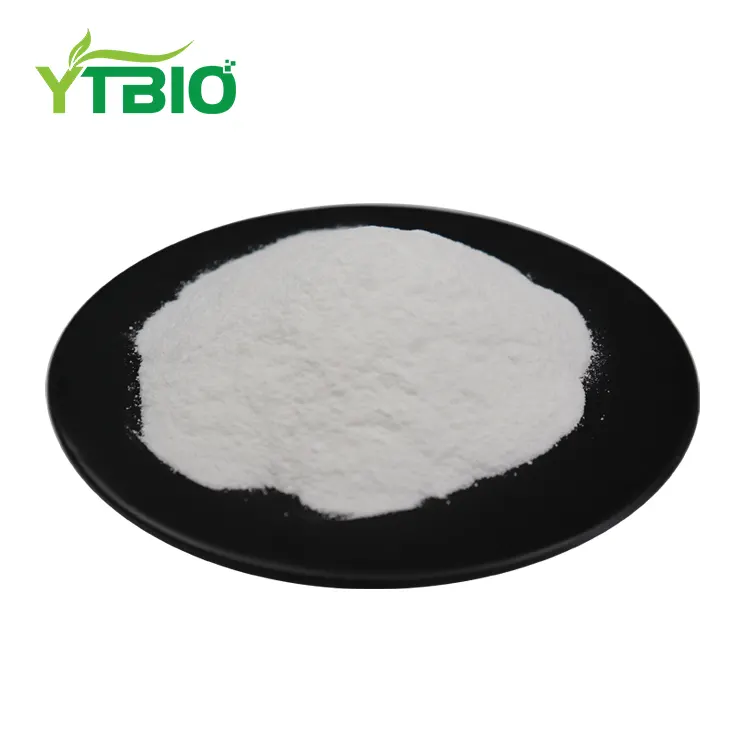
Bulk Lactobionic Acid Powder
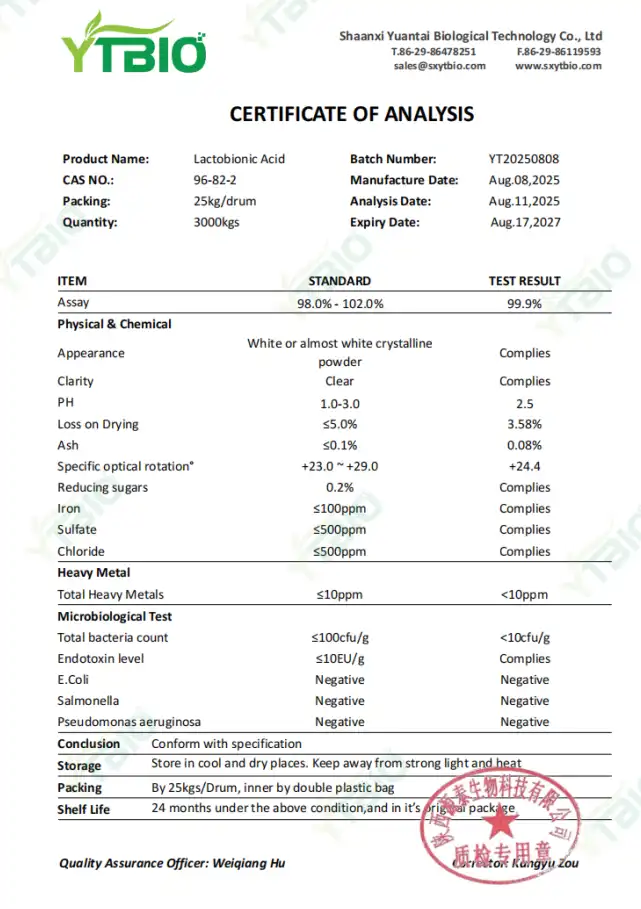
CAS:96-82-2
Assay:98% -102%
Appearance: White to off-white powder
Particle Size:100% pass 80 mesh
Storage conditions: This product should be kept in a sealed, shading, and dry place
Certification: ISO9001, ISO22000, Kosher, Halal, FSSC22000
Shipping speed: 1-3 days
MOQ:25KG
- Fast Delievery
- Quality Assurance
- 24/7 Customer Service
Product Introduction
Lactobionic Acid Supplier: Gentle Skincare Ingredient
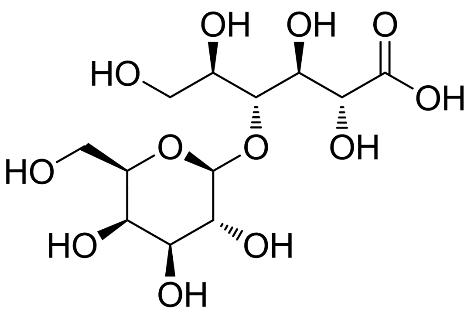 YTBIO offers high-purity (99%) Bulk Lactobionic Acid Powder suitable for use in cosmetic and personal care formulations. Our manufacturing system ensures stable product quality, excellent solubility, and consistent performance across all batches. Lactobionic Acid (LBA)—often referred to as a "third-generation AHA"—is a naturally occurring acidic substance found in the human body. It boasts a multifaceted array of benefits, including skin repair, anti-aging effects, moisturization, antioxidant activity, and the promotion of cellular renewal. Its unique molecular structure and physicochemical properties endow Lactobionic Acid with immense value across various applications. Currently, Lactobionic Acid is widely utilized across diverse industries, including skincare, food, pharmaceuticals, and fine chemicals.
Today, we will focus specifically on its applications and efficacy within the cosmetics sector. Compared to first-generation AHAs, Lactobionic Acid exhibits significantly lower irritation potential; furthermore, in terms of pore-cleansing efficacy, it outperforms second-generation AHAs. Its mechanism of action in skincare involves targeting the epidermis: by weakening the adhesion between keratinocytes, it accelerates the shedding and renewal of aging skin cells. As an exfoliating agent, Lactobionic Acid facilitates exfoliation at a relatively gentle pace—slightly slower than that of traditional AHAs and Salicylic Acid. It not only effectively removes dead skin cells, minimizes pores, and regulates excess sebum production, but also helps alleviate closed comedones (under-the-skin bumps) and resolves issues related to rough skin texture. Consequently, Lactobionic Acid not only delivers the full spectrum of benefits associated with traditional AHAs (such as exfoliation, blackhead removal, prevention and treatment of closed comedones, pore minimization, and acne control), but also offers additional skincare advantages, including antioxidant protection, anti-aging effects, and skin brightening capabilities.
Why Choose Our Lactobionic Acid?
YTBIO offers high-purity Lactobionic Acid, suitable for use in a wide range of cosmetic and personal care formulations. We ensure consistent product quality and excellent solubility.
Product Features
1) The irritation to the skin is milder than that of normal saline.
2) Compared with the most commonly used moisturizing ingredients such as glycerin and sorbitol, it has better water retention and water absorption.
3) Excellent anti-oxidation performance, 0.06% concentration can exert strong anti-oxidation performance, and the effect is comparable to that of VC.
4) It will intelligently identify aging keratinocytes, remove old dead cells, and promote keratinocyte regeneration.
5) It can also remove the dirt in the pores, help hyaluronic acid and collagen hyperplasia in the dermis, increase the water content of the skin, shrink the pores visually, and make the overall skin firm and elastic.
The Role of Lactobionic Acid
1. Moisturizing
The molecular structure of lactobionic acid contains eight groups of hydroxyl groups, which can capture a large number of water molecules. The water-capturing range can be from the skin's gel matrix to the water molecules that evaporate at room temperature, and can maintain a tightly bonded state of moisturizing for a long time. The moisturizing effect is much greater than Glycolic acid, lactic acid, citric acid and gluconic acid. Experiments have shown that each unit of lactobionic acid can absorb about 70g of water, and the water retention can reach 55g. Our commonly used moisturizers such as glycerin, sorbitol, etc. have lower water retention and water absorption than lactobionic acid.
Research results show that 10% and 30% lactobionic acid products have a better moisturizing effect on the skin, and there is no statistically significant difference between the two concentrations. Lactobionic acid is an efficient moisturizer.
2. Antibacterial and acne removal
It is currently believed that the bacteria mainly related to acne - Propionibacterium acnes, Staphylococcus epidermidis and Staphylococcus aureus - all have quorum sensing systems, which can regulate the expression of multiple virulence factors and biofilms according to different bacterial population densities. The formation of acne is closely related to the multiple pathogenic stages of acne and the development of drug resistance of pathogenic bacteria.
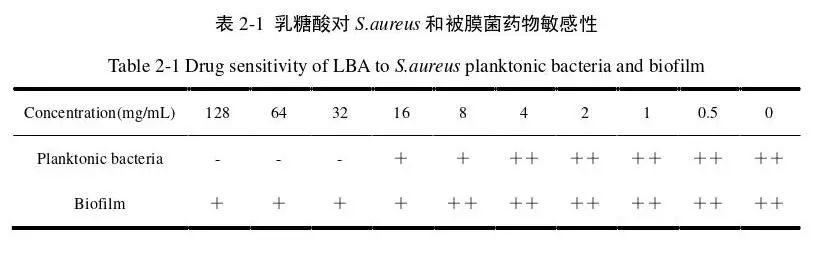
Research results show that lactobionic acid has a good inhibitory effect on Staphylococcus aureus. The experiment used a two-fold dilution method to test the drug susceptibility of lactobionic acid to suspended and enveloped bacteria of Staphylococcus aureus. The test results can be seen from the table that the minimum inhibitory concentration MIC of lactobionic acid against Staphylococcus aureus is 8mg/ mL, the minimum bactericidal concentration MBC is 32mg/mL, the minimum biofilm inhibitory concentration MBIC for Staphylococcus aureus biofilm is 16mg/mL, and the minimum biofilm killing concentration MBBC is greater than 128mg/mL.
3. Anti-aging
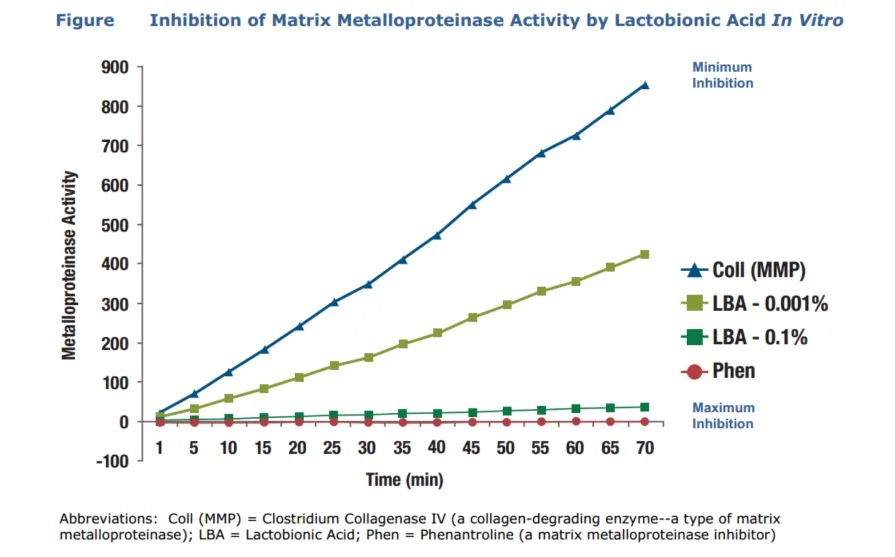
Reduce matrix metalloproteinase activity
Matrix metalloproteinases (MMPs), first identified in 1962 as a collagen hydrolase, can lead to the degradation of extracellular matrix EMC proteins and are a type of zinc-dependent endopeptidase. With factors such as sun exposure and aging, matrix metalloproteinases will increase day by day, leading to skin sagging.
Lactobionic acid can chelate zinc ions in matrix metalloproteinases and form a complex with metalloproteinases, reducing the activity of matrix metalloproteinases and reducing collagen loss. It can be seen from the experimental research results that 0.1% lactobionic acid can effectively inhibit the activity of metalloproteinases.
Inhibit lipid peroxidation
Intracellular iron accumulation can generate reactive oxygen species and cause oxidative stress through the Fenton reaction, thereby promoting lipid peroxidation and leading to regulated necrosis, also known as ferroptosis. Ferroptosis is a regulated form of cell death characterized by the iron-dependent accumulation of lipid peroxidation to lethal levels. When cellular cystine transport proteins are inhibited, intracellular glutathione will be depleted, eventually leading to the accumulation of lipid peroxidation, which can induce cell death to a certain extent.
Lactobionic acid can chelate ferric iron ions, inhibit lipid peroxidation, and protect cell membranes and mitochondria rich in unsaturated fatty acids from UA damage.
4. Antioxidant
Lactobionic acid can act as an antioxidant by chelating divalent iron ions and slowing down the hydroxyl radicals produced by the Fenton reaction.
In 1893, chemist Fenton (Chinese translation as Fenton) discovered that a mixed solution of hydrogen peroxide (H2O2) and ferrous iron ions has strong oxidizing properties and can convert many known organic compounds at that time, such as carboxylic acids, alcohols, and esters. It is quasi-oxidized into an inorganic state, and the oxidation effect is very significant.
5. Renew horniness
As a kind of fruit acid, lactobionic acid also has the ability to renew aging keratinocytes and promote the regeneration of keratinocytes. Because its molecular weight is larger than other fruit acids, its permeability is relatively slow and its irritation is lower. In an irritation experiment of continuous use for 14 days, the experimental group of lactobionic acid plus gluconic acid caused almost no irritation to the skin. The skin irritation of cosmetics containing 4% lactobionic acid and 8% lactone gluconic acid was the same as that of physiological saline. It is a relatively safe and mild ingredient.
Applications
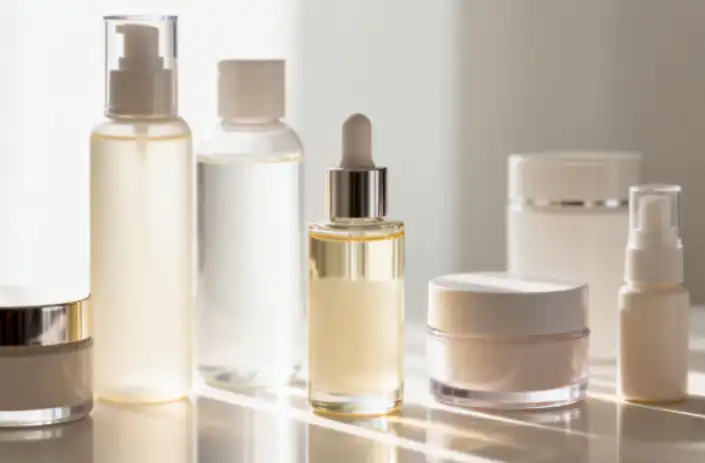 Lactobionic acid is widely utilized in various skincare products, and is particularly well-suited for sensitive skin and barrier-repair formulations.
Common product categories include:
·Gentle serums
·Skincare products for sensitive skin
·Moisturizing and repairing creams
·Facial masks
·Innovative exfoliating skincare products
·Skin barrier repair products, etc.
Are You Looking for High-Quality Lactobionic Acid Supplier?
We supply cosmetic-grade Lactobionic Acid for skincare formulations.
✔ High Purity ≥99%
✔ Gentle Ingredient
✔ Stable Bulk Supply
Contact us for COA, samples & quotation support
Tel:86-029-86478251 / 86-029-86119593
Whatsapp:8617782577059
Email:sales@sxytorganic.com
Hot tags:Lactobionic Acid Powder,Lactobionic acid,Suppliers, Manufacturers, Factory, Buy, price, for sale, producer, free sample, OEM, ODM, private label, white label.