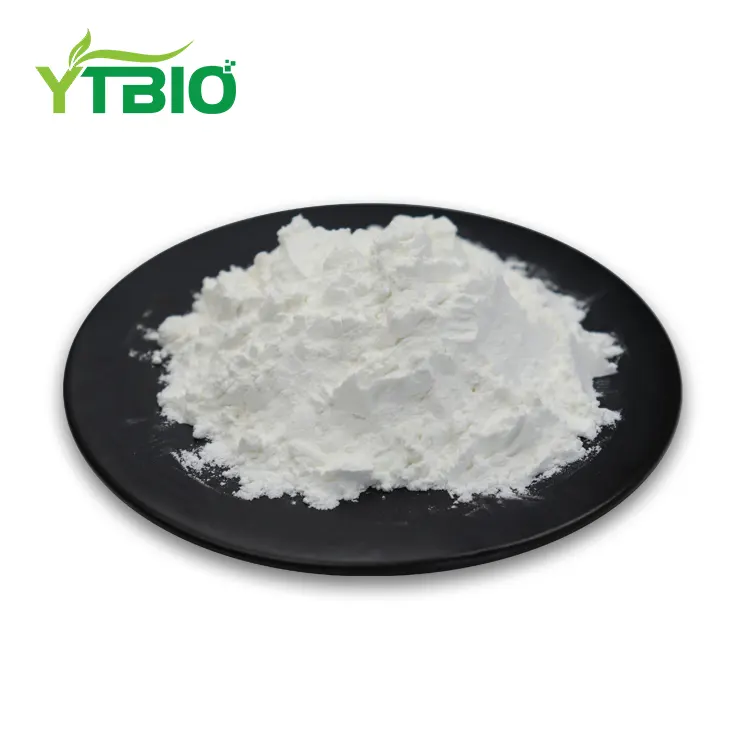
Synthetic Capsaicin
Physical property: Powder
Shelf Life:24 Month
Appearance: White Powder
Cotent:99%
Storage conditions: This product should be kept in a sealed, shading, and dry place
Certification: ISO9001, ISO22000, Kosher, Halal, FSSC22000
Shipping speed:3-5days
- Fast Delievery
- Quality Assurance
- 24/7 Customer Service
Product Introduction
Product Introduction
Synthetic capsaicin (chemical name: vanillyl nonanoate) is a vanillylamide compound prepared through chemical synthesis. Its molecular structure is highly consistent with the main pungent components of natural chili peppers. Synthetic capsaicin overcomes the batch-to-batch fluctuations in capsaicin content caused by variety, origin, and climate in natural extracts, ensuring high consistency in chemical purity and biological activity for each batch. Its core mechanism of action lies in the selective activation of transient receptor potential vanillic acid isoform 1 (TRPV1) on sensory nerve endings, regulating the synthesis and release of neuropeptide P, thereby exerting clear functional value in multiple fields. YTBIO supplies synthetic capsaicin with a purity of 99%, and all production processes strictly adhere to international certification systems such as cGMP, FSSC2200, BRC, HALAL, KOSHER, ISO9001, and ISO22000, providing you with high-purity, high-activity, and multi-purpose synthetic capsaicin raw material support.
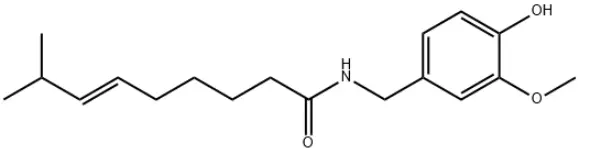
The melting point of capsaicin is 64-68°C and the boiling point is 210-220°C (1.33Pa). It has high chemical stability and is easily soluble in organic solvents such as ethanol, ether, benzene, acetone, and chloroform. It is slightly soluble in carbon dioxide and insoluble in cold water. .
The principle of producing spicy sensation:
Spicy sensation is not actually a taste sensation experienced by the taste buds, but a burning sensation caused by irritation of the tongue. Capsaicin Bulk Powder can rapidly bind to the vanilloid receptor subtype (VRI) located in sensory neurons in animals, and sensory neurons receive stimulation and transmit nerve impulses to the central nervous system. After the nerve impulse is transmitted to the brain, it is judged that the body is burned, which is called a burning sensation. At the same time as the burning sensation occurs, the central nervous system will issue instructions to promote the release of active factors for pain relief. Because of the chemical properties of capsaicin that is easily soluble in lipids and insoluble in water, people can dissolve capsaicin in it by eating foods rich in oil, reducing the contact between capsaicin and sensory neurons, thereby reducing burning. sense of purpose. For example, drinking milk, fruit juice, or eating sweets with high milk content are all good choices to reduce the spiciness.
Test report on Synthetic capsaicin
ITEM | STANDARD | TEST RESULT |
Apperance | Almost white to yellowish crystal | Complies |
Capsaicinoids | ≥98% | 99.14% |
Capsaicin | ≥95% | 95.09% |
Other Capsaicinoids | ≤3% | 2.14% |
Melting point | 60-66℃ | 65℃ |
Loss on drying | ≤1.0% | 0.76% |
Arsenic | ≤2PPM | Complies |
Heavy metal | ≤5PPM | Complies |
Ignition reisidue | ≤1.0% | 0.1% |
Microbiological Test | ||
Total Plate Count | ≤1,000cfu/g | 79cfu/g |
Mold and Yeast | ≤100cfu/g | <10cfu/g |
E.Coli | ≤10cfu/g | <0.3cfu/g |
Salmonella | Negative | Negative |
Staphylococcus | Negative | Negative |
The benefits of Capsaicin
1)Reduce fatigue
Synthetic capsaicin can specifically bind to sensitive receptors in the human body, release signal molecules to act on the transport channels of special cations, and then release specific active substances to reduce fatigue.
2)Hypoglycemic and lipid-lowering
Capsaicin's hypoglycemic and lipid-lowering effects are mainly accomplished by acting on lipid-related cytokines, acting on intestinal flora and regulating bacteria.
3)Protect the stomach
Gastritis is an inflammation of the gastric mucosa caused by various reasons, which has a serious adverse effect on the digestive system. Due to the strong irritating properties of capsaicin, it is generally believed that capsaicin will have adverse effects on the human intestine, and is especially not suitable for patients with gastritis. However, current research has shown that small doses of capsaicin not only do not cause damage to the stomach, but can also repair damage to the gastric mucosa.
Applications
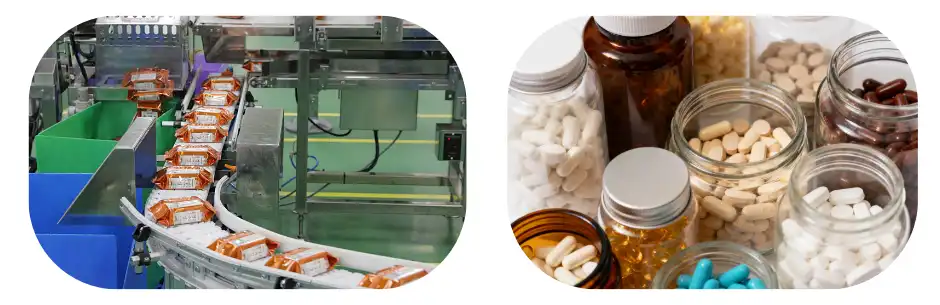
1. )As a food additive
Chili peppers are used as food seasonings, and some shallow processing of chili peppers is required to make chili sauce and so on. However, when these products are eaten, the capsaicin has to undergo a leaching process, and the bioavailability of capsaicin is not high. At the same time, the alkali continues to be released in the intestine, irritating the intestinal wall, which can cause abdominal discomfort, and even cause anal burning pain and induce hemorrhoids. Therefore, the extraction and separation of capsaicin from capsicum, as an additive in food processing, is beneficial to the control of spiciness and the full absorption and utilization of capsaicin.
2. )In terms of medicine and health care
China is one of the earliest countries to use chili peppers as medicines. Chili peppers are used in traditional Chinese medicine to treat stomach cold and rheumatism. Modern research shows that capsaicin has anti-inflammatory, analgesic, anesthesia and detoxification effects. Its analgesic effect is equivalent to that of morphine, but it is more durable than morphine. It is effective in postherpetic neuralgia, trigeminal neuralgia, and diabetic neuralgia , rheumatoid arthritis, osteoarthritis, psoriasis, alopecia, etc. have significant curative effect. In addition, capsaicin can also inhibit the occurrence of malignant tumors, and also has special effects on the treatment of skin diseases and weight loss.
3. )Applied to marine antifouling coatings:
Some attached organisms in the ocean, such as barnacles, seaweed, shellfish, etc., are largely attached to the bottom of ships, buoys, wharves, bridge piers, seawater pipelines and aquaculture cages and nets. It is huge and grows very fast, which can slow down the speed of ships, increase fuel, accelerate metal corrosion, block pipes and cage meshes, and unbalance underwater facilities, causing great harm to human development of the ocean. Capsaicin is used as a repellant , has a strong repelling effect, and does not kill marine life, has obvious ecological benefits.
4. )As an anti-ant and anti-rat repellent in wire and cable:
PVC and polyethylene are more and more widely used as insulation and sheathing materials in the wire and cable industry. In addition to being damaged by oxygen, heat, light, force and chemical erosion In addition, it will also be damaged by termites, mice or hares, resulting in power outages, communication interruptions, and even short circuits, causing fires. Using the strong spicy taste of capsaicin, the oral mucosa and taste nerves of rodents can be strongly stimulated. And abandoning chewing, while killing termites, has broad application prospects in wire and cable.
Methods for the Preparation of Capsaicin
① natural extraction method ② chemical synthesis method ③ biochemical method.
①Natural extraction method: In the early stage of extraction of capsaicin, bright red dried chili peppers were crushed and extracted with organic solvents. After concentration, a red to orange-red oily liquid was obtained. This oily liquid is called capsicum oleoresin, which contains Capsaicin, dihydrocapsaicin, orthodihydrocapsaicin and high dihydrocapsaicin, capsicum red pigment, carotene and tartaric acid, malic acid, citric acid and other ingredients. After the capsicum oleoresin is further extracted with ether, dilute ethanol and alkaline aqueous solution, or petroleum ether, dichloroethane and other solvents, crude capsaicin crystals can be obtained by crystallization with petroleum ether or n-ethane.
②Chemical synthesis method: From the chemical structure, capsaicin can be regarded as an amide compound formed by fatty acids and vanillylamine. Spath et al. used isobutylzinc and 1,6-adipate monoethyl monoacyl chloride as raw materials, and chemically 8-Methyl-6-nonenoic acid was synthesized, which was then chlorinated by phthalate and reacted with vanillylamine to obtain capsaicin.
③ Biosynthetic method: Currently known enzymes involved in the capsaicin synthesis pathway include phenylalanine lyase, cinnamic acid hydrolase, p-coumaric acid hydrolase, caffeic acid transmethoxylase and capsaicin synthase. The phenolic precursors in the synthesis process of capsaicin (p-coumaric acid, phenylalanine, caffeic acid, etc.) are also the synthesis precursors of proteins, alkaloids, flavonoids and lignin. Therefore, the biosynthesis of capsaicin There is a problem of competition with other biosynthetic pathways for common precursors, and the biosynthesis of capsaicin can be maximized through metabolic regulation or gene regulation.
Does Capsaicin help with weight loss?
Basic research has identified several potential mechanisms by which capsaicin works:
* By activating the TRPV1 signaling pathway, it inhibits fatty acid synthesis, promotes energy expenditure, and reduces fat accumulation. This has been validated in diet-induced obesity experiments in mice.
* It enhances sympathetic nerve activity, thereby suppressing appetite and increasing energy metabolism. A Japanese study showed that consuming chili peppers at breakfast can reduce the intake of carbohydrates, fats, and proteins throughout the day.
* It lowers postprandial blood glucose, insulin, and C-peptide levels, improving insulin resistance and helping to control obesity.
Related Experiments:
* In a randomized controlled trial, participants took 6 mg of capsaicin daily for 12 weeks. The results showed that while both groups experienced weight loss, there was no significant difference between the capsaicin group and the placebo group.
* In contrast, a domestic trial involving 10 overweight individuals found that after four weeks of oral capsaicin administration, volunteers' BMI, body fat percentage, visceral fat area, hip circumference, and overall obesity level all decreased significantly compared to before the intervention.
A meta-analysis of nine studies showed that consuming chili peppers or capsaicin increased daily energy expenditure by approximately 58 kcal in overweight and obese individuals. This figure is only about 1/30th of the average person's daily total energy intake, indicating that relying solely on chili peppers is unlikely to lead to significant weight loss.
Conclusion: Capsaicin can be used as an adjunct therapy, showing some weight loss potential in animal studies, but evidence in humans is insufficient, and its actual effects are far less than expected. Currently, it is more suitable as a supplementary food during weight loss, rather than relying on it for weight loss.
Contact Us
YTBIO is committed to providing customers with the highest-quality Pure Capsaicin Bulk Powder bulk and services so that every consumer can enjoy natural, healthy, and high-quality food. If you have any inquiries or needs about our products, please feel free to contact us, and we will reply to you as soon as possible.
Tel:86-029-86478251 / 86-029-86119593
Whatsapp:8617782577059
Email:sales@sxytorganic.com