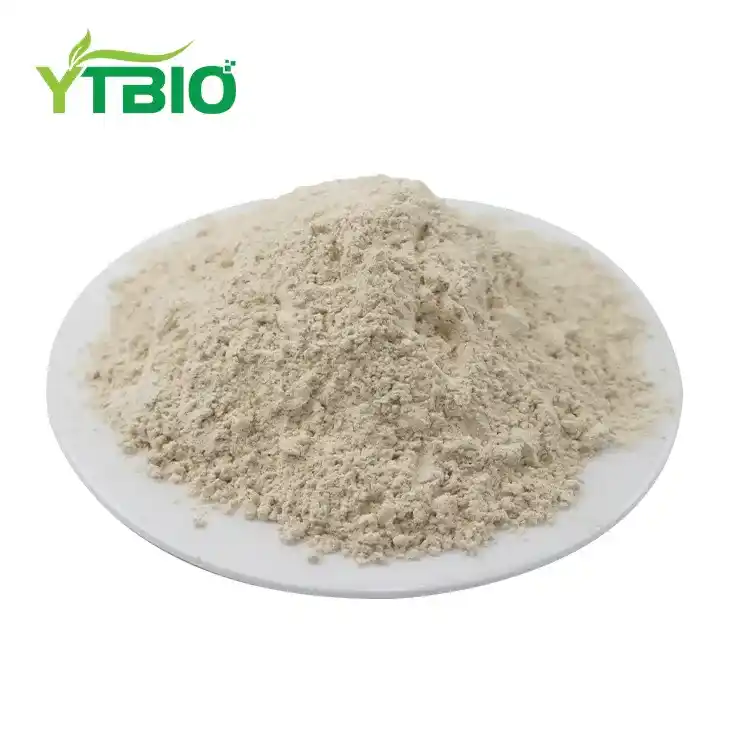
Pure Rice protein powder
Specification:80%
Appearance:Fine Light Yellow Powder
Odor:Characteristic
Particle Size:100 mesh ,300 mesh,600mesh
Storage conditions: This product should be sealed and shaded, stored in a dry
Certifications:ISO9001,ISO22000,Kosher,Halal,HACCP
Shipping speed:1-3 days
MOQ:25KG
- Fast Delievery
- Quality Assurance
- 24/7 Customer Service
Product Introduction
Rice Protein 80%: Product Introduction
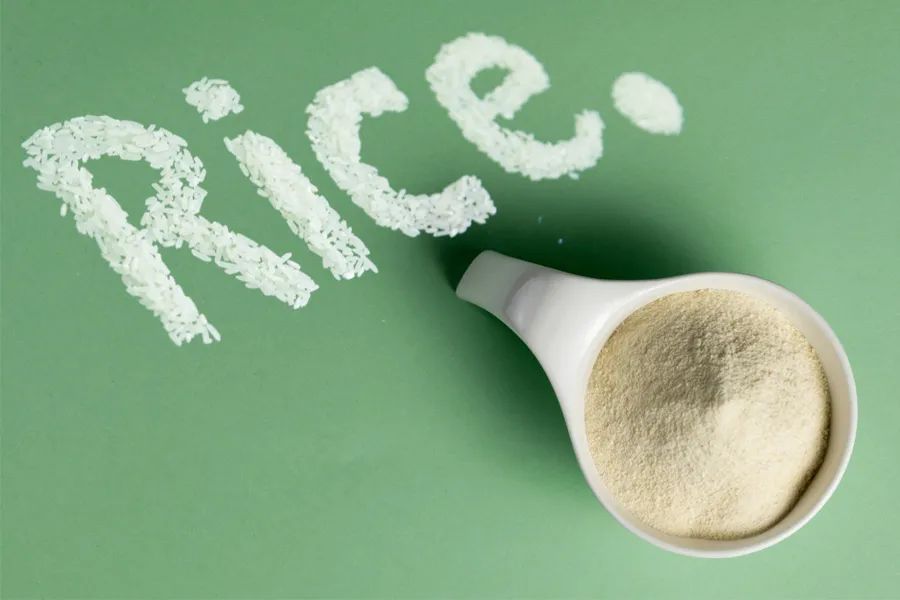
YTBIO's pure rice protein powder is made from high-quality rice through enzymatic hydrolysis, separation, and refining processes. This product boasts excellent dispersibility and processing adaptability. It contains ≥80% protein, and we offer both conventional and organic rice protein sources.
Rice protein has the characteristic subtle aroma of rice, is extremely low in fat and dietary fiber, and is a hypoallergenic complete protein. Its amino acid composition is balanced, rich in essential amino acids, gluten-free, and free of soy allergens. Its digestibility is close to that of casein and whey protein. Rice protein is widely used in plant-based protein powders, meal replacement shakes, gluten-free baked goods, infant rice cereal, cereal bars, and meat fillers.
Certificate of Analysis (Rice Protein)
| Test Items | Specification | Test Results | Test Methods |
|---|---|---|---|
| Appearance | Light yellow powder | Complies | Visible |
| Taste & Odor | Characteristic | Complies | Organoleptic |
| Particle Size | ≥95% pass through 300 mesh | 98% pass through 300 mesh | Sieving |
| Protein (dry basis, N×6.25), g/100g | ≥80.0% | 84.8 | GB 5009.5-2025 |
| Moisture, g/100g | ≤8.0% | 4.8 | GB 5009.3-2016 |
| Fat (dry basis), g/100g | ≤8.0% | 4.1 | GB 5009.6-2016 |
| Ash (dry basis), g/100g | ≤6.0% | 1.0 | GB 5009.4-2016 |
| Dietary Fiber (dry basis), g/100g | ≤7.0% | 3.4 | GB 5009.88-2023 |
| Total Carbohydrate, g/100g | ≤8.0% | 0.3 | GB 28050-2011 |
| pH Value (10%) | 5.0-7.0 | 6.2 | GB 5009.237-2016 |
| Bulk Density (Non-vibration), g/cm³ | 0.30~0.40 | 0.36 | GB/T 20316.2-2006 |
| Melamine, mg/kg | ≤0.1 | Not detected | SN/T 3032-2011 |
| Cyanuric Acid, mg/kg | ≤0.5 | Not detected | SN/T 3032-2011 |
| Ochratoxin A, ppb | ≤3 | Not detected | DIN EN 14132-2009 |
| Aflatoxin B1, ppb | ≤2 | 0.15 | DIN EN 14123-2008 |
| Aflatoxin B1+B2+G1+G2, ppb | ≤4 | 0.15 | DIN EN 14123-2008 |
| Gluten Allergen, ppm | ≤20 | <5 | Eurofins SENSISpec |
| Soy Allergen, ppm | ≤20 | <2.5 | Eurofins SENSISpec |
| GMO (Bt63),% | ≤0.01% | Not detected | SN/T 1204-2016 |
| Lead, mg/kg | ≤0.5 | 0.007 | GB 5009.12-2023 |
| Cadmium, mg/kg | ≤0.5 | 0.03 | GB 5009.15-2023 |
| Arsenic, mg/kg | ≤0.5 | 0.025 | GB 5009.11-2024 |
| Mercury, mg/kg | ≤0.05 | 0.02 | GB 5009.17-2021 |
| Total Plate Count, cfu/g | ≤5000 | 300 | GB 4789.2-2022 |
| Yeast & Mould, cfu/g | ≤50 | <10 | GB 4789.15-2016 |
| Coliforms, cfu/g | <30 | <10 | GB 4789.3-2025 |
| E.coli, cfu/g | Negative | Not detected | GB 4789.38-2012 |
| Salmonella,/25g | Negative | Not detected | GB 4789.4-2024 |
| Staphylococcus Aureus,/25g | Negative | Not detected | GB 4789.10-2016 |
| Listeria Monocytogenes,/25g | Negative | Not detected | GB 4789.30-2016 |
Process Flow
Raw material screening
↓
Crushing
↓
Enzymatic extraction
↓
Separation and filtration
↓
Concentration and purification
↓
Spray drying
↓
Sieving and mixing
↓
Quality inspection
↓
Finished product packaging
Why Choose Us?
1. Plant-based Protein: Made from plant-based ingredients, suitable for various plant-based product development needs.
2. High Protein Content: Protein content up to 80%, meeting the needs of different food and nutritional product applications.
3. Processing Adaptability: Suitable for various formulation systems including solid beverages, meal replacement powders, protein bars, and baked goods.
4. Customization Support: Supports specifications, packaging, and OEM/ODM cooperation solutions.
5. Stable Supply: Selected high-quality rice raw materials ensure a stable supply of products.
6. Professional Technical Support: Provides product information, application suggestions, and after-sales service support.
Composition and Structure
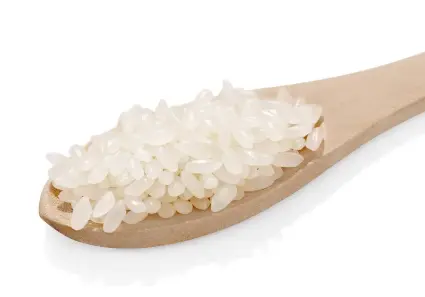
Rice is a finished product made from rice after cleaning, hulling, milling, finishing and other processes. Rice contains nearly 64% of the nutrients in rice and more than 90% of the nutrients needed by the human body; at the same time, rice is also The staple food of the people in most parts of China. The seeds produced by rice are actually rice. After the rice husk is removed, it is called brown rice. The brown rice can be obtained by grinding off the bran layer.
Pure Rice protein powder is produced by soaking, grinding, reacting, extracting, drying and other processes of rice; it is mainly composed of four proteins: albumin, globulin, alcohol-soluble protein and glutenin, each accounting for 5%. , 12%, 3% and 80%. Among them, gluten and globulin are the main components. Globulin and albumin are physiologically active proteins in rice endosperm. There are many types, with relative molecular masses of 10-200KDa and 16-130KDa. Prolamin and glutenin are storage proteins in rice. Although the content of gliadin is not high, it is closely related to the morphology of endosperm protein bodies.
Rice protein mainly exists in the form of two protein bodies (PB), namely PB-I and PB-II. Electron microscopy observation shows that the PB-I protein body has a lamellar structure, with a dense particle diameter of 0.5-2 μm, and gliadin is present in PB-I; while PB-II has an ellipsoidal shape, no layering, uniform texture, and particles The diameter is about 4 μm, its peripheral membrane is not obvious, and gluten and globulin are present in PB-II. The two protein bodies often exist together.
Properties and Nutritional Value of Rice Protein
Functional properties include solubility, emulsification, foaming, water-holding, oil-holding, gelling, and flavor-binding properties. Among them, solubility often affects other functional properties such as thickening, foaming, emulsification and gelling. Studies have found that methods to increase the solubility of rice protein are beneficial to improving the emulsifying properties of rice protein; the emulsifying properties of rice protein are greatly affected by pH value. The emulsifying activity is lowest at pH=5, and then decreases as the pH increases. increase, which is consistent with its solubility change trend. In addition, related research has found that although rice protein extracted from rice bran has poorer foaming properties than casein, it has better emulsification properties and maintains stable emulsification in the presence of high levels of salt and sugar. performance.
 Nutritional properties of natural rice protein
Low antigenicity. Low antigenic activity is the prerequisite for protein nutrition to be efficiently utilized in the animal body. As we all know, many plant proteins contain anti-nutritional factors, such as trypsin inhibitors and flatulence factors in soybeans, and lectins in peanuts, which greatly limit their application in production. However, relevant research shows that rice protein has the characteristics of high nutrition, mildness and non-irritation, and low antigenic activity. It is a plant protein resource with great development potential. In addition, some animal protein raw materials contain anti-nutritional factors, such as lactoglobulin and some ovalbumin, which may cause allergic or toxic reactions in the animal body. However, rice protein does not contain similar allergenic factors, and its application is safe and reliable.
As the protein with the highest biological value among all grains, rice protein is a hypoallergenic plant protein. Its digestibility, biological value and net protein utilization rate in young children are 88.8%, 90% and 79.9% respectively, so it is suitable for use in children. Used in food for infants, young children and middle-aged and elderly people.
Balanced amino acid composition. The protein content of rice protein is as high as 40%-70%, and its absorption and utilization efficiency in the animal body is high. Its biological potency is as high as 77, and its nutritional value is much higher than that of plant-based proteins such as corn and wheat. The amino acid composition of rice protein is balanced and rich in various essential amino acids required by the body, which is very close to the ideal model recommended by WHO/FAO (1973). Through analysis of its components, researchers found that rice protein has a high lysine content and contains more than 80% alkali-soluble glutenin.
Rice Protein:Main Application Areas
Rice protein has been widely used in the food, health supplement, and animal feed industries.
Food Sector
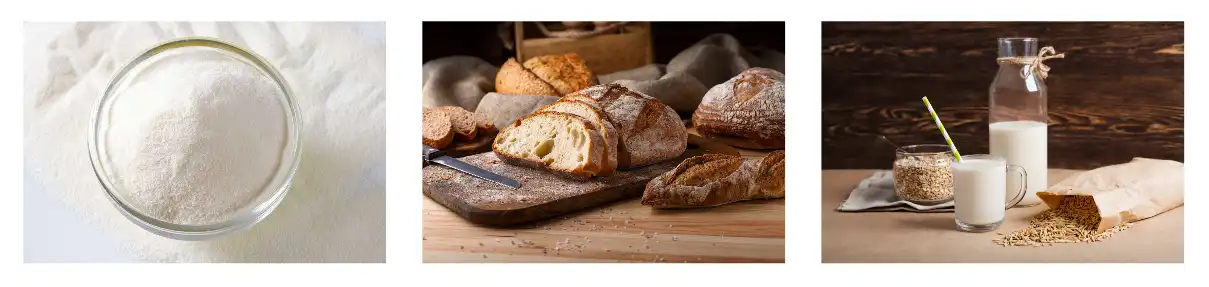
* As a core protein ingredient, it is added to infant formula, offering hypoallergenic properties.
* Used in protein drinks, catering to the needs of vegetarians.
* It can also be added to baked goods such as bread and cakes to improve product texture and increase protein content.
* Added to protein bars and energy supplements, it helps supplement protein and support muscle mass maintenance.
Health Supplement Sector
As a plant-based protein source, rice protein can be compounded with other plant proteins, dietary fiber, vitamins, and minerals, and is commonly used in protein powders, sports nutrition, nutritional supplements, and meal replacement products.
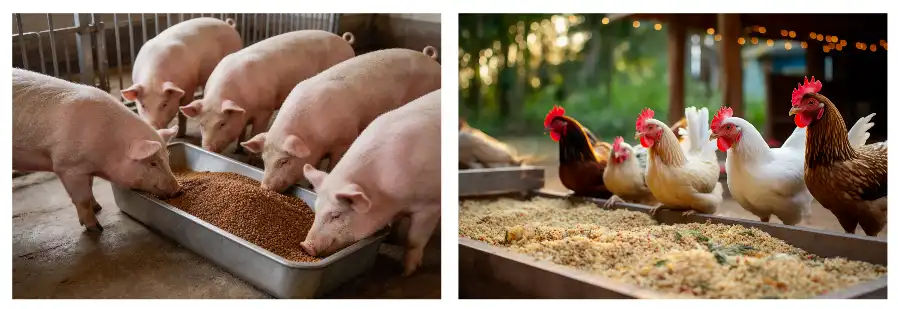
Animal Feed Sector
It can be widely added to livestock feed such as pigs and poultry, and can also be used in aquatic compound feed to improve animal growth performance.
Contact Us
YTBIO is committed to providing customers with the highest-quality Pure Rice protein bulk and services so that every consumer can enjoy natural, healthy, and high-quality food. If you have any inquiries or needs about our products, please feel free to contact us, and we will reply to you as soon as possible.
Please contact us for product specifications, the latest quotes, samples, and detailed technical information!
Tel:86-029-86478251 / 86-029-86119593
Whatsapp:8617782577059
Email:sales@sxytorganic.com
Hot tags:Pure Rice protein powder,Rice protein,Suppliers, Manufacturers, Factory, Buy, price, for sale, producer, free sample, OEM, ODM, private label, white label.