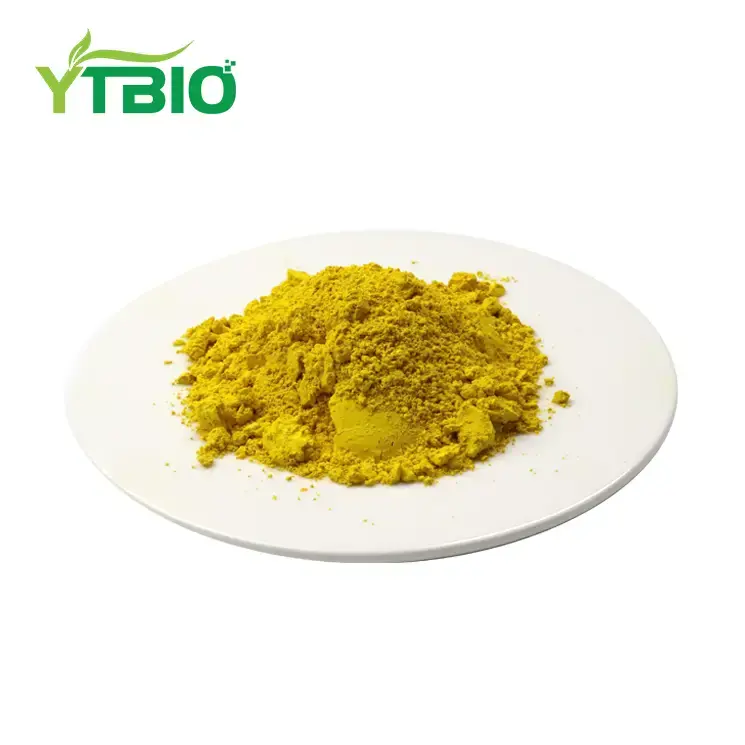
Berberine Hydrochloride Powder
Appearance: yellow fine powder
Solubility: Soluble in water, insoluble in benzene, ether and chloroform
Package: 1kg/foil bag, or 20kg/drum
MOQ:25kg
Storage conditions: This product should be sealed and shaded, stored in dry cool place
Certifications:ISO9001,ISO22000,Kosher,Halal,HACCP
Shipping speed:1-3 days
- Fast Delievery
- Quality Assurance
- 24/7 Customer Service
Product Introduction
What is Berberine Hydrochloride?
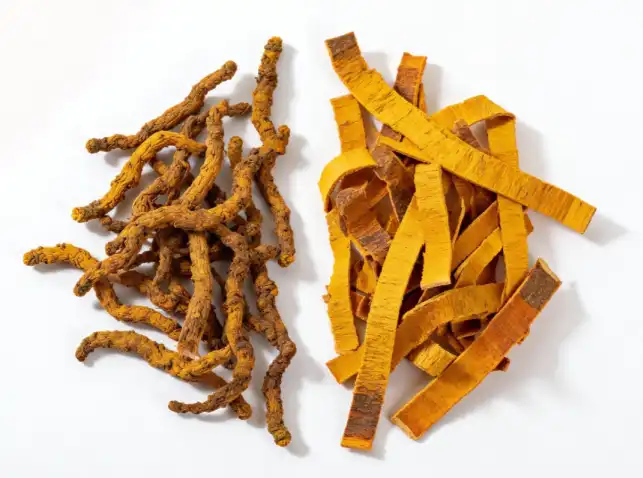 Berberine hydrochloride Powder is an important alkaloid and has been used in traditional Chinese medicine for a long time. It can be extracted from Coptis chinensis, Phellodendron cypress, Sanzhen and other plants. Has a significant inhibitory effect. Berberine hydrochloride can fight against pathogenic microorganisms and has inhibitory effects on a variety of bacteria such as Shigella dysenteriae, Mycobacterium tuberculosis, Pneumococcus, Diphtheriae and Typhoid bacilli. Among them, its effect on Shigella is most commonly used to treat bacterial gastroenteritis. , dysentery and other gastrointestinal diseases. Mainly used to treat bacillary dysentery and gastroenteritis, it has fewer side effects.
Furthermore, recent studies have revealed the potential value of berberine hydrochloride in regulating lipid metabolism (improving hyperlipidemia), assisting in lowering blood sugar, and anti-inflammation.
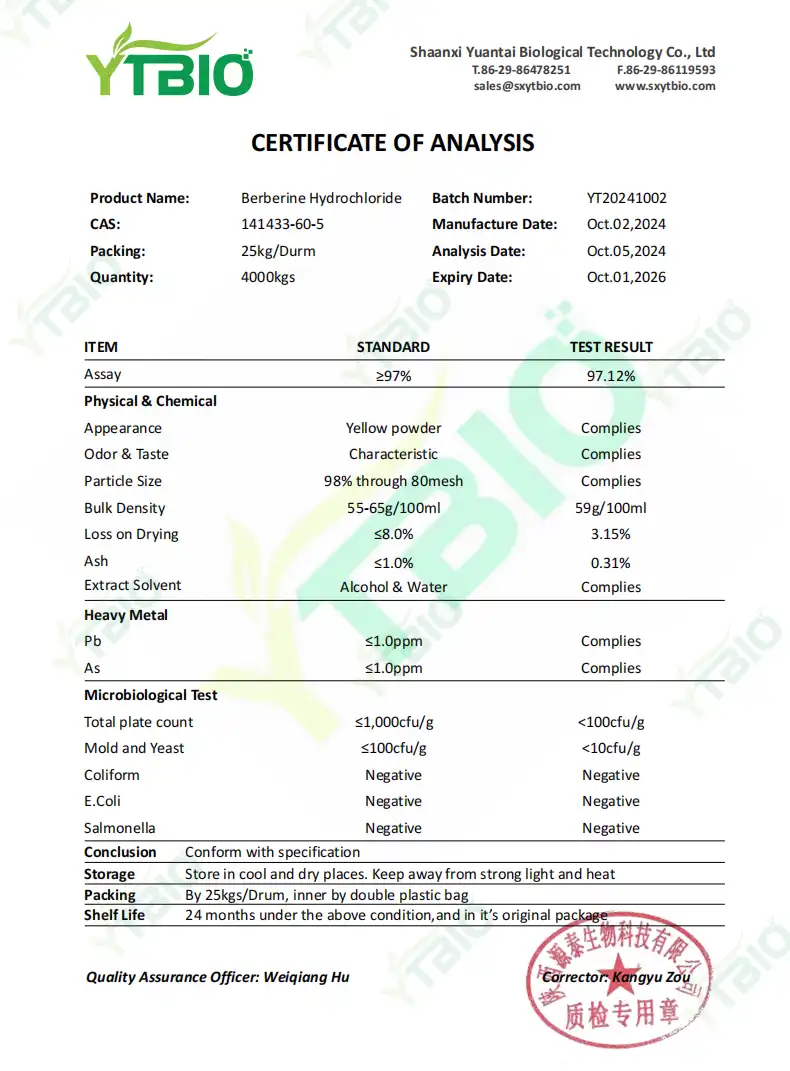
YTBIO supplies berberine hydrochloride in two plant-derived specifications—Phellodendron amurense and Trifolium repens. The product is suitable for the development of tablets, capsules, oral liquids, etc., and has complete certifications. Small-sample testing and flexible MOQ are supported.
| Specification | Source |
| Berberine (HPLC 98%) | Synthesis |
| Berberine hydrochloride (HPLC70%、 98%) | *Phellodendron chinense* |
| Berberine hydrochloride (HPLC 97%) | Chinese barberry |
What Are The Benefits?
1. Regulate blood sugar: Berberine hydrochloride has been shown to improve blood sugar levels in patients with type 2 diabetes. One study found that berberine hydrochloride works just as well as the commonly used diabetes drug metformin.
2. Lowers Cholesterol: Berberine HCL Powder has been shown to lower blood cholesterol levels, especially "bad" LDL cholesterol. This may help reduce the risk of heart disease.
3. Anti-inflammatory: Berberine hydrochloride has a strong anti-inflammatory effect, helping to reduce inflammation in the body and alleviate related health problems.
4. Anti-tumor: Berberine hydrochloride has been found to inhibit the growth of a variety of cancer cells, including breast cancer, liver cancer and lung cancer cells.
5. Antibacterial: Berberine HCL Powder has antibacterial properties that help fight bacterial infections and support immune system function.
Main Applications
Pharmaceutical Field
The core application of berberine hydrochloride is in the pharmaceutical field. Its classic use is in treating intestinal infections, exhibiting significant inhibitory effects against common pathogens such as Shigella, Escherichia coli, and Staphylococcus aureus. It is a commonly used over-the-counter drug for treating bacterial dysentery and gastroenteritis-related intestinal infectious diarrhea. Modern research has also found its potential in regulating metabolic diseases, improving insulin resistance, assisting in the management of type 2 diabetes, and helping to lower total cholesterol and triglyceride levels. Furthermore, berberine hydrochloride shows promise in the adjunctive treatment of cardiovascular diseases, exhibiting antiarrhythmic, antihypertensive, and cardiac function-improving effects.
Veterinary Drugs and Feed Additives
In animal husbandry and aquaculture, berberine hydrochloride is widely used as a natural antibacterial component. It can be used to prevent and treat intestinal infections in livestock and poultry, such as common diseases like piglet yellow and white scours and avian colibacillosis. Simultaneously, as a feed additive, it helps improve animal disease resistance and production performance.
Health Products
Berberine Hydrochloride Powder is also used in health products. In the health supplement industry, it is often used in functional products that regulate blood sugar and blood lipids.
Research on the Application of Berberine Hydrochloride in Digestive System Health
Berberine hydrochloride has traditionally been used to treat intestinal infections and bacterial dysentery. Recent studies have found that it also has positive effects on various digestive system health problems.
1. Antibacterial and Supports Gut Health
Berberine hydrochloride has an inhibitory effect on common intestinal pathogens such as Staphylococcus aureus, Enterococcus faecalis, Shigella dysenteriae, and Salmonella. It can also inhibit the proliferation of Helicobacter pylori (HP) and reduce its activity, helping to maintain stomach health.
2. Improves Ulcerative Colitis
Berberine hydrochloride can promote the growth of beneficial bacteria in the gut (such as bacteria that produce short-chain fatty acids), help regulate the intestinal environment, and also has anti-inflammatory and immunomodulatory effects, reducing intestinal mucosal damage.
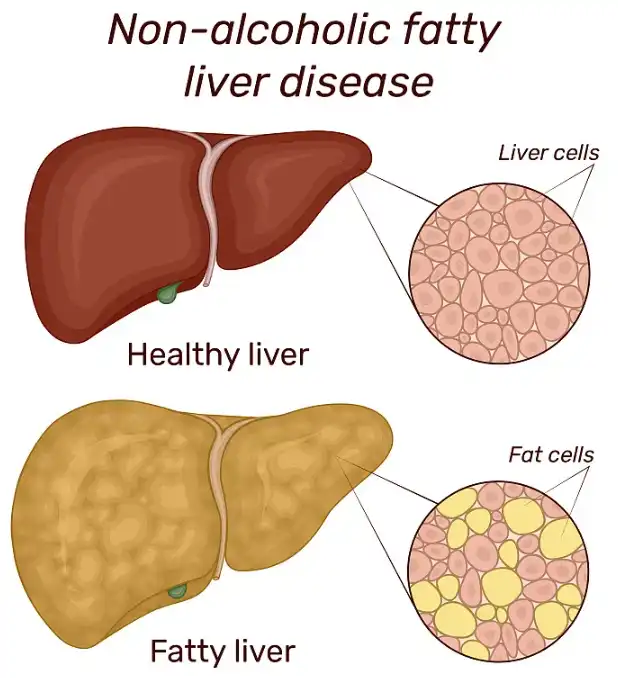
3. Alleviates Non-Alcoholic Fatty Liver Disease
Berberine hydrochloride can reduce fat accumulation in hepatocytes, lower inflammation levels, reduce liver function indicators such as ALT and AST, and improve blood lipid levels. Its effects are related to reducing oxidative stress and activating the Nrf2 pathway.
4. Assisting in the improvement of cholecystitis
In addition to its antibacterial properties, Berberine Hydrochloride Powder can also inhibit platelet aggregation and improve blood supply to the gallbladder mucosa. Combined use can improve symptoms of chronic cholecystitis and reduce levels of inflammatory factors (TNF-α, LEP).
From its traditional use as an antidiarrheal agent to its modern applications in liver protection, anti-inflammation, and gut microbiota regulation, berberine hydrochloride demonstrates diverse applications in the field of digestive health.
The production process of berberine hydrochloride:
1.Extraction: The first step in the process is to extract berberine from a plant source, usually Coptis chinensis or Berberis spp. The dried roots or bark of the plant are usually used for extraction. Plant material is finely ground and mixed with a suitable solvent such as ethanol or water, then heated or macerated. This facilitates the extraction of berberine alkaloids from plant material.
2. Filtration: After extraction, the mixture is filtered to separate the liquid extract from any solid plant material. This can be done using various filtration techniques such as filtering through filter paper or using a filter membrane.
3. Concentration: The filtered extract is then concentrated to increase the berberine concentration. This can be achieved by various methods such as evaporation, vacuum distillation or freeze drying. This step helps to obtain a higher yield of berberine.
4. Precipitation: The concentrated extract is precipitated by adding suitable reagents. For berberine hydrochloride, hydrochloric acid (HCl) is generally used. The addition of HCl helps to convert berberine into more stable and soluble berberine hydrochloride.
5. Filtration and washing: The Berberine HCL Powder precipitate is then filtered to separate it from the liquid. Wash it with a suitable solvent, such as ethanol or water, to remove any impurities or residual reagents.
6.Drying: The washed berberine hydrochloride is then dried to remove any residual solvent or moisture.
YTBIO is committed to providing customers with the highest-quality Berberine Hydrochloride Powder and services so that every consumer can enjoy natural, healthy, and high-quality food. If you have any inquiries or needs about our products, please feel free to contact us, and we will reply to you as soon as possible.
Tel:86-029-86478251 / 86-029-86119593
Whatsapp:8617782577059
Email:sales@sxytorganic.com
Office Add: No.801, Building 3, Dahua Shuzhi Industrial Park, Tiangu 6th Road, Yanta District, Xi 'an, Shaanxi,China.