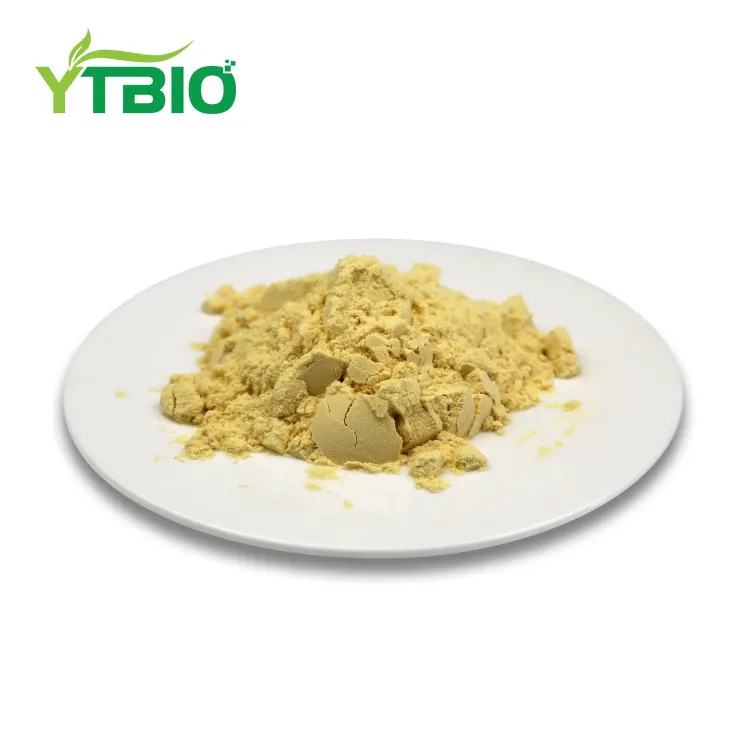
Caffeic Acid Powder
Detection method: HPLC
CAS: 331-39-5
Molecular formula: C9H8O4
Molecular weight: 180.16
EINECS:206-361-2
Melting point 211-213 °C (dec.) (lit.)
Boiling point 272.96°C (rough estimate)
Density1.2933 (rough estimate)
Shipping speed:1-3 days
Inventory:In stock
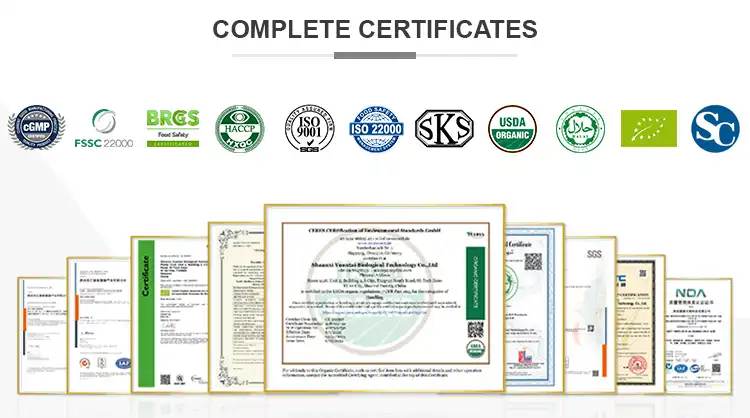
Certificates:HACCP, HALAL, KOSHER, ISO9001, ISO22000, FDA
MOQ:25KG
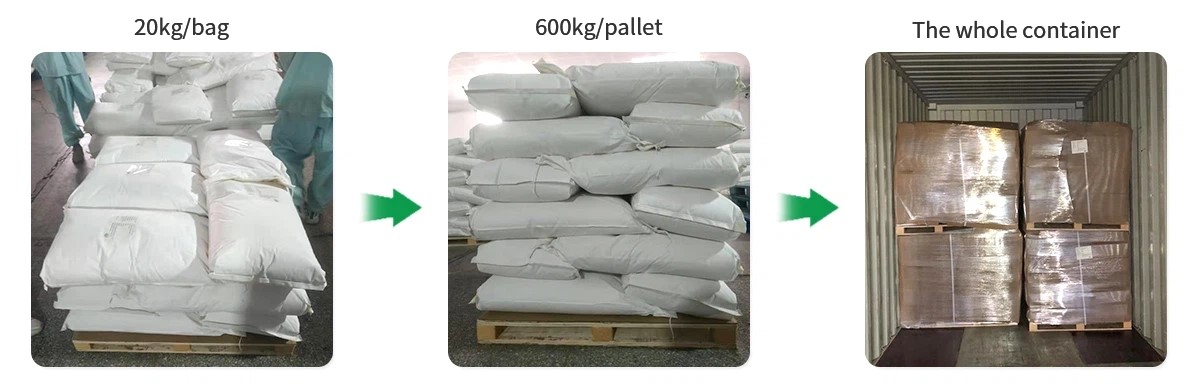
Package:25Kg/barrel
Sales group:not for individual customers
- Fast Delievery
- Quality Assurance
- 24/7 Customer Service
Product Introduction
YTBIO High-Content Caffeic Acid Powder | Highly Effective Active Ingredient | Antioxidant and Antibacterial Raw Material
YTBIO's caffeic acid is a high-purity (99%) organic acid (C9H8O4). Its signature ortho- and tho-dihydroxyl structure forms the core of its superior antioxidant, antibacterial, and antiviral activities. As a natural secondary metabolite derived from the shikimic acid pathway, it is not only widely found in various foods and traditional Chinese medicines, but is also refined into a yellow crystalline powder using scientific extraction technology. It possesses excellent solubility in hot water and ethanol, as well as cosmetic-grade safety. The multiple bioactivities of caffeic acid and its derivatives (such as rosmarinic acid, salvianolic acid, and chlorogenic acid) have been fully validated, covering cutting-edge health areas from anti-inflammation and free radical scavenging to potential cardiovascular protection and metabolic improvement. YTBIO provides this potent active ingredient through precise process control, suitable for formulation development and health product applications seeking safe and effective results.
CERTIFICATE OF ANALYSIS
ITEM | STANDARD | TEST RESULT | |
Assay | ≥99.0% | 99.43% | |
Physical & Chemical | |||
Appearance | Yellowish crystallization powder | Complies | |
Sugar | ≤0.3% | Complies | |
Protein | ≤0.% | Complies | |
Loss on Drying | ≤1.0% | 0.91% | |
Heavy Metal | |||
Total Heavy Metals | ≤5ppm | Complies | |
As | ≤3ppm | Complies | |
Pb | ≤2ppm | Complies | |
Microbiological Test | |||
Total Plate Count | ≤1,000cfu/g | <10cfu/g | |
Mold and Yeast | ≤100cfu/g | <10cfu/g | |
E.Coli | ≤10cfu/g | <0.3cfu/g | |
Salmonella | Negative | Negative | |
Staphylococcus | Negative | Negative | |
Conclusion | Conform with specification | ||
Storage | Store in cool and dry places. Keep away from strong light and heat. | ||
Packing | By 25kgs/Drum, inner by double plastic bag | ||
Shelf Life | 24 months under the above condition,and in it’s original package | ||
What are the benefits?
Antiviral activity
In recent years, studies have found that caffeic acid and its derivatives have very good anti-influenza virus and anti-HIV activities. Caffeic acid can inhibit the proliferation of influenza A virus and inhibit the spread of hepatitis C virus in the initial stage of hepatitis C virus infection. Caffeic acid phenethyl ester, a derivative of caffeic acid, is a natural substance discovered in recent years that has very obvious anti-HIV properties. In addition, lithospermic acid and salvianolic acid B have strong activity in inhibiting human immunodeficiency virus type I (HIV-I) integrase, with IC5 of 0.83 and 0.48 mol/L respectively, and are expected to become new natural drugs for the treatment of AIDS. In addition to anti-HIV virus, caffeic acid and quinic acid are condensed through an esterification reaction to form a series of phenolic acid compounds, collectively called caffeoylquinic acid, represented by chlorogenic acid components. This type of compound is widely present in Among plants such as Asteraceae, Fabaceae, Apiaceae, Convolvulaceae, etc., studies have found that this type of substance has very good antiviral activity and can effectively inhibit influenza viruses and hepatitis B viruses. Recent studies have found that chlorogenic acid and caffeic acid in forsythin can inhibit the proliferation of porcine transmissible gastroenteritis virus (TGEV) in porcine testicular cells (ST). Among them, caffeic acid can greatly reduce virus activity. It is expected to be developed into an antiviral drug.
Antibacterial, anti-infective
Caffeic acid and its derivatives are natural fungicides that can inhibit a variety of fungal and bacterial infections. Studies have shown that the antibacterial mechanism of caffeic acid components is related to its strong antioxidant properties. Salvianolic acid A in Salvia miltiorrhizae has good anti-inflammatory activity after ultrasonic extraction. The chlorogenic acid in Panax notoginseng, honeysuckle and Eucommia ulmoides has strong antibacterial activity and can be developed as a natural food preservative. Other studies have shown that the inhibitory effect of chlorogenic acid components on E. coli is due to the fact that these components can destroy the bacterial cell wall and membrane structure, leading to an increase in cell permeability, which in turn causes the leakage of cell contents and leads to cell apoptosis. .
Cardiovascular disease
Salvia miltiorrhiza preparations are widely used in the clinical treatment of cardiovascular and cerebrovascular diseases. The main chemical components that exert pharmacological effects are salvianolic acid and other caffeic acid derivatives. Studies have found that salvianolic acid components have strong antagonistic effects against cerebral ischemia-reperfusion injury, can inhibit platelet aggregation, and have good anti-thrombotic effects. Total salvianolic acid can inhibit thrombosis and reduce plasma endothelin and thromboxane B2 levels after cerebral ischemia.
Anti-liver fibrosis and hepatoprotective effects
Liver fibrosis refers to the abnormal proliferation of connective tissue in the liver caused by various pathogenic factors. It is the result of damage to the liver parenchyma tissue and biliary system. Studies have found that both salvianolic acids A and B exhibit strong hepatoprotective activity, and lithospermic acid can resist liver damage caused by oxidative stress. Danshensu can inhibit liver fibrosis through the MEK/ERK signaling pathway, and caffeic acid phenethyl ester can resist oxidative stress and inhibit the activity of hematopoietic stem cells (HSC), so it has anti-hepatic fibrosis characteristics.
therapeutic effect on diabetes
In recent years, studies have shown that there is a certain connection between diabetes and oxidative stress, and the antioxidant effects of caffeic acid and its derivatives also play a positive role in the treatment of diabetes. Caffeic acid can reduce the absorption of glucose by endothelial cells, promote the decomposition of glycogen in the liver, and regulate the sensitivity of pancreatin by increasing the glucose uptake of adipocytes, thus reducing blood sugar levels. Caffeic acid derivatives caffeic acid methyl ester (CAME), caffeic acid ethyl ester (CAEE), and caffeic acid phenethyl ester (CAPE) can reduce the absorption of glucose by C2C12 cells. Sinapic acid can reduce high glucose-induced rat vascular smooth muscle cell proliferation and promote cell apoptosis by inhibiting PKC/P38 activation, and can be used for the prevention and treatment of diabetic complications. Salvianolic acid A can treat diabetes by activating AMPK to regulate mitochondria.
Application direction
With the advancement of scientific research, the biosynthetic pathway system of caffeic acid and its derivatives is becoming more and more complete. The structure-activity relationship of caffeic acid and its derivatives has also been initially understood. For example, its biological activity is closely related to the hydroxyl group on its benzene ring. When the hydrogen on the benzene ring is replaced by certain electron-withdrawing groups, its biological activity is stronger. This can be achieved through chemical The synthetic method changes the substituents on the benzene ring to purposefully and specifically develop new caffeic acid derivatives to enhance their biological activity.
Caffeic Acid Powder and its derivatives have biological activities such as antiviral, antibacterial, anti-infectious, and treatment of cardiovascular and cerebrovascular diseases. They have been used in the medical field. Some drugs for the treatment of cardiovascular and cerebrovascular diseases contain caffeic acid and its derivatives. , such as caffeic acid tablets can be used to treat leukopenia, and sodium ferulate can be used to treat atherosclerosis. In addition to their applications in the medical field, caffeic acid and its derivatives have also become new research hotspots in other fields.
For example, caffeic acid and its derivatives have antioxidant activity in food emulsification systems and can extend the shelf life of food. Caffeic acid and its ester derivatives play an antioxidant role in the emulsification system formed by mayonnaise, milk and fish oil. The antioxidant activity of caffeic acid and its derivatives makes it used as an additive in food preservation and storage. As safe and effective natural products, caffeic acid and its derivatives have a variety of biological activities. It is believed that with the deepening of research, they will also be used as food additives in the food field in the future.
Caffeic acid supplier
Package & Shipment

Our Company and Factory
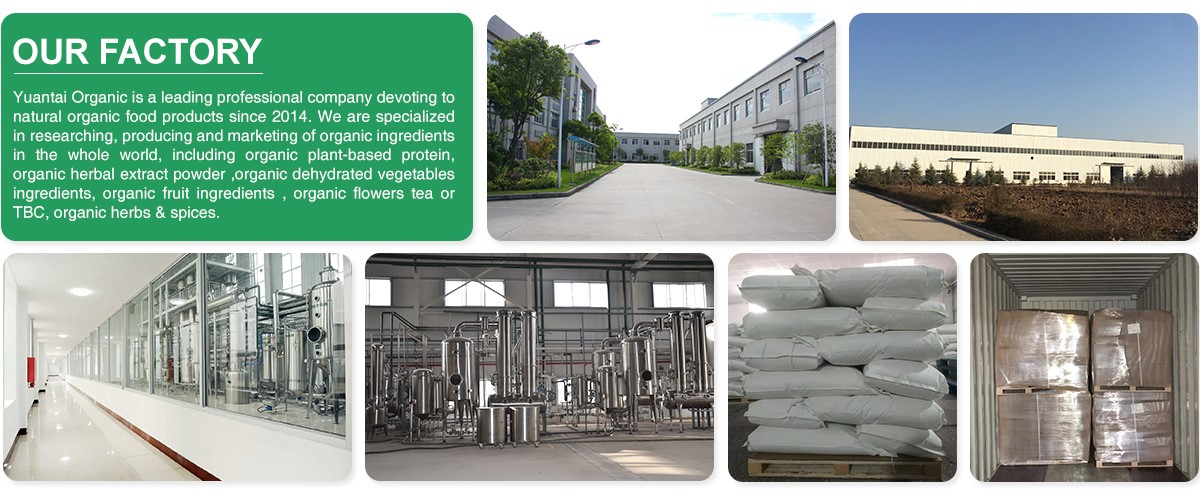
Yuantai Organic Bio is committed to providing customers with the highest-quality bulk caffeic acid powder and services so that every consumer can enjoy natural, healthy, and high-quality food. If you have any inquiries or needs about our products, please feel free to contact us, and we will reply to you as soon as possible.