Anthocyanin Ingredients: Key Extraction Technologies and Food Applications
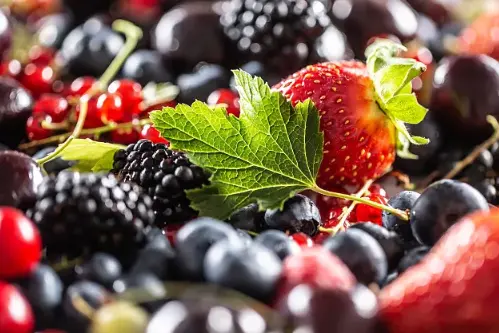
With the continuous growth of the market for natural plant extracts and "clean label" food products, anthocyanins have emerged as significant plant-based bioactive compounds, drawing increasing attention from the food, beverage, and dietary supplement industries. A wide variety of plants—ranging from blueberries, blackberries, and grapes to purple sweet potatoes, purple corn, and black rice—are rich in anthocyanins. As natural, water-soluble pigments, anthocyanins not only impart vibrant red, purple, and blue hues to food products but also offer substantial value in the development of functional foods and nutritional supplements, thanks to their polyphenolic structure and antioxidant properties.
For suppliers of anthocyanin ingredients and manufacturers of downstream products, key factors to consider during product development include the botanical source, extraction processes, active ingredient content, stability, and suitability for specific applications.
I. What Are Anthocyanins? What Are Their Primary Botanical Sources?
Anthocyanins are a class of water-soluble flavonoids widely found in the plant kingdom. As polyphenolic plant pigments, they are primarily located in the fruits, petals, leaves, and roots or stems of plants.
In nature, anthocyanins typically exist as "anthocyanosides"—glycosidic structures formed by the combination of an anthocyanidin (the aglycone) with one or more sugar molecules. This is the most common form in which these pigments appear in plants.
The most extensively studied anthocyanidins include:
Cyanidin
Delphinidin
Pelargonidin
Peonidin
Petunidin
Malvidin
Because the composition, concentration, and ratios of anthocyanins vary significantly depending on the botanical source, products labeled simply as "anthocyanin extract" may differ considerably in their specific characteristics and intended applications.
Common Plant Sources of Anthocyanins
1. Blueberry
Blueberries are a significant source of anthocyanins, containing a variety of anthocyanin glycosides—primarily derivatives of cyanidin, delphinidin, and malvidin.
Blueberry extract is frequently used in the development of nutritional supplements, functional beverages, powdered drink mixes, and various food formulations. Product specifications for these raw materials can vary based on intended product positioning and the analytical methods employed.
2. Bilberry
Bilberry is a classic plant source used in both anthocyanin research and commercial applications. Bilberry extract typically contains a diverse range of anthocyanin glycosides, with product specifications often defined by their total anthocyanin or anthocyanoside content.
In the raw material market, bilberry extract is commonly utilized in dietary supplements, complex botanical extract formulations, and functional food products.
3. Blackcurrant
Blackcurrants are rich in anthocyanins, consisting mainly of glycoside derivatives of delphinidin and cyanidin. The extract, which features a deep purplish-red hue, is suitable for use in fruit juices, food ingredients, and nutritional supplements.
4. Purple Sweet Potato
Purple sweet potatoes serve as an important source of natural anthocyanin pigments. Their anthocyanin profile is characterized by the presence of acylated anthocyanins, which offer greater stability during processing—making them valuable as natural food colorants.
5. Purple Corn
The kernels and cobs of purple corn are abundant in anthocyanins, including derivatives of cyanidin, peonidin, and pelargonidin.
Purple corn extract can be used as a natural coloring agent or as an ingredient in beverages, confectionery, and various other food formulations.
6. Grape Skin
Grape skins—particularly those from dark-colored grape varieties—are a major source of anthocyanins. The specific composition of these anthocyanins depends heavily on the grape variety, the degree of ripeness, and the processing conditions.
Grape skin extract is used in food and beverage products, complex polyphenol formulations, and nutritional supplements.
II. Main Extraction Techniques for Anthocyanin Raw Materials
The production of anthocyanin-based raw materials typically involves several stages: raw material pretreatment, extraction, filtration, concentration, purification, drying, and quality testing.
Given that anthocyanins are water-soluble and chemically sensitive, the extraction process requires careful consideration of factors such as the solvent system, temperature, pH level, extraction duration, and oxidative conditions—all to balance the extraction efficiency of the target compounds with their stability.
Common extraction techniques currently used in the production of anthocyanin raw materials include the following:
1. Solvent Extraction
Solvent extraction is a fundamental and widely used technique for producing anthocyanins from plant sources.
Extraction is generally performed using water, ethanol, or a water-ethanol mixture in specific proportions. Depending on the structural characteristics of the plant material and the properties of the target compounds, the solvent ratio and pH conditions can be adjusted to optimize extraction results.
2. Ultrasound-Assisted Extraction
Ultrasound-assisted extraction leverages the cavitation effect generated by ultrasonic waves to disrupt plant cell structures and facilitate the release of target compounds, thereby enhancing extraction efficiency.
Compared to traditional solvent extraction, this technique can—under certain conditions—shorten extraction time and improve contact between the solvent and the plant tissue.
3. Microwave-Assisted Extraction
Microwave-assisted extraction utilizes microwave energy to rapidly heat the interior of plant tissues, inducing changes in cell structure that facilitate the release of target compounds.
This technique has been applied in the extraction of compounds from sources such as purple corn, grape skins, and other raw materials rich in plant polyphenols.
4. Macroporous Resin Purification
Macroporous resin adsorption is a common separation and purification technique used in the production of plant extracts.
Following initial extraction and filtration, the process exploits the varying affinities of different components for the resin, allowing for the separation of anthocyanins from sugars, organic acids, and other impurities.
Through a sequence of adsorption, elution, and concentration steps, anthocyanin extracts of varying purities and specifications can be obtained. 5. Supercritical Fluid Extraction (SFE)
Supercritical fluid extraction leverages the solubility characteristics of a fluid in its supercritical state—achieved at specific temperatures and pressures—to separate target substances.
Supercritical carbon dioxide (SC-CO₂) is a commonly used extraction medium, valued for its low-temperature operating conditions and the ease with which it can be removed from the final product.
However, because anthocyanins are highly polar, water-soluble compounds—while supercritical carbon dioxide is relatively non-polar—using SC-CO₂ alone is generally not an ideal approach for extracting anthocyanins.
In certain research contexts or process designs, the addition of a polar co-solvent (such as ethanol) may be considered; however, this requires validation based on the specific target compounds and process parameters.
Consequently, while supercritical fluid technology offers distinct advantages for extracting plant-based oils and lipophilic (fat-soluble) components, its suitability for the production of anthocyanin-rich ingredients should be evaluated with caution.
III. Applications of Anthocyanin-Rich Ingredients in Food and Nutritional Products
Possessing both the properties of a natural pigment and the characteristics of a plant-derived polyphenol, anthocyanins are used not only for food coloring but increasingly in functional foods and dietary supplements.
1. Beverages and Powdered (Solid) Beverages
Anthocyanins provide a natural red-purple or purple hue to beverages, making them suitable for:
Blueberry-based drinks
Mixed berry beverages
Plant-based fruit juice drinks
Functional powdered (solid) beverages
Blended fruit and vegetable powder drinks
Drinks containing plant extracts
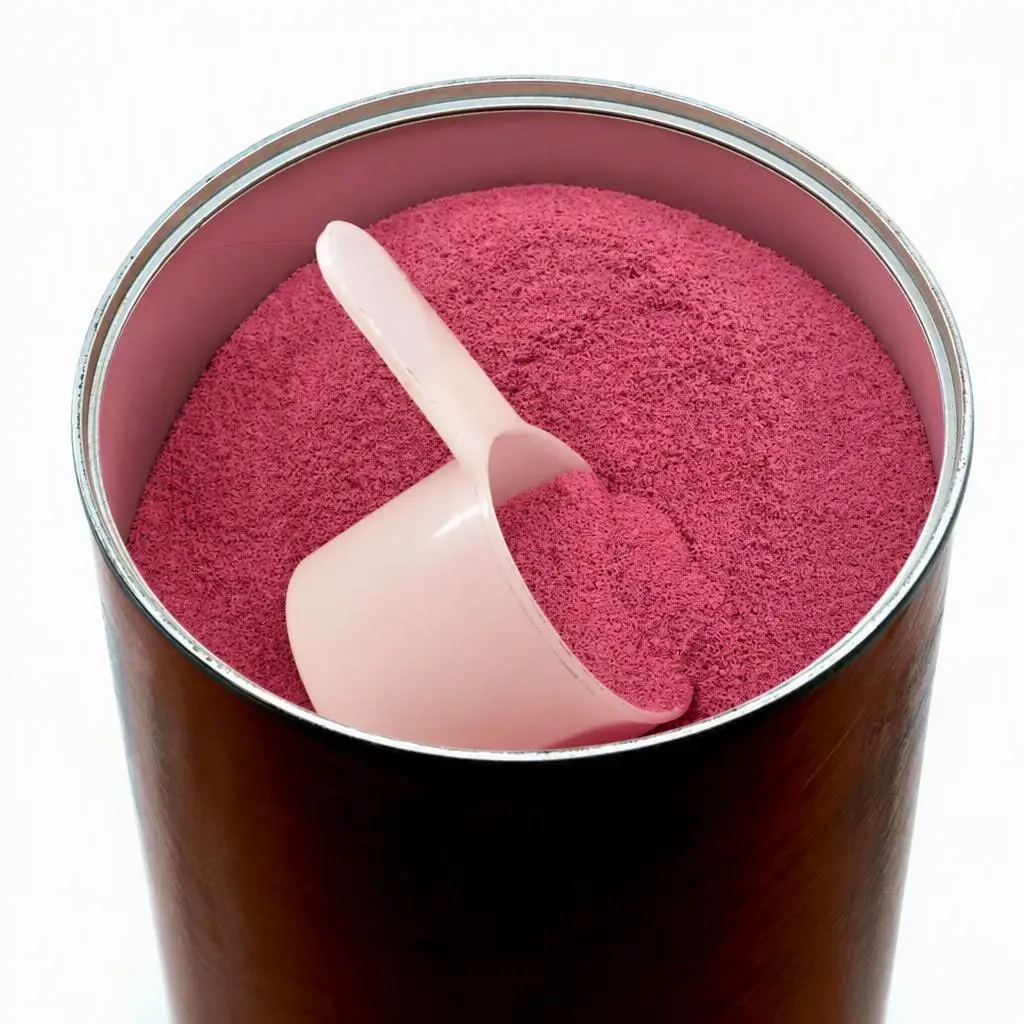
When developing powdered beverages, anthocyanin extracts can be combined with ingredients such as blueberry powder, blackcurrant powder, vitamin C, and other plant extracts.
Formulation development requires careful consideration of the compatibility between various components, as well as the final product’s solubility, color profile, and storage stability.
2. Dairy Products and Fermented Foods
Anthocyanins can be incorporated into the formulations of yogurt, fermented milk, and other dairy products, providing a natural color and a unique, plant-based selling point.
It should be noted, however, that dairy products are complex food matrices; anthocyanins may interact with milk proteins, which can affect the product's color, stability, and overall appearance. Therefore, formulation testing is required, taking into account the product's pH value, protein content, and processing conditions.
3. Confectionery and Baked Goods
Natural anthocyanin-based pigments can be used to provide color in certain types of confectionery, jellies, gummies, and baked goods.
However, due to significant variations in processing temperatures, pH levels, and storage conditions across different food products, anthocyanins are not suitable for all high-temperature processing systems.
In practical application, formulation trials are necessary to evaluate color retention and performance throughout the product's shelf life.

4. Jams and Fruit Products
Jams and fruit products typically possess a certain level of acidity, which aligns well with the fact that anthocyanins are stable in acidic environments.
Anthocyanin extracts derived from blueberries, blackcurrants, grapes, and other berries can be used in the development of jams, fruit purees, fruit-flavored fillings, and other processed fruit products.
5. Dietary Supplements
Beyond their use as food colorants, anthocyanins also serve as an important ingredient in plant-based nutritional supplements.
Common product forms include:
Anthocyanin capsules
Anthocyanin tablets
Blueberry complex extract capsules
Bilberry complex plant extracts
Anthocyanin-blend solid beverages
Complex formulations containing various plant polyphenols
In the development of dietary supplements, anthocyanins are often combined with other plant extracts, vitamins, and antioxidant-related nutrients.
Specific formulations must be designed in accordance with target market regulations, product positioning, raw material specifications, and labeling requirements.

IV. Development Directions for Anthocyanin Ingredients
As the use of natural plant-based ingredients in food and nutritional products continues to expand, the development of anthocyanin ingredients is shifting from simple extracts toward standardized, blended, and application-specific solutions.
1. Anthocyanin Ingredients from Diverse Plant Sources
Different plants possess unique anthocyanin compositions and color profiles. Sources such as blueberries, bilberries, blackcurrants, purple sweet potatoes, purple corn, and grape skins can meet the diverse requirements of various food formulations and nutritional products. Establishing clear specifications for ingredients derived from different plants helps downstream clients with product positioning and formulation selection.
2. Standardized Anthocyanin Extracts
For B2B ingredient purchasers, consistent product specifications and batch-to-batch uniformity are critical. By optimizing extraction, purification, and drying processes, manufacturers can produce anthocyanin ingredients with varying concentration levels, supported by quality standards established through analytical methods such as UV spectroscopy or HPLC.
3. Water-Soluble and Microencapsulated Ingredients
In the beverage and powdered beverage sectors, factors such as water solubility, dispersibility, color performance, and storage stability directly influence the quality of the final product. Consequently, developing water-soluble powders, microencapsulated powders, and blended anthocyanin ingredients tailored to specific applications is a promising area for product development.
4. Blending Anthocyanins with Other Plant Extracts
Anthocyanins can be combined with various plant polyphenols and other nutritional components to create composite ingredients designed for specific formulation goals.
Examples include:
Blueberry extract + bilberry extract
Blackcurrant extract + grape seed extract
Purple corn extract + other plant polyphenols
Anthocyanins + Vitamin C
Anthocyanins + other plant-derived antioxidants
The development of such blended products requires careful consideration of ingredient compatibility, stability, and the testing standards applicable to the final product.
Conclusion
Anthocyanins are not only plant pigments that provide natural coloration, but also active ingredients with significant development potential within the market for plant extracts and nutritional raw materials. For manufacturers of food, beverages, and dietary supplements, selecting the right anthocyanin raw material requires more than just looking at the stated content. It involves a comprehensive evaluation of the botanical source, testing methods, solubility, stability, and the specific application requirements of the final product.
As the market for natural colors, plant extracts, and functional foods continues to grow, anthocyanin ingredients are poised to add value to an even wider range of food formulations and nutritional products.
Looking for a Reliable Anthocyanin Extract Supplier?
YTBIO provides a diverse range of plant extract ingredients for manufacturers in the food, beverage, and dietary supplement sectors. We offer various botanical sources, standardized extract specifications, and customized ingredient solutions tailored to your product development needs.
Whether you are sourcing blueberry extract, bilberry extract, blackcurrant extract, or other anthocyanin-rich botanical ingredients, our professional team is here to assist you with product specifications, Certificates of Analysis (COA), samples, and bespoke sourcing solutions.
Contact YTBIO to discuss your requirements for anthocyanin ingredients and discover the ideal raw material solutions for your business.
Tel:86-029-86478251 / 86-029-86119593
Whatsapp:8617782577059
Email:sales@sxytorganic.com