Bilberry Anthocyanins: A Natural Nutritional Ingredient for Eye Health
With the widespread use of electronic devices and a growing public focus on eye health, the market for ocular nutritional supplements continues to expand. As natural plant-based polyphenols, anthocyanins offer antioxidant properties and benefits for visual health, making them an increasingly important ingredient in the nutritional and dietary supplement sector.
Among the many plants rich in anthocyanins, the bilberry (*Vaccinium myrtillus* L.) has garnered significant attention. Bilberry extract is highly valued for its rich anthocyanin content and is widely used in eye health supplements, multivitamin formulations, and functional food products.
So, what are the specific characteristics of bilberry anthocyanins? How do they differ from common blueberry extracts, and what value do they bring to the development of eye health products?
I. What is the difference between bilberries and blueberries?
 The bilberry (*Vaccinium myrtillus* L.)—also known as the European blueberry—belongs to the *Vaccinium* genus within the Ericaceae (heather) family and is primarily found in Northern and Central Europe. Its fruit, which ranges in color from deep blue-purple to black-purple, is packed with anthocyanins, polyphenols, organic acids, and other bioactive plant compounds.
Through processes such as drying, extraction, and concentration, bilberries are transformed into standardized extracts, with anthocyanins serving as one of the most significant bioactive components. While both bilberries and blueberries belong to the same genus, they differ in terms of botanical species, fruit characteristics, and the composition of their active ingredients.
- Bilberry: Typically, both the flesh and the skin are deep purple-red. They are particularly rich in anthocyanins and are frequently used to produce standardized anthocyanin extracts.
- Highbush Blueberry: These fruits are generally larger, with flesh that is typically light green or pale in color. They are primarily used in general food products, fruit powders, and the development of polyphenol-based ingredients.
II. Characteristics of Bilberry Anthocyanins
Anthocyanins are a class of natural, water-soluble pigments belonging to the flavonoid family. They are widely found in blueberries, blackberries, purple sweet potatoes, purple corn, and other dark-colored plants.
The anthocyanins in bilberries consist primarily of various glycosylated anthocyanin compounds and are of interest for the following reasons:
1. Antioxidant Properties
Anthocyanins possess a strong capacity to scavenge free radicals *in vitro*. They can participate in the body’s antioxidant defense mechanisms, helping to mitigate cellular damage caused by oxidative stress.
Because the retina is constantly exposed to light and high levels of oxidative metabolism, antioxidant nutrients have long been a key focus in research on eye health.
2. Ocular Microcirculation and Visual Function
Some research has explored the potential impact of bilberry anthocyanins on ocular microcirculation, retinal function, and visual adaptation.
Of particular interest is the relationship between anthocyanins and the regeneration of rhodopsin—a vital photosensitive pigment in the rod cells of the retina that is essential for vision in low-light conditions.
However, findings in this area remain inconsistent; therefore, bilberry anthocyanins cannot be simply equated with a treatment for myopia or other eye diseases.
3. Anti-inflammatory and Cytoprotective Potential
Experimental studies indicate that anthocyanins exhibit anti-inflammatory activity and may provide cytoprotection by modulating pathways associated with oxidative stress.
These properties have not only drawn attention within the field of ocular nutrition but also provide a scientific basis for incorporating them into comprehensive antioxidant nutritional formulas.
III. Bilberry Anthocyanins and Eye Health
Bilberry extract has long been used in the development of nutritional products for eye health, with research primarily focusing on visual adaptation, eye fatigue, and ocular oxidative stress.
1. Low-Light Vision and Visual Adaptation
The relationship between bilberry anthocyanins and vision in low-light conditions was one of the earliest areas of research to gain attention.
During World War II, there were anecdotal accounts suggesting that Royal Air Force pilots consumed bilberry jam to improve their night vision. Although this story is widely circulated, there is a lack of sufficient clinical evidence to support the claim that it can significantly enhance the night vision of pilots.
From a scientific perspective, while there is a documented link between anthocyanins and the metabolism of rhodopsin (visual purple), the extent to which they actually improve dark adaptation in humans requires further validation through high-quality clinical research.
2. Visual Fatigue and Ocular Comfort
Prolonged use of computers, mobile phones, and other electronic display devices often leads to discomfort, such as dry eyes, blurred vision, and a sore or strained sensation in the eyes.
Some clinical studies have evaluated the potential role of bilberry extract in alleviating visual fatigue. For instance, one study examined the effects of a daily 160 mg supplement of bilberry extract on indicators of eye fatigue in individuals who frequently use video display terminals.
While such research offers some insight into the use of bilberry extract in nutritional products designed for visual comfort, its actual efficacy depends on factors such as the extract's specifications, dosage, the specific study population, and the duration of use.
3. Antioxidant Nutritional Support for the Eyes
The retina and the macular region exhibit high metabolic activity, making oxidative stress a significant topic in eye health research.
Due to their antioxidant properties, bilberry anthocyanins are frequently included as plant-based ingredients in comprehensive eye-health nutritional formulas. In product development, they are often combined with other nutrients—such as lutein, zeaxanthin, vitamins A, C, and E, and zinc—to create multi-ingredient formulations.
It is important to emphasize that bilberry anthocyanins are classified as nutritional supplements; they cannot be marketed or promoted as treatments for myopia, or as agents for the prevention of cataracts or the treatment of glaucoma.
IV. Bilberry Anthocyanins: Applications in Eye Nutrition for Children and Adolescents
Children and adolescents are in a critical stage of visual development. Factors such as academic study, reading, and the use of electronic devices make eye health a key focus for family nutritional management.
In the development of nutritional products for children and adolescents, bilberry extract has garnered attention primarily due to its status as a natural source of anthocyanins and its antioxidant properties. Consider the following development directions:
- Eye Health Formulas: Combine bilberry extract with ingredients such as lutein and zeaxanthin to develop comprehensive eye health products.
- Antioxidant Formulas: Incorporate antioxidant nutrients like vitamin C and vitamin E to enhance the product's nutritional profile.
- Children’s Nutrition: Through carefully designed formulations, bilberry extract can be incorporated into products such as nutritional gummies for children.
Please note that formulations for children’s products must be designed with consideration for the target age group, applicable regulations, and safety requirements. Current evidence is insufficient to prove that bilberry anthocyanins can prevent or reverse myopia in children; they should not be viewed as a substitute for healthy visual habits, outdoor activities, or professional eye examinations.
V. Bilberry Extract: Key Application Areas
As the use of natural plant extracts in the nutrition and health industry continues to expand, a diverse range of product development paths for bilberry extract has emerged.
1. Dietary Supplements for Eye Health
This is the most prominent application area for bilberry anthocyanins. Common products include bilberry extract capsules, multi-ingredient eye-care capsules, and nutritional tablets.
2. Antioxidant Nutritional Products
Bilberry extract can be combined with ingredients such as grape seed extract, blackcurrant extract, and vitamin C to develop antioxidant products derived from multiple botanical sources.
3. Functional Foods and Beverages
Bilberry extract can be used in solid beverages, nutritional powders, fruit and vegetable blends, and other functional food formulations. Its natural purple-red hue also offers creative possibilities for product coloration, though the final color depends on the specific extract grade, pH level, and processing conditions.
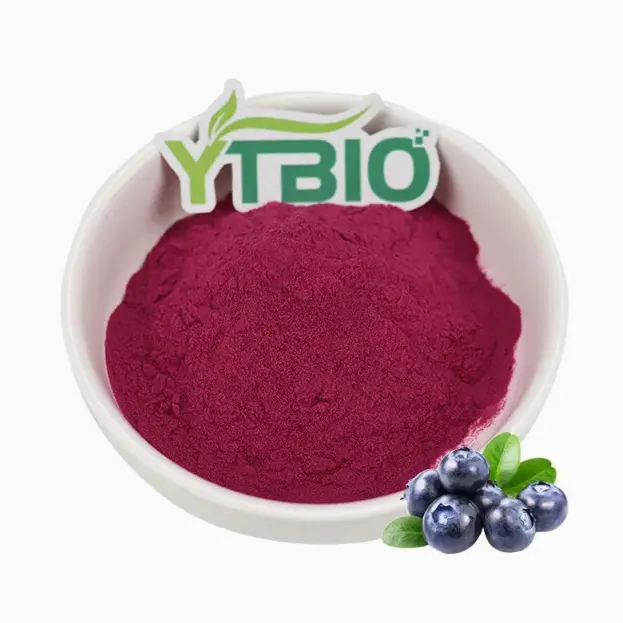
YTBIO: Bilberry Extract Ingredients and Customized Nutritional Product Solutions
As a supplier of plant extracts and nutritional/health ingredients, YTBIO (Shaanxi Yuantai Biological Technology Co., Ltd.) specializes in plant extracts, raw materials for nutritional supplements, and OEM/ODM services for finished products. The company provides ingredient sourcing and product development support to global brands, distributors, and product formulators. In addition to supplying raw bilberry extract, YTBIO offers one-stop OEM/ODM customization services for nutritional products. We support the incorporation of bilberry extract into various formats—such as capsules, tablets, solid beverages, and nutritional gummies—and provide tailored solutions for formulations, dosage forms, flavors, packaging, and labeling to meet your specific requirements.
**Looking for a reliable Bilberry Extract supplier or a manufacturer for customized eye-health supplements?**
Contact YTBIO to explore our bilberry extract specifications, request product samples, or discuss your OEM/ODM project.
Tel:86-029-86478251 / 86-029-86119593
Whatsapp:8617782577059
Email:sales@sxytorganic.com