Blueberry Anthocyanins: What Is the Value of This Natural Purple Nutrient?
 Whenever blueberry season arrives, these small, blue-purple berries become a consumer favorite. Whether enjoyed on their own, mixed into yogurt, or used in juices and desserts, blueberries have become a popular addition to the daily diet, prized for their fresh taste and rich nutritional profile—yet their value extends well beyond their flavor. A closer look at a blueberry reveals a deep blue or blue-purple skin; this distinctive hue is largely due to a natural, bioactive plant compound known as anthocyanins.
In recent years, as interest in plant-based nutrition, natural antioxidants, and functional foods has grown, blueberry anthocyanins have become a key subject of research within the food, dietary supplement, and botanical extract industries.
So, what exactly are anthocyanins? Why are blueberries so rich in them, and what potential health benefits do they offer? Beyond fresh blueberries, what other foods contain these compounds? Let’s explore this representative bioactive plant compound, starting with the blueberry.
I. What Are Anthocyanins?
Anthocyanins are a class of water-soluble pigments found naturally in plants. They belong to the flavonoid family and are an important component of plant polyphenols. Widely present in foods such as blueberries, blackberries, mulberries, purple grapes, red cabbage, and purple sweet potatoes, they are responsible for the vibrant blue, purple, and red colors seen in many fruits and vegetables.
For the plants themselves, anthocyanins do more than just provide color; they also play a role in how plants respond to light exposure and environmental stress. From a nutritional research perspective, anthocyanins have garnered attention due to their unique chemical structure and antioxidant activity.
II. What Other Nutrients Are Found in Blueberries Besides Anthocyanins?
The nutritional value of blueberries is not limited to anthocyanins alone. As a type of berry, they also contain dietary fiber, vitamin C, vitamin K, manganese, and a variety of plant polyphenols. The following are reference values for the nutritional content of 100 grams of the edible portion of fresh blueberries; actual levels may vary based on factors such as variety, degree of ripeness, and growing conditions.
|
Nutrient |
Reference Amount (per 100g) |
Nutritional Characteristics |
|
Energy |
~57 kcal |
Provides daily energy |
|
Carbohydrates |
~14.5 g |
Mainly natural sugars |
|
Dietary Fiber |
~2.4 g |
Helps maintain normal bowel function |
|
Protein |
~0.7 g |
Plant-based nutrient |
|
Fat |
~0.3 g |
Low content |
|
Vitamin C |
~9.7 mg |
Involved in normal antioxidant defense |
|
Vitamin K |
~19.3 μg |
Involved in normal blood clotting function |
|
Manganese |
~0.3 mg |
Involved in the normal physiological activity of various enzymes |
In addition to these basic nutrients, blueberries also contain quercetin, chlorogenic acid, catechins, and other polyphenols. Among these, anthocyanins are one of the most representative plant-based active ingredients in blueberries.
III. What are the potential benefits of anthocyanins to the human body?
Anthocyanins have attracted attention in the field of nutritional science primarily due to their antioxidant properties and research on their effects on eye health, cardiovascular health, and metabolic health.
1. Antioxidant Properties
The human body produces free radicals during normal metabolism. When the balance between free radical production and the body's antioxidant defenses is disrupted, oxidative stress may occur. Anthocyanins possess the typical structural characteristics of polyphenolic compounds and can participate in free radical scavenging and redox reactions. Therefore, anthocyanins are a class of components that have received considerable attention among natural plant antioxidant raw materials.
2. Eye Health
Some studies focus on the relationship between anthocyanins and mechanisms related to retinal oxidative stress, visual adaptation, and microcirculation. Some components of anthocyanins have shown certain biological activities in experimental studies; therefore, blueberry extract is often considered for use in eye nutrition complex formulations.
However, current research results are not entirely consistent, and blueberries or anthocyanins cannot be directly considered as drugs for treating myopia or improving vision.
3. Cardiovascular Health
Some human studies have found a possible correlation between dietary anthocyanin intake and vascular endothelial function, blood pressure, and some blood lipid indicators. Researchers believe that anthocyanins may participate in these physiological processes through antioxidant activity, inflammation regulation, and related signaling pathways. However, the specific effects still need to be determined by considering intake levels, product composition, and evidence from human studies.
4. Metabolic Health
In addition to antioxidant and cardiovascular health benefits, anthocyanins have also attracted attention in the field of metabolic health research. Current research mainly focuses on glucose metabolism, insulin sensitivity, inflammatory responses, and gut microbiota. These studies provide more research directions for the application of anthocyanins in functional foods and nutritional supplements.
IV. How to Better Preserve Anthocyanins?
While anthocyanins have high nutritional research value, their stability is easily affected by the external environment. Whether consuming blueberries daily or using anthocyanins in food and dietary supplements, the following aspects need attention:
1. Avoid Prolonged High-Temperature Processing
Anthocyanins are sensitive to temperature; prolonged high-temperature heating may cause some components to degrade. When consuming blueberries daily, prioritize fresh consumption or use gentler processing methods.
2. Retain the Peel as Much as Possible
Anthocyanins in blueberries are mainly distributed in the peel and surrounding tissues. Therefore, eating the whole fruit after washing allows for a more complete intake of the natural plant components.
3. Pay Attention to Light and Storage Conditions
Prolonged exposure to light, oxygen, and unsuitable storage environments can all affect the stability of anthocyanins. For blueberry extract raw materials and anthocyanin-containing end products, attention should generally be paid to light-proof packaging, storage temperature, and moisture control.
4. Pay Attention to the Acidity/Alkalinity of Product Formulations
Anthocyanins exhibit significant pH sensitivity. Their molecular structure and color may change under different acidic or alkaline conditions. Therefore, when developing beverages, powders, and other food products containing anthocyanins, it is crucial to fully consider the pH level and compatibility with other ingredients.
V. Raw Material Application Value of Blueberry Anthocyanins
With the development of the plant nutrition market, consumer demand for anthocyanins is no longer limited to fresh fruits but has gradually extended to standardized plant extracts and compound nutritional products. Unlike directly consuming blueberries, standardized blueberry extracts utilize extraction and concentration processes to convert specific plant active ingredients into a raw material form easily used in formulations.
Main Applications of Blueberry Anthocyanin Extract
1. Dietary Supplements
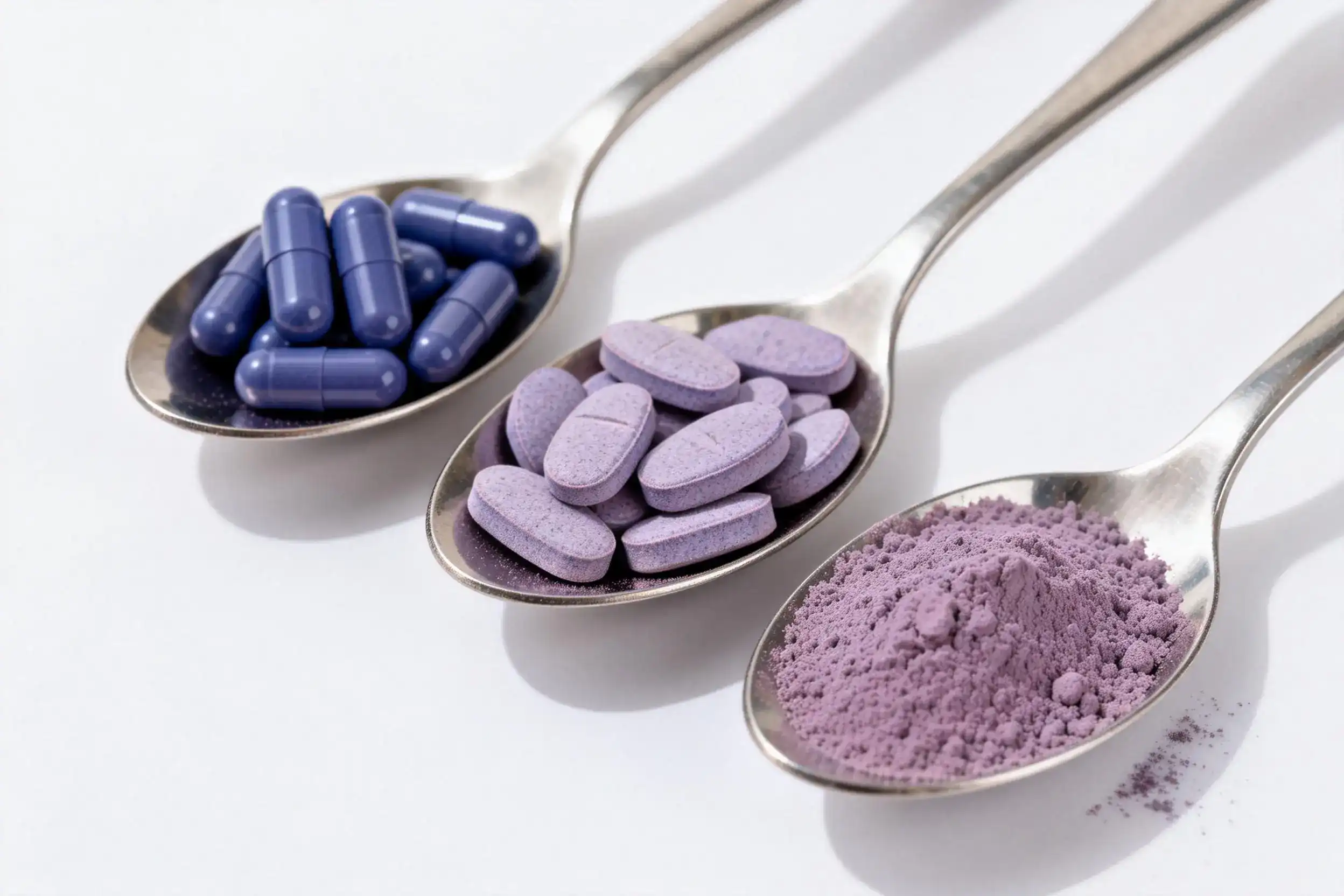
Blueberry extract can be used as an important component in plant polyphenol formulations, applied in: anthocyanin capsules, plant-based compound tablets, eye nutrition compound formulations, berry compound extract products, etc.
2. Solid Beverages and Nutritional Powders
Blueberry extract can be combined with vitamins, minerals, fruit and vegetable powders, and other plant extracts to develop: blueberry-flavored solid beverages, berry compound nutritional powders, plant polyphenol drinks, compound plant nutritional powders, etc.
3. Functional Foods
Anthocyanins have natural coloring properties and show potential in food formulations and natural plant pigment applications. However, specific use requires consideration of the product's pH, processing conditions, and storage stability, as well as confirmation of relevant food regulations and usage requirements.
VI. What are the common specifications of blueberry anthocyanin extract?
Anthocyanins are not the only indicator to consider during the procurement and product development of plant extracts. Depending on different raw material standards and testing methods, different specifications such as anthocyanins, proanthocyanidins, and total polyphenols also exist on the market.
|
Ingredient Indicator |
Common Specification |
|
Anthocyanidins |
25% |
|
Anthocyanins |
5%, 10%, 25%, 40% |
|
Anthocyanidin + Anthocyanin Composite |
25% + 36% |
|
Proanthocyanidins |
25% |
|
Pterostilbene |
20% |
|
Total Polyphenols |
25% |
For buyers and product developers, when selecting raw materials, it is crucial to confirm the plant source, target ingredients, testing methods, and Certificate of Authorisation (COA) to avoid confusing different testing indicators.
Conclusion
From fresh blueberries to standardized plant extracts, and then to capsules, tablets, and functional beverages, anthocyanins are becoming a vital component bridging natural plant nutrition and the modern food industry. Blueberries, as a classic source of anthocyanins, with their rich polyphenol composition and increasing scientific research, offer more possibilities for the development of nutritional and health products.
Looking for Blueberry Extract or Standardized Anthocyanin Ingredients?
YTBIO supplies a range of botanical extract ingredients with different specifications and supports raw material sourcing and customized supplement OEM/ODM services.
Contact our team to discuss your ingredient requirements, request COA and evaluate samples.
Tel:86-029-86478251 / 86-029-86119593
Whatsapp:8617782577059
Email:sales@sxytorganic.com
References
Khoo HE, Azlan A, Tang ST, Lim SM. Anthocyanidins and anthocyanins: colored pigments as food, pharmaceutical ingredients, and the potential health benefits. Food & Nutrition Research. 2017;61(1):1361779.
Antioxidant Activity of Anthocyanins and Anthocyanidins: A Critical Review. International Journal of Molecular Sciences. 2024;25(22):12001.
Wallace TC, Giusti MM. Anthocyanins. Advances in Nutrition. 2015;6(5):620–622.
USDA FoodData Central. Blueberries, raw.