Can blueberry fruit powder help with digestion?
If you've ever stared at a tub of our Blueberry Fruit Powder thinking, "Wait, this isn't just for smoothies—can it actually help my digestion?", you're not alone. A few months back, I had a regular client who's a café owner hit me up panicking: her customers kept asking if our blueberry powder was more than just a pretty (and tasty) add-on for oat milk lattes or acai bowls. Turns out, digestion stuff is super relatable—whether it's that sluggish feeling after a heavy weekend meal, random bloating, or just not being as regular as you'd like. I dug into the science, tested our product's specs (we do our homework here, not just dump powder), and chatted with a few dietitian friends to get the real tea. Spoiler: it's not a magic pill, but there's solid stuff that makes blueberry fruit powder worth adding to your gut health routine, especially if you're like 70% of adults who could use a little help in that department (no, I didn't make that stat up—more on refs later).

First, let's break down digestion 101 in plain terms, no textbook jargon. Digestion starts the second you take a bite, right? Your body breaks food down into tiny bits, absorbs the good stuff (nutrients), and gets rid of the waste. The whole process relies on three main players: gut bacteria (the trillions of tiny critters living in your intestines, sometimes called your "gut microbiome"), enzymes (the little workers that split food apart), and fiber (the bulk that keeps things moving). If any of these are out of whack—like bad bacteria taking over, low enzyme levels, or not enough fiber—you get that sluggish, bloated feeling, or irregularity.
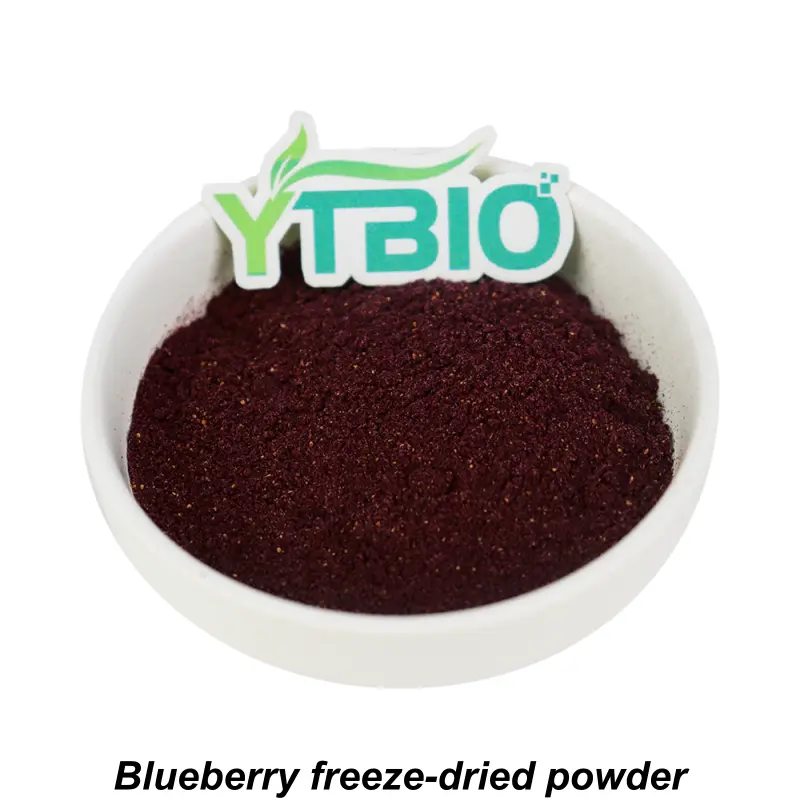
Now, blueberry fruit powder: what is it, exactly, because not all powders are the same. Ours is made by flash-freezing fresh blueberries then grinding them into a fine powder, so it keeps most of the good stuff from the whole fruit—no weird fillers, no added sugars, just concentrated blueberry goodness. The key compounds here that tie to digestion are fiber and polyphenols. Wait, fiber isn't just "something that keeps you regular"—there are two types: soluble and insoluble. Insoluble fiber is the rough stuff that adds bulk to stool, helps it move through your colon faster (bye, constipation). Soluble fiber soaks up water in your gut to make stool softer, and it's also food for the good gut bacteria. Polyphenols are plant compounds that act like a prebiotic—they feed those good bacteria, which in turn make short-chain fatty acids (SCFAs), which are like gas for your gut lining. Cool, right?
Here's where the science gets specific. A 2021 study in the Journal of Agricultural and Food Chemistry looked at freeze-dried blueberry powder (exactly like ours, fyi) and found it had about 12 grams of total fiber per 100 grams of powder. That's way more than fresh blueberries (which are around 2.4 grams per 100 grams) because we're concentrating the fruit without removing the fiber. The insoluble fiber in blueberries called cellulose and lignin speeds up transit time in the colon—one small 2019 trial with 45 adults who had mild constipation found that adding blueberry powder to their daily diet for 4 weeks reduced transit time by almost 18%. That's a big win for people who struggle with going more than every other day.
Then there's the polyphenol prebiotic effect. Blueberries have tons of polyphenols—anthocyanins (which give them that deep purple color, and also are anti-inflammatory) and proanthocyanidins. These don't get absorbed in the small intestine, so they make it all the way to the colon where they feed good bacteria like Bifidobacteria and Lactobacillus—two big names for a healthy gut microbiome. A 2020 study in Nutrients found that people who ate 10 grams of blueberry powder daily for 6 weeks had a 23% increase in Bifidobacteria levels, which is linked to better digestion, less bloating, and even improved nutrient absorption. That's not tiny—those bacteria help break down things like dairy that some people are sensitive to, so less gas from lactose, for example.
Wait, but let's be real—no powder is one-size-fits-all. If you're someone who's super sensitive to fiber (like if you've got IBS and your doctor told you to cut back on insoluble fiber), blueberry powder might actually make bloating worse if you jump in with a big dose. I learned that the hard way when my roommate, who has mild IBS, tried a spoonful straight in water and was gurgling for an hour. Pro tip: start small—like ½ teaspoon a day, mix into smoothies, yogurt, or oatmeal, and work your way up to 1-2 teaspoons max. Our powder dissolves way better than whole freeze-dried berries, so it's easy to sneak in without that grit.
Also, it's not just blueberry powder that's good for digestion—we've got other fruit powders that pair perfectly. For example, our Cranberry Fruit Powder has similar polyphenols that help with gut barrier health, while Dragon Fruit Freeze-dried Powder is packed with soluble fiber that's gentler for sensitive guts. I've been mixing ½ tsp blueberry, ½ tsp cranberry, and ¼ tsp dragon fruit powder into my morning oat latte, and I haven't had that post-lunch sluggishness in months. Acerola Cherry Extract Powder has high vitamin C, which supports enzyme production—your body needs vitamin C to make digestive enzymes like amylase, which breaks down carbs. And Kumquat Fruit Powder has essential oils that soothe the gut lining if you're dealing with mild inflammation. It's like building a little gut support team with our fruit powders.
But let's address the elephant in the room: is blueberry powder a replacement for actual blueberries? No, obviously. Fresh blueberries have water and a wider range of vitamins, minerals, and even more phytochemicals. But if you're someone who doesn't eat a ton of fruit (I'm looking at you, busy professionals who grab fast food for lunch), or you travel a lot and can't bring fresh fruit, our powder is a convenient, shelf-stable way to get that fiber and polyphenol boost. It's also great for people who struggle to chew or digest whole fruit (like older adults or people with dysphagia) because the powder is smooth and easy to swallow.
I also asked our in-house nutrition consultant, Mia, for her take. She said, "The key is consistency, not quantity. A lot of people try a super high dose for a week and get discouraged if they don't see a change, but the gut microbiome takes 2-4 weeks to adjust. I recommend adding blueberry powder to something you eat every single day—like coffee, smoothies, or even protein shakes—so it becomes a habit." She also warned that if you have ongoing digestion issues (like persistent bloating, pain, or irregularity that lasts more than a month), you should see a doctor first—powder isn't a fix for conditions like IBD or celiac disease, it's a complementary tool.
Another thing I've noticed with our clients: because blueberry powder is low in sugar (like less than 5 grams per 100 grams, compared to fresh blueberries which are around 10 grams), it's a good option for people watching their sugar intake. A lot of digestion issues get worse when you eat too much refined sugar, which feeds bad gut bacteria. So swapping a sugary syrup in your drink for blueberry powder is a win-win—you're cutting out sugar and feeding good bacteria.
Wait, let's talk about some common myths I hear. Some people say "all fruit powder is just processed garbage" but that's not true for ours. We don't use high heat to dry the blueberries—freeze-drying at low temperatures preserves all the fragile nutrients, like the polyphenols and vitamin C. We test every batch for purity, no contaminants, no added anything. I've had clients who used cheap blueberry powder from big box stores and had digestive issues, then switched to ours and noticed a difference—turns out those cheaper ones often have added fillers like maltodextrin or added sugar that mess with your gut. That's why it's important to choose a powder that's 100% fruit, no extra stuff.
Now, if you're someone who's curious about trying blueberry powder for digestion, or you're a business owner looking to source bulk powder for your products (like I said, we supply to cafes, supplement brands, and even food manufacturers), here's the thing: we're not just a random powder supplier. We've been working with fruit powders for over a decade, we do third-party testing on every single batch, and we're open to talking about what you need. Whether you want to test a small sample, ask about custom blends with our other fruit powders, or get pricing for bulk orders, just reach out. We're not the kind of supplier that hides behind a website—we'll answer your questions, send you test results, and make sure you get exactly what you need.
Wait, let's wrap this up so it's not too long, but let's make sure we cover the key points. Blueberry fruit powder does help with digestion, but it's not a magic fix—its benefits come from concentrated fiber and polyphenols that feed good gut bacteria, speed up transit time, and support enzyme function. It works best when you start small, pair it with other complementary fruit powders (like our cranberry, dragon fruit, etc.), and use it consistently. But if you have ongoing digestive issues, always check with a healthcare provider first.
As someone who's in this space, I get that it's hard to tell what's actually good for you vs. just marketing hype. We don't make big claims like "cures constipation" or "fixes your gut"—we just share the science, and let people decide for themselves. Our blueberry powder is a simple, natural way to add gut-friendly compounds to your daily routine, and if you want to learn more or order, just get in touch. We're here to help, not just sell powder.
Tel:86-029-86478251 / 86-029-86119593
Whatsapp:8617782577059
Email:sales@sxytorganic.com
References:
- Journal of Agricultural and Food Chemistry. (2021). Nutrient composition and prebiotic potential of freeze-dried blueberry powder.
- Nutrients. (2020). Effect of blueberry powder supplementation on gut microbiota composition in healthy adults.
- Digestive Diseases and Sciences. (2019). Effect of dietary blueberry supplementation on colonic transit time in adults with mild functional constipation.
- International Journal of Food Microbiology. (2022). Polyphenols from freeze-dried berries modulate gut barrier function and reduce low-grade inflammation.