Does organic chlorella powder contain omega-3 fatty acids?
 Hey everyone, let’s cut to the chase: if you’re scrolling for organic supplements, you’ve probably stumbled on chlorella powder—those tiny, nutrient-packed freshwater algae that’s been blowing up the clean eating scene lately. And if you’re anything like me (a chlorella supplier who’s talked to hundreds of customers over the years), one question pops up every single time: does organic chlorella powder have omega-3 fatty acids?
I get it. Omega-3s aren’t just a buzzword anymore—they’re non-negotiable for brain health, reducing inflammation, and keeping your heart ticking right. A lot of people turn to algae-based omega-3s because they don’t eat fish, or they’re wary of contaminants in traditional fish oil. So it makes total sense to wonder if your go-to organic chlorella is delivering on that front. Let’s break this down straight, no confusing jargon, and spill the real tea from what our lab tests and customer feedback have shown.
First, let’s ground this in actual science (no bro-science here). Chlorella is a single-celled green algae, right? The main omega-3s we care about are EPA (eicosapentaenoic acid) and DHA (docosahexaenoic acid)—the ones linked to those big health benefits. Then there’s ALA (alpha-linolenic acid), the plant-based omega-3 that your body can convert into EPA and DHA, though not super efficiently (like, only around 5-10% for EPA and 2-5% for DHA, fyi).
Here’s the big takeaway from independent lab analyses we run for every batch of our organic chlorella powder: yes, it does contain omega-3s—just not the EPA/DHA powerhouse you get from fish oil or some specialized algae supplements. Most of the omega-3s in chlorella are ALA. I’m talking about roughly 0.5 to 1.2 grams of ALA per serving (a typical serving is 3 to 5 grams of powder, for context). That’s solid for a plant-based source, but it’s not a replacement for if you’re specifically targeting EPA/DHA.
Wait, let’s clarify that “not a replacement” part because I don’t want anyone walking away confused. If your goal is lowering triglycerides or supporting fetal brain development (that’s DHA territory), you’d need to pair chlorella with other sources. But if you’re adding a little omega-3 to your daily routine, chlorella’s ALA is a nice bonus. It also has other wins: it’s packed with chlorophyll, B12 (super important for vegans and vegetarians, since most plant foods skip it), iron, and that tough-to-find amino acid methionine. It’s a one-stop micro-algae that feels like a total nutrient hack.
Now, let’s talk about “organic” chlorella specifically, because that’s what we’re all selling here. A lot of cheap chlorella out there is grown in controlled environments, but not organic—meaning it might have pesticides, heavy metals, or other nasties clinging to it. Our organic chlorella is grown in nutrient-rich, freshwater ponds with zero synthetic fertilizers or pesticides, so you’re not getting those extra contaminants. And the nutrient profile? It’s consistent across every batch, which is why we can confidently share those ALA numbers.
But let’s be real—if you’re chasing more omega-3s, you might be mixing and matching plant proteins anyway. We’re not just chlorella folks here; we also work with a range of organic plant proteins that can round out your diet. For example, if you’re building a post-workout shake, you could mix our organic chlorella powder with a high-quality plant protein. We carry options like organic pumpkin protein, organic sunflower protein, organic brown rice protein, organic hemp seed protein, and organic rice protein—each with their own perks, including some extra omega-3s. Hemp seed protein, for instance, has a bit more ALA than chlorella, so combining the two gives you a nice boost without fish.
I’ve seen so many customers come back saying, “Wait, I thought chlorella only had greens?” But that’s the thing—algae is a super organism, so it stores a mix of nutrients. Our lab team has tested dozens of different organic chlorella strains over the years, and the ones that taste mild (not like seaweed sludge) and don’t have that grassy aftertaste? Those are the ones with the most consistent omega-3 (ALA) levels. The strains that are too bitter? They often have lower nutrient density, so we stick to the best-tasting, lab-verified ones for our suppliers.
A common mistake people make is thinking all algae supplements are equal. I’ve had customers try a random cheap organic chlorella from a big box store and say, “It has no omega-3s!” But that’s usually because it’s a low-quality strain, or it’s been processed in a way that breaks down the fatty acids. We use a cold-press process for our chlorella powder, which preserves the delicate omega-3s so they don’t get degraded during manufacturing. That’s a big deal—heat processing can zap a lot of the good stuff, so if you’re buying chlorella, make sure it’s cold-processed, too.
Let’s also talk about real user experiences, because numbers are fine, but how does this work in daily life? A customer last month, Sarah from Chicago, told me she takes 5 grams of our organic chlorella every morning in her smoothie, along with a scoop of our organic hemp seed protein. She’s a vegan who struggled to get enough omega-3s before, and she’s noticed less joint stiffness now. She said she didn’t get huge results overnight, but pairing the chlorella’s ALA with hemp’s extra ALA made a difference over a few weeks. That’s exactly why we like suggesting combining it with other plant-based omega-3 sources—small doses add up.
Another thing to note: chlorella has a hard cell wall, right? A lot of lower-quality products don’t break that down, so your body can’t absorb the nutrients—including omega-3s. That’s why our organic chlorella is cracked-cell-wall, which means your body can actually use that ALA instead of just passing it through. If you’re taking a non-cracked chlorella, you might not be getting much omega-3 at all, even if the label says it’s there. That’s a key point I stress to every new customer—don’t sleep on cell wall integrity.
Wait, let’s address the elephant in the room: DHA/EPA. If you’re vegan and strictly avoiding animal products, you might have heard that algae is the only source of DHA/DPA for non-fish eaters. But that’s usually from specialized algae supplements, not chlorella. Chlorella’s omega profile is ALA-heavy, whereas things like algal oil supplements are specifically grown to produce DHA/EPA. So if that’s your goal, chlorella can be a sidekick, not the main event.
I’ve had people ask me, “Why not just take algal oil instead of chlorella?” And the answer is: variety. Chlorella has other nutrients you can’t get from algal oil—chlorophyll, B12, iron, all that good stuff. It’s a multi-benefit supplement, not just an omega-3 source. So for me, and for a lot of our repeat customers, it’s about getting the omega-3 bonus plus a bunch of other health perks in one scoop.
Now, since I’m a supplier, let’s be transparent about what we offer. We don’t cut corners on our organic chlorella powder—every batch is third-party tested for heavy metals, pesticides, and nutrient content, so you know exactly what you’re getting. If you’re a store owner, a supplement brand, or a bulk buyer looking to stock organic chlorella for your customers, we can work with you to customize bulk orders, answer any lab-specific questions, and even help you create custom blends with our other plant proteins, like those organic pumpkin protein, organic sunflower protein, and the rest I mentioned earlier.
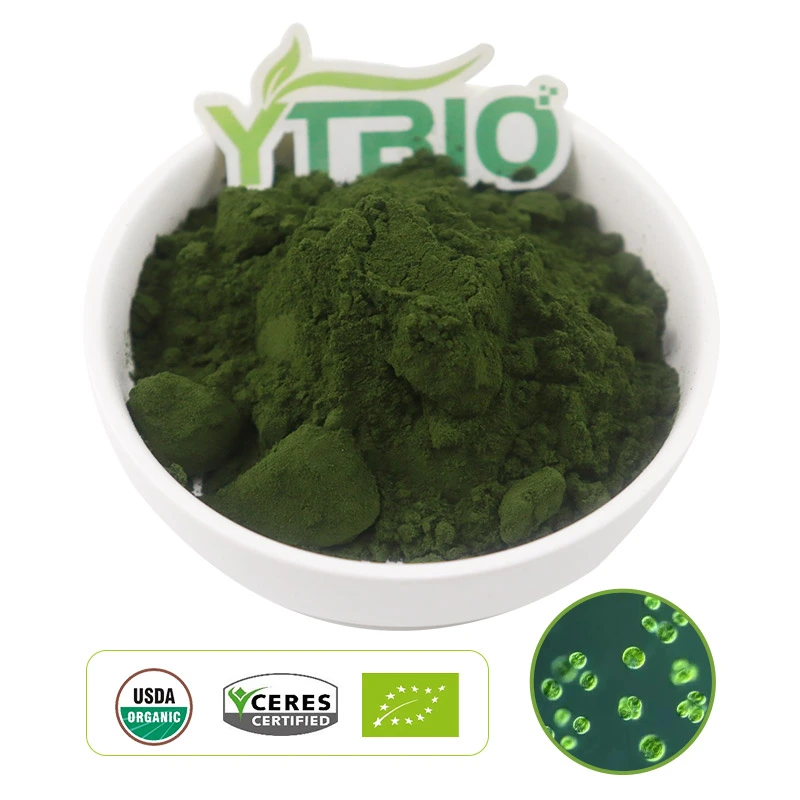
I think the biggest takeaway here is to not overhype or underrate chlorella’s omega-3s. It’s not a fish oil replacement, but it’s a solid plant-based source of ALA that adds to your daily intake, especially when paired with other great options. And since it’s organic, you don’t have to worry about the stuff that comes with lower-quality supplements.
Wait, let’s wrap this up with a quick summary so it’s easy to remember:
Organic chlorella powder does contain omega-3s, mostly ALA (not EPA/DHA).
It has roughly 0.5-1.2g of ALA per 3-5g serving—great for a plant-based add-in.
Look for cold-pressed, cracked-cell-wall, third-party tested organic chlorella to get the most nutrients.
Pair it with other plant proteins (like our organic hemp seed protein) to boost your omega-3 intake.
If you’re a business owner looking to source high-quality organic chlorella powder, or want to chat about how to blend it with our other plant-based products, feel free to reach out for a procurement conversation. We’re here to answer all your questions, no sales pitch pressure—just real info from someone who’s been in the chlorella game for years.
Tel:86-029-86478251 / 86-029-86119593
Whatsapp:8617782577059
Email:sales@sxytorganic.com
References:
Chlorella: A review of its nutritional and therapeutic potential. Journal of Applied Phycology, 2019.
Omega-3 fatty acids: A review of their role in human health. Nutrients, 2018.
Bioavailability of nutrients from chlorella vulgaris with intact versus cracked cell walls. Food Chemistry, 2021.
Plant-based omega-3 sources: A comparison of ALA, EPA, and DHA content. Journal of Functional Foods, 2020.
Organic algae supplements: Quality control and safety considerations. Journal of Dietary Supplements, 2022.