How to store inulin powder?
Hey there,
If you’re an inulin powder user—whether you’re a formulator, a supplement brand owner, or even someone just stocking up for personal use—you know how finicky this prebiotic can be. As a supplier of inulin powder, I’ve seen firsthand how small storage mistakes can turn a perfectly good batch into something that clumps, loses potency, or even goes bad way before its expiration date. So today, let’s break down exactly how to store inulin powder right, no fancy lab jargon needed.
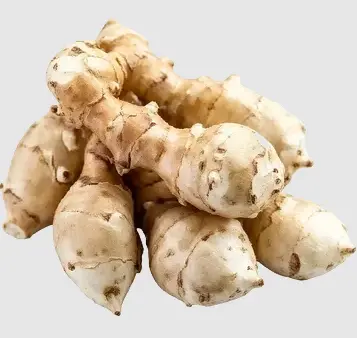
First, let’s get the basics straight: inulin is a soluble fiber made from plants (usually chicory root or Jerusalem artichokes) that’s super popular for gut health, blood sugar support, and as a fat substitute in baked goods. But here’s the thing—it’s hygroscopic, meaning it loves moisture. That’s the biggest enemy of inulin powder. If even a little water gets in, it starts to absorb it, clumps up, and becomes hard to work with. For manufacturers mixing it into supplements, like capsules or gels, clumpy inulin can mess up dosage consistency. For end users, it can mean uneven mixing in smoothies or baked goods that don’t rise right.
 |
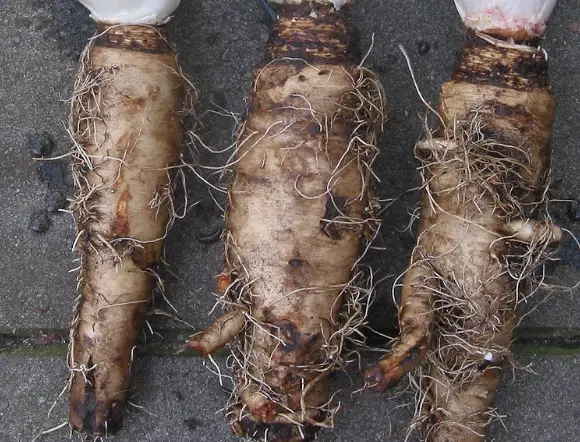 |
Image source: Wikipedia
Let’s start with the short-term storage—you know, the stuff you’ll use within 1–3 months. If you’re a brand that’s got inulin powder on your production line, or a home user with a big tub, don’t just leave the bag open on the counter. Even your kitchen counter, which feels dry, has tiny water molecules floating around. I’ve had customers come to me saying their inulin turned into a rock hard brick after just two weeks on the counter. So what’s the fix? Use an airtight container. Not a half-empty jar with a loose lid—something with a rubber seal around the edge, like a glass jar with a screw-top or a food-grade plastic container with a tight snap lid. Oh, and if you’re transferring it from the original factory bag (which usually has a zipper, but sometimes those zippers wear out), make sure you squeeze out as much air as possible before sealing it. Less air = less moisture.
For longer-term storage—like if you’re stocking up a 50kg batch for your supplement business, or you’re buying a bulk bag to last 6+ months—you need to go a step further. Forget the pantry if your kitchen is warm (over 25°C/77°F) or has high humidity (think summer in Florida, or a basement with leaks). Inulin breaks down faster in heat, too—so high temps aren’t just bad for moisture, they make the prebiotic compounds degrade. Cool, dark places are your BFF here. A storage closet in a climate-controlled warehouse, or a fridge? Wait, hold up—do NOT put inulin in the fridge. Condensation will happen when you take it out, and that’s exactly the moisture we’re trying to avoid. If you’re using a fridge, make sure it’s in an airtight, moisture-proof container, and let it come to room temperature before opening it. I’ve heard of some brands doing this, but honestly, it’s easier to just use a cool, dark spot that’s steady.
Now, let’s talk packaging because that’s where storage starts for suppliers like us. We ship inulin in multi-layered, food-grade bags that have a moisture barrier—usually a combination of plastic and aluminum foil to block both water and light. Light might not seem like a big deal, but UV rays can speed up nutrient degradation in inulin, so keeping it out of direct sunlight is key. That’s why those foil-lined bags are way better than clear plastic. If you’re repackaging inulin into smaller containers for your brand, use the same kind of barrier material—don’t use regular plastic bags, which let moisture seep through over time. Some of our clients repackage into our supplement packaging lines, like if they’re making capsules with inulin. Wait, speaking of supplements—if you’re mixing inulin into finished products, like magnesium glycine capsules, that’s a whole other storage thing, but that’s a separate topic. For inulin itself, stick to the barrier packaging.
Another mistake I see a lot: using containers that were previously used for other things, like flour or rice. Those can have residual oils, moisture, or even chemicals that can react with inulin? No, not really, but they can introduce extra moisture. So stick to clean, unused, airtight containers. If you reuse a container, make sure you dry it completely first—no wet spots left at the bottom. Also, don’t overfill the container. Leave a little headspace (like 5–10% of the total volume) so there’s less air inside. More air = more moisture. Duh, right?
What about shelf life? When stored correctly, inulin powder can last 18–24 months from production date. If it’s not stored right, that number drops to 6 months or less. How do you tell if it’s gone bad? Clumps that are hard, not just loose clumps—like if you can’t break them apart with a spoon, that’s a sign moisture got in. It might also have a sour or off smell, instead of the mild, neutral taste inulin usually has. If that happens, toss it—don’t use it, because it might not work the way it’s supposed to, and in worst case, mold can grow in really bad conditions. Wait, mold? Inulin is a prebiotic, so mold loves it if there’s enough moisture. Yeah, that’s a real risk, especially in warm, humid places. So don’t cut corners here.
Now, for our fellow suppliers and brand owners—let’s talk transport too. If you’re shipping inulin to another facility, or to a retailer, make sure the shipping conditions are temp-controlled. Don’t leave pallets in a hot truck for 3 days in the middle of summer. We always recommend climate-controlled transport for bulk inulin, because even a few hours in 35°C heat can start breaking down the powder. Also, stack the bags properly—no punctures, because a hole in the bag is a direct path for moisture. That’s why our shipping pallets are wrapped in plastic stretch film too, to protect against rain or humidity during transit.
Wait, let’s circle back to end users who are buying in small amounts. If you’re a consumer buying inulin powder for your smoothies or gut health routine, the same rules apply. Buy a container with a tight seal, keep it in a dark cabinet, away from the stove (which has heat and steam when you cook). I’ve had a customer tell me they kept theirs next to the coffee maker, and after a month, it was all clumped. Makes sense—coffee makers release steam every time you brew. So avoid any spot with regular moisture or heat sources.
Now, if you’re using inulin in your supplement formulas—whether it’s mixing it into soft capsule wrapped soft capsule products, or adding it to coenzyme Q10 softgel—make sure the inulin is as dry as possible before adding it to the mix. Even a tiny amount of moisture in the final supplement can cause issues with the capsules or gels. That’s why we test our inulin powder for moisture content before shipping—we make sure it’s under 5% (usually around 3–4%) so it’s perfect for formulators. If you’re sourcing inulin from somewhere that doesn’t test moisture, that’s a red flag right there.
Oh, and one pro tip: if you do get a small clump of inulin that’s just starting to form, not a hard brick, you can sift it through a fine-mesh sieve to break it up. But if it’s already hard, don’t waste time—use it for non-critical stuff, like garden soil amendments (inulin is great for plants too!) instead of supplements or food.
Now, I know a lot of you are in the supplement space, so let’s tie this back to your products. If you’re formulating with inulin, storage isn’t just about the inulin itself—it’s about the whole product. For example, if you’re making breast enlargement capsules that include inulin, you need to make sure the capsule shell is moisture-resistant too. Even if your inulin is dry, a thin capsule shell can absorb moisture from the air, which will mess with the inulin. Same goes for astaxanthin softgels capsules—those are oil-based, so moisture can break down the oil, which in turn affects the inulin if they’re mixed together. That’s why we work closely with our supplement clients to make sure their packaging and storage aligns with inulin’s needs, so their finished products stay potent and effective.
Wait, let’s address a common question: can you freeze inulin powder? Technically, you can, but it’s not recommended. Every time you take it in and out of the freezer, you get temperature changes, which cause condensation. We’ve had a couple clients test freezing, and most found it didn’t extend shelf life much, and the condensation issue was more hassle than it was worth. Stick to cool, dark, airtight—way easier.
So to wrap up, here’s the quick storage checklist for inulin powder:
- Keep it in an airtight, moisture-proof container (no loose lids!)
- Store in a cool place (15–25°C / 59–77°F) away from heat sources (stoves, ovens, coffee makers)
- Keep it out of direct sunlight and away from humid spots (bathrooms, basements with leaks)
- Don’t overfill the container—leave headspace for less air
- For bulk batches, use climate-controlled storage and transport
- Check for clumps or off-smells every couple months—if you find them, it’s time to replace
If you’re a brand owner or formulator looking for high-quality inulin powder that’s tested for low moisture and consistent potency, we’re here to help. Whether you need small sample sizes for testing or bulk orders for production, we can work with you to meet your needs. We also offer OEM/ODM services for supplements, so if you’re looking to create products with inulin paired with other ingredients, like magnesium glycine capsules or coenzyme Q10 softgel, we’ve got you covered. Reach out to our team to chat about your requirements, and we’ll make sure you get the right inulin for your storage and formulation goals.
Tel:86-029-86478251 / 86-029-86119593
Whatsapp:8617782577059
Email:sales@sxytorganic.com
reference
- Gibson GR, Roberfroid MB. Dietary modulation of the human colonic microbiota: introducing the concept of prebiotics. J Nutr. 1995;125(6):1401-1412.
- Vandamme EJ, De Baets S, Van den Broeck I, et al. Inulin and oligosaccharides from chicory: production, properties and applications. Biotechnol Adv. 1995;13(4):589-609.
- Food and Drug Administration. Guidance for Industry: Dry Ingredients and Their Storage in Food and Dietary Supplement Facilities. 2020.
- Bielecka M, Wójcik M. Effect of moisture on the stability of inulin powder. J Food Eng. 2006;75(3):385-391.