What Is Purple Yam Powder? Exploring Its Food Applications and Market Potential Through the Popularity of "Ube"
In recent years, purple-colored foods and unique plant-based ingredients have garnered increasing attention in the global food and beverage market. From purple ice cream and cakes to milkshakes and lattes, "Ube"—a specialty ingredient originating from the Philippines—is gaining significant traction in international markets.
In the United States, Ube has evolved from a traditional component of Filipino desserts into a mainstream ingredient found in retail food products and coffeehouse chains. Cafés abroad are increasingly incorporating it into lattes, ice cream, and baked goods. As consumer interest in natural colors, distinctive flavors, and plant-derived ingredients grows, purple yam and its processed derivatives are presenting new opportunities for product development.
For food and beverage manufacturers, beyond fresh purple yam, **purple yam powder** is an ingredient form worth noting. It allows the natural color and flavor of purple yam to be integrated into various food formulations, opening up new possibilities for the development of beverages, baked goods, and snack foods.
I. What Is Purple Yam Powder?
"Ube" typically refers to a purple-fleshed yam used in traditional Filipino cuisine. Scientifically known as *Dioscorea alata*—a member of the *Dioscoreaceae* (yam) family—it is commonly referred to in Chinese as *zi shanyao* (purple yam), and is also known as the "greater yam" or "foot-board yam."
It is important to note that Ube is neither a purple sweet potato nor taro. While they may share similarities in appearance, color, or culinary application, they are distinct botanical species.
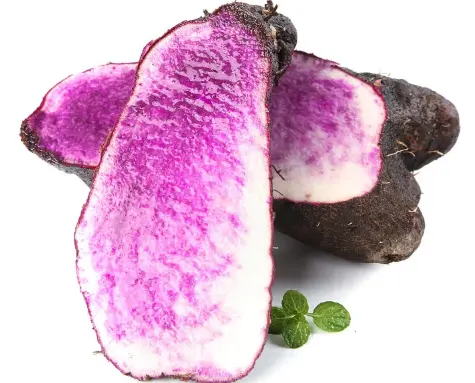
The tubers of the purple yam typically feature a natural purple or purple-and-white mottled flesh. Once cooked, they take on a smooth, delicate texture with a mild sweetness, complemented by subtle notes of nuttiness, vanilla, and coconut. This unique combination of color and flavor has earned it a prominent place in traditional Filipino desserts.
In terms of processing, purple yam can be used directly in cooking and dessert preparation, or it can be cleaned, sliced, dried, and pulverized into purple yam powder—a convenient form for use as an ingredient in industrial food production.
II. What are the differences between purple yam powder, purple sweet potato powder, and taro powder?
In the context of sourcing food ingredients and developing new products, purple yam powder, purple sweet potato powder, and taro powder are frequently confused. However, it is essential for food manufacturers to understand the distinctions between them.
1. Purple Yam Powder
Derived from *Dioscorea alata* (greater yam), certain varieties of which possess a distinct natural purple hue. It features a relatively mild flavor profile with subtle nutty and vanilla-like notes, making it well-suited for specialty beverages, desserts, and baked goods.
2. Purple Sweet Potato Powder
Derived from purple-fleshed sweet potatoes (*Ipomoea batatas*). The purple color is primarily attributed to anthocyanins. This ingredient carries a pronounced "sweet potato" flavor and is commonly used in instant cereal mixes, baked goods, noodles, and powdered beverage mixes.
3. Taro Powder
Derived from taro (*Colocasia esculenta*), which typically appears white, light purple, or grayish-purple. It is characterized by a distinct taro aroma and is frequently used in milk tea, ice cream, desserts, and baked goods.
While all three ingredients can be used to develop purple-colored or specialty-flavored food products, they differ in terms of their botanical origin, natural coloration, flavor profile, and performance in formulations. Therefore, when sourcing these ingredients, it is crucial to verify their botanical origin, product specifications, and analytical testing documentation.
III. What are the characteristics of purple yam powder?
The value of purple yam powder lies not only in its unique purple color but also in its flavor profile, nutritional composition, and suitability for processing.
1. Natural Purple Coloration
Certain varieties of purple yam exhibit a natural purple color, which is linked to the presence of plant pigments such as anthocyanins.
For food and beverage manufacturers, this purple hue provides a striking visual identity, making it particularly effective for specialty beverages, desserts, and baked goods.
It should be noted, however, that the actual color of purple yam powder can be influenced by factors such as the specific variety, the stage of maturity, drying temperatures, and the processing methods employed. Color variations may occur between different batches of raw materials; therefore, ensuring color consistency is essential when developing standardized products.
2. A Unique and Mild Flavor Profile
Unlike some raw materials that possess a distinct "green" or vegetal odor, purple yam offers a relatively mild, tuber-like flavor, with subtle notes reminiscent of nuts, vanilla, and coconut.
This characteristic allows it to pair well with a wide range of food ingredients, such as:
- Coconut: Ideal for creating tropical-flavored beverages and desserts.
- Milk and Cream: Perfect for milkshakes, lattes, and ice cream.
- Matcha: Leverages the visual contrast between purple and green to create distinctive, eye-catching beverages.
- Chocolate: Well-suited for cakes, cookies, and complex, multi-flavored desserts.
- Cheese: Can be used in cheesecakes, cream fillings, and various other baked goods.
3. Plant-Based Nutritional Content
As a tuber, purple yam contains starch, dietary fiber, and a variety of natural nutrients. Certain purple varieties also contain plant polyphenols, such as anthocyanins.
The specific nutritional composition varies depending on the variety, growing environment, and processing methods. When sourcing purple yam powder or developing products, always refer to the nutritional analysis report for the specific product in question.
4. Versatility in Food Processing
Compared to fresh purple yam, the powdered form is easier to weigh and blend according to specific formulations; it is also more convenient for transport, storage, and industrial-scale production.
For food manufacturers, purple yam powder serves as a unique plant-based ingredient that can be integrated into various product lines, eliminating the need for on-site processing of fresh tubers.
IV. In What Types of Food and Beverages Can Purple Yam Powder Be Used?
As the "Ube" flavor gains popularity in international markets, the applications for purple yam have expanded well beyond traditional desserts into a broader range of food categories. Consequently, purple yam powder has become an ingredient of significant interest for the development of specialty food formulations.
 |
 |
 |
1. Purple Yam Lattes and Specialty Beverages
In recent years, the purple yam (Ube) latte has emerged as a popular application in overseas markets. Purple yam powder can be combined with dairy, plant-based, or coconut milk to create beverages with a natural purple hue and a distinctive flavor profile. It can also be paired with ingredients like matcha or coffee to develop complex, multi-layered flavor combinations.
For beverage brands, purple yam powder can be used in:
- Ube Lattes
- Ube Coconut Lattes
- Ube Matcha Lattes
- Purple Yam Milkshakes
- Instant Ube Drink Mixes
2. Ice Cream and Frozen Desserts
Purple yam possesses inherent flavor characteristics well-suited for desserts, pairing effectively with dairy products, coconut milk, and various sweeteners.
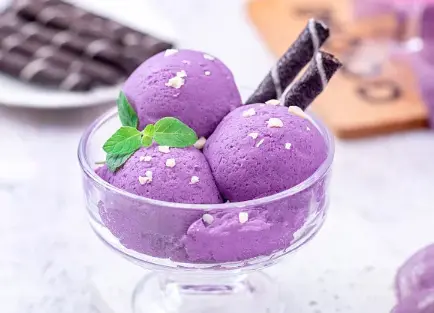
Purple yam powder can be incorporated into ice cream, popsicles, frozen yogurt, and other frozen treats, imparting a unique flavor and a vibrant purple color.
3. Baked Goods
Purple yam powder is also suitable for a wide range of baking recipes, including:
- Purple yam cakes and Swiss rolls
- Purple yam breads and loaves
- Purple yam cookies and biscuits
- Purple yam waffles and pancakes
- Purple yam-based fillings and cream centers
In baking, purple yam powder serves as a specialty plant-based ingredient that can be blended with flour, sugar, fats, and dairy products.
4. Powdered Beverage Mixes
With the growing demand for convenient, instant-preparation food products, purple yam powder is an excellent choice for powdered beverage mixes and composite drink powders.
For instance, it can be blended with coconut milk powder, dairy powder, plant-based proteins, sweeteners, and other flavoring agents to create instant purple yam drinks.
This format is ideal for food brands developing retail-ready products and serves as a versatile ingredient for OEM/ODM powdered beverage development. 5. Other Food Applications
Beyond the aforementioned uses, purple yam powder can be utilized in the development of products such as puddings, cream fillings, dessert sauces, cereal-based foods, and specialty snacks.
As the "Ube" flavor gains recognition among a broader consumer base, its application has the potential to expand from traditional Asian desserts into a wider range of international food categories.
V. Key Considerations for Using Purple Yam Powder in Food Processing
In the development of food formulations, the performance of purple yam powder depends not only on the raw material itself but also on processing techniques, the overall formulation matrix, and storage conditions.
1. Processing Temperature and Color Stability
The natural purple hue of purple yam can be affected by temperature, processing duration, and environmental conditions. For varieties containing anthocyanins, pigment stability is also influenced by factors such as pH levels.
Therefore, when developing beverages or desserts, it is advisable to conduct trial runs at various temperatures and processing durations to ensure that prolonged exposure to high heat does not negatively impact the product's color.
2. Formulation pH
Anthocyanin pigments are pH-sensitive and may exhibit different shades depending on the acidity or alkalinity of the environment.
If purple yam powder is used in lemon-flavored beverages, yogurt, or fruit-based drinks, compatibility and color stability tests should be performed during the formulation stage to ensure the final product meets expectations.
3. Powder Dispersion and Solubility
As a plant-derived powder, purple yam powder does not necessarily dissolve completely in the same way as highly water-soluble ingredients.
Its dispersion, tendency to settle, and mouthfeel are influenced by factors such as particle size, starch characteristics, processing methods, and the overall formulation. When developing instant (mix-in) beverages, it is essential to evaluate the powder’s fineness, dispersibility, and reconstitution properties based on specific product requirements.
4. Raw Material Quality
For industrial food production, it is recommended to focus on key quality parameters, including the source of the raw material, its botanical name, moisture content, microbiological specifications, color, particle size, and other relevant quality testing criteria.
If a product highlights its natural purple color, it is also important to monitor color consistency across different batches to ensure a uniform appearance in the final product.
VI. Purple Yam (Ube) Powder: Market Opportunities
The popularity of "Ube" (purple yam) in overseas markets reflects a growing consumer interest in unique botanical flavors, natural visual appeal, and differentiated food experiences.
Historically, purple yam was primarily found in traditional foods across the Philippines and Southeast Asia. Driven by the influence of social media, product development by retail brands, and innovations in the café and beverage sector, it has increasingly found its way into a broader range of international food and beverage contexts.
For food manufacturers, the opportunities presented by this trend extend well beyond simply launching an "Ube latte." They encompass the development of standardized food ingredients and finished products centered around purple yam.
Purple Yam Powder: Unlocking New Possibilities for Food Innovation
For food manufacturers, purple yam powder serves as more than just a botanical ingredient with a distinctive color and flavor; it is a versatile component that can be incorporated into beverages, baked goods, desserts, and instant powdered food mixes.
YTBIO specializes in the supply of botanical ingredients, plant extracts, and nutritional food components. We also provide OEM/ODM customization services for food products and nutritional supplements. We offer comprehensive support—from ingredient selection and formulation development to finished product manufacturing—tailored to your specific product development needs.
If you are sourcing purple yam powder, or if you are planning to develop Ube-flavored beverages, powdered drink mixes, or other specialty food products, please contact YTBIO to learn more about our ingredient supply and customized product solutions.
Tel:86-029-86478251 / 86-029-86119593
Whatsapp:8617782577059
Email:sales@sxytorganic.com