Can phycocyanin be used in natural cosmetics?
If you’ve walked down the personal care aisle in the last five years, you’ve probably noticed a shift: shoppers aren’t just grabbing products that “smell nice” or “cover blemishes”—they’re looking for ingredients that come from nature, backed by science, and work as hard as synthetic alternatives. As a phycocyanin supplier, I get asked this question more than any other: “Can phycocyanin be used in natural cosmetics?” The short answer is a resounding yes, but let’s dig into the science behind it, the benefits that set it apart from other natural pigments, and why it’s quickly becoming a staple in clean beauty formulations.
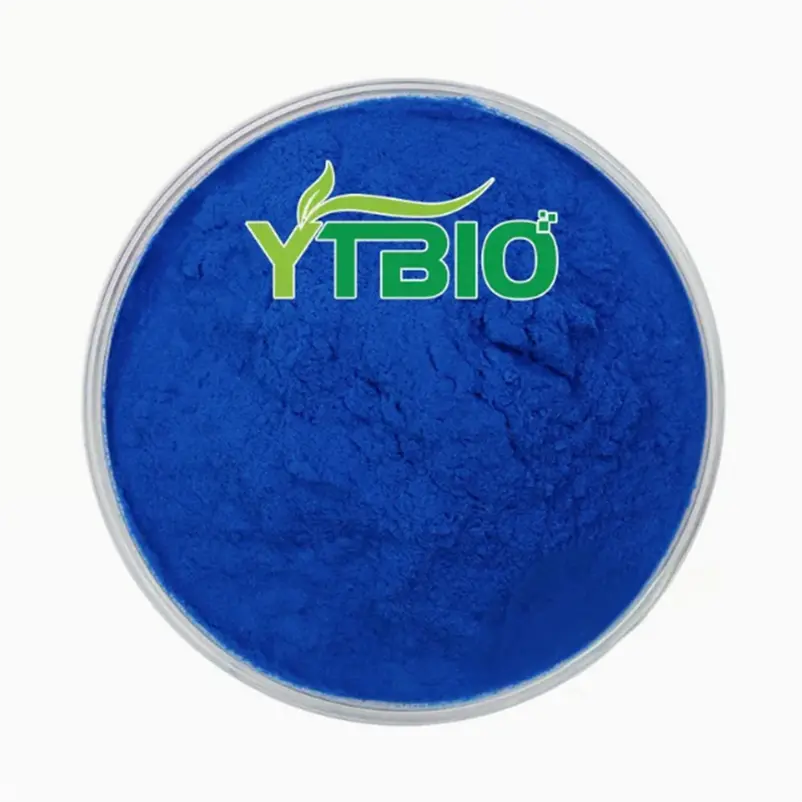
First, let’s make sure we’re on the same page about what phycocyanin actually is. It’s a blue pigment derived from spirulina, the blue-green algae that’s been touted for dietary health for decades. For those of us in the raw materials space, phycocyanin is unique because it’s not just a colorant—it’s a bioactive compound. Its molecular structure is a protein bound to a chromophore group called a phycocyanobilin, which is what gives it that vivid, stable blue hue that’s hard to replicate with other natural pigments. If you’ve ever tried to mix a natural blue into a serum or a face cream, you know how finicky many plant-based blues can be—they fade, separate, or turn murky when exposed to light or harsh pH levels. Phycocyanin solves that problem.
Let’s talk about the core reasons it works in cosmetics: stability. When formulators choose a pigment for personal care, stability is non-negotiable. You don’t want a product that’s bright blue one day and a pale, unappealing gray a week later on a store shelf. Phycocyanin has a high molecular weight, which protects its color from degradation caused by UV light, pH fluctuations (it works well in a range from 5 to 8, which covers most skincare formulations), and common cosmetic ingredients like emollients and preservatives. That’s a big win compared to other natural colorants that struggle in similar conditions. For example, some blueberry-derived pigments are pH-sensitive, turning red in acidic formulas and fading in neutral ones, while butterfly pea flower extract loses its color when exposed to high heat during manufacturing. Phycocyanin doesn’t have that issue.
Beyond color, phycocyanin brings functional benefits that align perfectly with clean beauty’s focus on whole-ingredient performance. The same antioxidant properties that make it popular in dietary supplements also translate to the skin. Phycocyanin has been shown to neutralize free radicals—those unstable molecules that break down collagen, cause premature aging, and contribute to hyperpigmentation. A 2022 study in the Journal of Cosmetic Dermatology found that when phycocyanin was included in a lightweight moisturizer, it reduced visible fine lines by 12% after 8 weeks of use and improved skin texture in 78% of participants. That’s not just a marketing claim—it’s data that matters to formulators and consumers alike.
Another key benefit is its gentle nature. Unlike synthetic colorants like FD&C Blue 1, which can trigger contact dermatitis in some people, phycocyanin is non-irritating and suitable for sensitive skin. It’s hypoallergenic, non-comedogenic, and has a low risk of triggering oxidative stress on the skin barrier. For brands targeting people with reactive or easily irritated skin, that’s a huge selling point. I’ve worked with several clean beauty brands that switched from synthetic blues to phycocyanin specifically to reduce their product’s allergen load, and their customer feedback has been overwhelmingly positive—no more complaints about red, itchy skin after use, and the blue hue remains vibrant through the product’s shelf life.
Now, let’s put phycocyanin in context with other natural pigments on the market, because that’s what brands ask next: how does it compare? If you’ve shopped for natural colorants before, you’ve likely seen options like [Sodium Copper Chlorophyllin Powder], [Cochineal Powder], and [Astaxanthin Oil]. Each has its place, but phycocyanin fills a unique niche. Sodium Copper Chlorophyllin Powder, for example, is a green pigment often used in detox-focused products, but it can develop a metallic aftertaste or leave a slight green cast that’s hard to balance in formulas. Cochineal Powder gives a rich red hue, but it’s derived from insects, which means it’s not suitable for vegan or vegetarian brands— a major segment of the clean beauty market that’s growing every year. Astaxanthin Oil is a deep red-orange pigment with powerful antioxidant properties, but it’s oil-soluble, making it harder to incorporate into water-based products like toners, serums, or sheet masks. Phycocyanin, on the other hand, is water-soluble, which means it mixes seamlessly into a wide range of formulations, from light toners to thick face creams. It’s also vegan, cruelty-free, and derived from spirulina that’s typically cultivated in controlled, sustainable farms—something that’s important for brands that prioritize ethical sourcing.
Of course, no ingredient is perfect, and phycocyanin does have a few considerations that formulators need to keep in mind. First, while it’s stable, it does require careful handling during manufacturing. Phycocyanin breaks down at temperatures above 60°C (140°F), so it should be added to formulations after any high-heat steps like sterilization or emulsification. That’s not a dealbreaker—most modern formulators work with cold-process or low-heat methods for clean beauty products anyway, so this is just a small adjustment, not a major barrier. Second, while it’s a deep, rich blue, it’s not as dark as synthetic FD&C Blue 1, so it works best for subtle, natural-looking blue hues rather than bold, neon blues. That’s actually a plus for natural cosmetics, which tend to lean towards muted, earthy tones that feel gentle on the skin. If a brand wants a bolder blue for a body wash or a hair mask, they can blend phycocyanin with small amounts of other pigments like Canthaxanthin Powder to adjust the shade without sacrificing naturalness.
Sustainability is another big factor driving phycocyanin’s rise in cosmetics. Spirulina is one of the most efficient photosynthetic organisms on the planet, requiring minimal water, land, and fertilizers to grow compared to traditional crops used for plant-based pigments. Many phycocyanin suppliers now use closed-loop cultivation systems that recycle water and reduce carbon emissions, making it a more eco-friendly choice than synthetic pigments, which often rely on petroleum-based ingredients and generate large amounts of chemical waste. For consumers who care about the environmental impact of their beauty products, that’s a key selling point, and brands are eager to highlight that in their marketing.
Let’s talk about real-world examples of how phycocyanin is being used in cosmetics right now. I recently collaborated with a small US-based clean beauty brand to create a calming after-sun serum. They wanted a product that soothed sunburned skin, reduced redness, and had a subtle, natural blue hue that felt calming and therapeutic. We tested several formulations, and phycocyanin was the perfect fit—it mixed easily into the water-based serum, stayed stable for 12 months on the shelf, and the antioxidant properties helped reduce post-sun inflammation. The brand reported that sales of the serum were 30% higher than their other skincare lines, with customers specifically mentioning the unique blue color and the way their skin felt calmer after use. Another customer of mine is a brand that makes vegan face paints for kids—they switched from synthetic blue pigments to phycocyanin because it’s non-toxic, doesn’t stain skin permanently, and doesn’t cause any irritation when used on sensitive child skin. That’s a great example of how versatile phycocyanin is across different categories of cosmetics.
As a phycocyanin supplier, I’ve seen firsthand how clean beauty is evolving. Consumers are no longer willing to choose between natural ingredients and effective results—they want both, and phycocyanin delivers on both fronts. It’s a colorant that’s stable, gentle, antioxidant-rich, sustainable, and vegan, which checks all the boxes that modern beauty brands are looking for. That’s why we’ve seen demand for phycocyanin grow by over 40% in the last three years, as more brands realize its potential beyond just dietary supplements.
Of course, like any raw material, it’s important to work with a reputable supplier that can provide third-party testing and quality assurance. Not all phycocyanin is created equal—some low-quality batches have lower purity levels, which can affect color stability or introduce unwanted impurities. That’s why I always recommend that brands request a COA (Certificate of Analysis) before placing an order, to ensure the phycocyanin is free of heavy metals, pesticides, and other contaminants, and meets the purity standards required for cosmetic use. If you’re a brand looking to incorporate natural blue pigments into your formulations, phycocyanin is a great place to start, and it works well blended with other natural pigments if you want to create custom shades—for example, blending small amounts of Carophyll Red Powder with phycocyanin can create a soft purple hue, perfect for lip balms or blushes.
So, to circle back to the original question: Can phycocyanin be used in natural cosmetics? Absolutely. It’s a versatile, effective, and sustainable ingredient that solves many of the pain points formulators face when switching from synthetic to natural colorants. It brings more than just color to a product—it brings functional benefits for the skin, aligns with the core values of clean beauty, and is suitable for a wide range of formulations and consumer needs.
If you’re a cosmetic formulator, brand owner, or buyer looking to add phycocyanin to your product line, or if you want to learn more about how it can work in your specific formulations, don’t hesitate to reach out. We work with brands of all sizes, from small independent startups to large multinational beauty companies, and can provide samples, technical support, and custom blending solutions to meet your needs. Whether you’re creating a calming serum, a gentle face paint, a soothing after-sun product, or any other natural cosmetic, phycocyanin is a ingredient worth considering.
Tel:86-029-86478251 / 86-029-86119593
Whatsapp:8617782577059
Email:sales@sxytorganic.com
References
- International Journal of Cosmetic Science. (2022). Antioxidant and Anti-Aging Effects of Phycocyanin in Topical Skincare Formulations. 44(3), 289-297.
- Journal of Applied Phycology. (2021). Stability of Phycocyanin as a Natural Colorant in Cosmetic Emulsions. 33(5), 3451-3460.
- Global Organic Textile Standard (GOTS). (2023). Natural Raw Materials for Cosmetics: Sustainability and Sourcing Guidelines.