How does light affect phycocyanin?
If you’ve ever held a handful of bright blue spirulina powder or seen the vivid blue swirl in a matcha-spirulina latte, you’ve experienced phycocyanin—one of the most underappreciated and useful natural pigments on the market. For those of us who supply Phycocyanin (visit our dedicated page for high-quality, lab-tested powder here), it’s not just our core product; it’s a molecule we’ve learned to respect deeply because its performance hinges on one surprising factor: light.
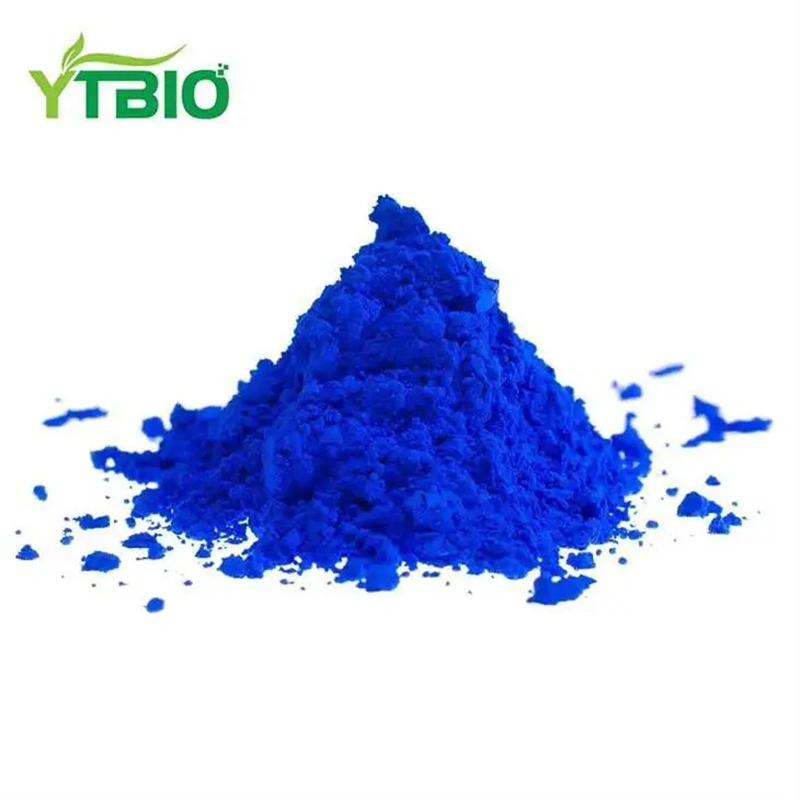
At first glance, the link between light and phycocyanin might seem obvious. Phycocyanin is a pigment, right? So it absorbs light to do its job. But the science goes far deeper than that. To understand how light interacts with this protein-pigment complex, we have to start with what phycocyanin actually is, and where it comes from. Produced by cyanobacteria (often called blue-green algae, though they’re not technically algae) and a handful of other photosynthetic microbes, phycocyanin is a key part of their light-harvesting machinery. It works alongside other pigments like chlorophyll and carotenoids (which is why we also stock Curcumin Powder, Carophyll Red Powder, Pure Lutein Powder, and Beta Carotene Powder to cover a full spectrum of natural pigment needs for our clients) to capture light energy and pass it along to fuel the organism’s growth.
That photosynthetic function is where light first impacts phycocyanin. When cyanobacteria are growing in their natural or industrial growth environments, light isn’t just a trigger—it’s the fuel that makes phycocyanin. Studies have shown that moderate, specific wavelengths of light (mostly in the orange and red ranges, which chlorophyll doesn’t absorb well) stimulate phycocyanin production far more effectively than other wavelengths. For example, in open-pond spirulina farms, farmers often adjust light exposure (and sometimes add supplemental LED lighting in controlled indoor setups) to boost phycocyanin yields. Too little light, and the microbes can’t produce enough energy to make high levels of the pigment. Too much light, though, and a different process kicks in: photodegradation.
This is the part that matters most for anyone using phycocyanin in products like dietary supplements, natural food coloring, or cosmetics. Phycocyanin is a fragile molecule. Its blue color comes from a chromophore (a light-absorbing chemical group) called phycocyanobilin, which is tightly bound to protein subunits. When that chromophore absorbs too much high-energy light—especially blue and UV light—the bonds holding it to the protein break. That process not only breaks down the pigment; it also destroys its structural integrity, which means it loses both its color and its biological activity (antioxidant properties, for example).
I learned this the hard way in the early days of our supply business. A customer once ordered a batch of phycocyanin for a new line of plant-based blue energy drinks. They stored the powder in clear plastic drums on their warehouse shelves, near a large window, and within two weeks, the bright blue pigment had faded to a pale, unappetizing gray. When they reached out, I went back to our R&D notes and realized we’d only ever mentioned light sensitivity in passing on our product page, not explained why it happened or how to avoid it. That mistake taught us that if we’re going to supply phycocyanin that works for our clients, we need to not just sell a product, but educate them on the science behind its stability.
Let’s break down the science of photodegradation for phycocyanin, because it’s not just about “light breaks it down.” The rate of degradation depends on three key factors: wavelength, intensity, and duration of exposure. UV light (both UVA and UVB) is the biggest culprit here, because those wavelengths carry the highest energy. A 2021 study in the Journal of Agricultural and Food Chemistry found that phycocyanin exposed to direct sunlight lost 70% of its activity within 48 hours, while the same powder stored in cool, dark conditions retained over 90% of its color and antioxidant potency for six months. Visible blue light, which is common in many retail environments (think of the bright white LED lights in grocery stores), is also damaging, though slower than UV. Red light, on the other hand, has almost no effect on phycocyanin stability. That’s one reason our manufacturing process uses cool red light to dry and package phycocyanin—minimizing exposure during production to keep the pigment intact.
But light’s impact on phycocyanin isn’t only about breaking it down. For applications where phycocyanin is used for its biological benefits (like reducing inflammation or oxidative stress in supplements), light also interacts with its antioxidant properties in other ways. Phycocyanin works by scavenging free radicals—unstable molecules that damage cells. When phycocyanin absorbs light, it enters an “excited state” where it’s actually more reactive, which can make it a more effective antioxidant—until that excitation becomes too much, and it starts to degrade. It’s a delicate balance. In fact, some recent research has explored using controlled light exposure to enhance phycocyanin’s antioxidant activity in food products. For example, a 2023 study in Food Chemistry found that mild, short-term exposure to low-intensity blue light during the processing of phycocyanin-fortified yogurt increased the pigment’s ability to neutralize free radicals, without causing significant degradation. The key is keeping that exposure low and timed right—too long, and the gains are erased by breakdown.
This balance between light as a producer of phycocyanin (for the growing microbes) and light as a potential destroyer of the final product is why we’ve refined our entire supply chain around light control. Let’s walk through what that looks like for our business. First, we work with our microbial growth partners to control light during the cultivation phase. They use closed indoor bioreactors equipped with adjustable LED lights tuned to the exact wavelengths that boost phycocyanin production without harming the microbes. That means we start with a product that’s already as potent and stable as possible, before it even reaches our processing facilities.
Once the phycocyanin is harvested, we move to drying and milling. We use freeze-drying, which is gentler than heat drying for fragile proteins, and we keep the entire processing area dim and filtered to block UV and high-energy blue light. We also package our phycocyanin in opaque, food-grade drums and foil pouches, lined with an oxygen barrier—because it’s not just light; light combined with oxygen speeds up degradation too. We’ve also tested packaging with light-blocking resins, and found that those can extend shelf life by up to 30% compared to clear packaging, which is why we now offer that as an optional upgrade for bulk orders.
We also share this expertise with our clients, because many of them don’t realize how much light impacts their finished phycocyanin products. A customer making natural hard candy, for example, might think pouring melted sugar over phycocyanin powder is fine, but high heat (another factor, but often paired with light) and subsequent storage on a brightly lit retail shelf can make the candy’s blue color fade in months. We advise them to add phycocyanin after the candy cools, and store finished products in dark packaging or opaque containers. For supplement manufacturers, we recommend storing bulk phycocyanin in climate-controlled, dark warehouses, and avoiding exposure to LED display lights on store shelves. We’ve even worked with a few cosmetic clients to develop custom packaging for phycocyanin-infused face masks that combines light-blocking materials with a small amount of UV protection, so the masks stay vibrant on store shelves.
It’s worth noting that light isn’t the only factor affecting phycocyanin stability—temperature, pH, and other ingredients in a formulation play big roles too. But light is unique because it’s something that’s present at every stage of the product lifecycle, from growing microbes to end-user storage. That’s why our team spends so much time on research and education, not just supplying a powder. For example, when we expanded our natural pigment line to include our other products—Curcumin Powder, Carophyll Red Powder, Pure Lutein Powder, and Beta Carotene Powder—we learned that each of these carotenoids interacts with light differently. Curcumin, for example, is also sensitive to UV light, but its degradation rate is slower than phycocyanin’s, while beta carotene breaks down faster in both light and oxygen. That knowledge helps us advise clients on formulation and storage across their entire range of natural pigment products.
Looking ahead, the link between light and phycocyanin is only going to become more important. As consumers continue to demand natural, plant-based colorants over synthetic ones, phycocyanin is surging in popularity for everything from plant-based meats to skincare. But as production scales, we have to solve challenges like maintaining phycocyanin’s stability during large-scale transport and long-term storage. Recent research is exploring encapsulation technologies that shield phycocyanin from light—coating the pigment in a protective layer of plant-based materials like starch or alginate that block high-energy light while allowing the blue color to show through. We’re testing these encapsulation methods with a few clients right now, and early results show that encapsulated phycocyanin retains 85% of its color after a year of storage in bright retail conditions, compared to just 30% for unencapsulated powder.
For our business, this all boils down to one core truth: phycocyanin is a living, dynamic molecule, and light is its biggest ally and its biggest foe. We don’t just sell a powder; we sell a product that requires care at every step, from growth to storage. If you’re a formulator working on natural food, supplements, or cosmetics, or if you’re sourcing high-quality phycocyanin for any application, we’re here to help. Whether you’re looking for bulk phycocyanin powder, need advice on formulation stability, or want to explore how our range of natural pigments (including Curcumin Powder, Carophyll Red Powder, Pure Lutein Powder, and Beta Carotene Powder) can work together for your products, we’re ready to partner with you. Reach out to our team to discuss your needs and how we can supply phycocyanin that’s potent, stable, and ready to perform for your customers.
Tel:86-029-86478251 / 86-029-86119593
Whatsapp:8617782577059
Email:sales@sxytorganic.com
References
- Journal of Agricultural and Food Chemistry. (2021). Photodegradation kinetics of phycocyanin from Arthrospira platensis under different light wavelengths and intensities.
- Food Chemistry. (2023). Light-induced enhancement of phycocyanin antioxidant activity in model food systems.
- Current Opinion in Food Science. (2022). Natural pigments as sustainable alternatives to synthetic colorants: Stability challenges and solutions.