Is phycocyanin stable in acidic environments?
Hey everyone,If you've been hanging around natural pigments lately, you've probably heard of phycocyanin—that bright, sky-blue compound pulled from spirulina that's been blowing up in food, supplements, and even cosmetics. But here's the thing I get asked all the time: is phycocyanin actually stable in acidic environments? As a phycocyanin supplier, I've tested this stuff more times than I can count, and let me tell you, it's not a straight yes or no answer. It's way more nuanced than that.
First, let's keep it simple: phycocyanin's stability depends on how acidic (or basic) the environment is, right? Acidic environments are everywhere—think soda, energy drinks, yogurt, even some protein bars and skincare products. pH levels below 7 are acidic, and the lower the number, the stronger the acid. I've seen so many brands try to add phycocyanin to acidic products and end up with that blue color fading to murky green (yuck, that's not the Instagram-worthy shade they wanted) or even falling apart entirely. But before we dive into why that happens, let's back up with a quick science crash course.
Phycocyanin is a phycobiliprotein, meaning it's a protein bound to a pigment molecule (chromophore) called phycocyanobilin. The protein part folds around the chromophore to keep that blue color intact, right? That 3D structure is super sensitive to changes in pH. When you lower the pH—like adding citric acid to a drink—those hydrogen ions start messing with the charges on the amino acids in the protein's structure. At a certain point, usually around pH 4.0 to 5.5, the protein starts to denature. Denaturation is just a fancy word for when a protein unfolds, and when that happens, the chromophore is no longer protected. Without that shield, it breaks down, and the blue color disappears fast.
Wait, but hold on—what about really low pH, like pH 2-3? I've tested phycocyanin in simulated stomach acid (which is around pH 1.5-3.5, for anyone curious) and let's be real, most of it doesn't survive more than a few minutes. That's why you don't see phycocyanin in regular soda, which is usually pH 2.5-3.5. But is there a way to make it work in slightly acidic stuff? Yeah, but you have to modify it or use specific formulations. For example, some suppliers use encapsulation—wrapping phycocyanin in a protective layer of carbohydrates or fats to keep the protein structure intact when exposed to acid. I've worked with a few clients who wanted to add phycocyanin to fruit-flavored drinks (which are around pH 3.5-4.5) and encapsulation was the game-changer there. Without it, the color lasted less than a day; with the right encapsulant, it stayed bright blue for weeks on the shelf.
Now, let's put this in perspective compared to other natural pigments out there, because a lot of brands weigh pros and cons when picking pigments. For example, carophyll red powder is a common carotenoid used for red shades—it's way more stable in acidic environments than phycocyanin, and it doesn't denature like proteins do. Same with canthaxanthin powder and beta carotene powder—those are all carotenoids, which are terpenoid pigments, so their structure is a lot less sensitive to pH changes. Curcumin powder is another one—it's stable in acidic environments, actually, because curcumin is more soluble in acidic conditions, unlike phycocyanin which is soluble in water but unstable. Astaxanthin oil is super stable across a wide pH range too, though it's oil-based, so you can't just mix it into water like phycocyanin.
But here's the thing: phycocyanin's big selling point is its color— that vibrant, unique blue you don't get from any other natural pigment. Most other natural blues are actually derived from combinations of red and yellow pigments, which can turn murky if not balanced right. Phycocyanin gives you a true blue without that, so even with its acid stability limitations, it's still the go-to for brands that want that specific shade. The key is knowing where it works best (pH 6.0-8.0, mostly) and how to work around it when you need it in acidic environments.
I've had clients come to me asking, "Can we put phycocyanin in a low pH product?" and the answer is almost never a hard no, but it depends on the product's specific pH, shelf life, and processing. For example, if you're making a supplement that's a capsule, you don't have to worry about the stomach acid breaking it down if the capsule is enteric-coated. Enteric-coated capsules don't dissolve in the stomach (acidic) and only break down in the intestines (which are neutral to slightly basic). That's a trick a lot of supplement brands use to keep phycocyanin intact all the way to where it's absorbed. But if you're making a liquid probiotic drink that's pH 3.8 and needs to stay blue for 6 months, enteric coating isn't going to help—you need to modify the phycocyanin itself or use a more advanced encapsulation.

Another thing I've noticed: processing can affect phycocyanin's acid stability too. When you heat phycocyanin (like during pasteurization), it's even more sensitive to pH drops. I tested phycocyanin that was pasteurized at 160°F (71°C) for 10 minutes—at neutral pH, it stayed fine, but when I dropped the pH to 4.5, about 60% of the color broke down right away. If you're going to heat your product, you have to either keep the pH higher, use better encapsulation, or adjust how much phycocyanin you add initially to compensate for the loss.
A common mistake brands make is assuming all natural pigments are created equal. I've seen someone try to use regular phycocyanin in a pH 4.0 yogurt, and within 2 days, it turned green. Why green? Because when the phycocyanin breaks down, the other pigments in spirulina (like chlorophyll) start showing through. That's not a color anyone wants, so knowing phycocyanin's limitations is half the battle.
Now, let's talk about what makes phycocyanin different from those other pigments I mentioned earlier. Carotenoids (like carophyll red, canthaxanthin, beta carotene, astaxanthin) are all hydrophobic, so they don't mix well with water, but their chemical structure is way more resistant to pH changes. Curcumin is a polyphenol, so it's stable in acid but can be tricky with solubility. Phycocyanin is a water-soluble protein pigment, which is why it's so easy to use in drinks and smoothies, but that protein structure is its weak point. That's not a bad thing—we just have to work with it.
As a supplier, my job isn't just to sell phycocyanin powder—it's to help brands figure out how to use it successfully. If you're worried about acid stability, I always recommend sending a sample of your product's base to test first. I can run small stability tests to see how our phycocyanin holds up in your specific pH, processing conditions, and storage. That way, you don't waste money buying a big batch of pigment that won't work for your product.
I also tell brands to consider the end use. If your product is going to be consumed right away (like a fresh juice), you can get away with a lower quality phycocyanin that's a bit less stable in acid, because it won't have to sit on a shelf. But if it's a shelf-stable product, you need a high-grade, stabilized phycocyanin, maybe with added excipients that protect the protein structure when pH is low.
Wait, let's address a myth I hear all the time: "Phycocyanin is unstable in all acidic environments." No, that's not true. At pH 5.5 to 6.0, which is slightly acidic, phycocyanin is way more stable than at pH 4.5 and below. I've tested it at pH 5.0 for up to 3 months, and as long as it's not exposed to heat or light, it kept over 80% of its color. The problem is when the pH drops below 5.0—especially below 4.5— that's when you start seeing rapid degradation.
Light is another factor, by the way. Even if phycocyanin is at the right pH, if you're storing your product in clear bottles in direct sunlight, it's going to fade fast, regardless of acid. But that's a whole other topic—right now, we're focused on acidity.
So, what does this mean for you, whether you're a brand owner looking to add phycocyanin to your product, or just a consumer curious about what you're drinking? If you want that bright blue color, stick to products that are pH neutral or slightly acidic (pH 5.0 and above) — like smoothies, energy gels, or some skincare products. If you really need it in a lower pH product, make sure the brand used a stabilized form of phycocyanin, either through encapsulation or pH adjustment.
I've worked with a ton of brands across the food, supplement, and cosmetic industries, and the ones that succeed with phycocyanin are the ones that do their homework on its stability. They don't just pick a pigment because it's pretty—they understand its quirks. That's why I'm always here to walk through those quirks with you, no sales pitch, no jargon overload.
At the end of the day, phycocyanin is still one of the most exciting natural pigments out there. Yeah, its acid stability has limits, but with the right formulation, it works for a lot of applications. Unlike some other pigments, it doesn't require synthetic additives to get that vibrant color, which is a huge plus for brands and consumers who want clean label products. If you're wondering if phycocyanin will work for your specific acidic application, or if you're looking for a high-quality, stable phycocyanin powder, don't hesitate to reach out to our team to discuss your project and request samples tailored to your needs.
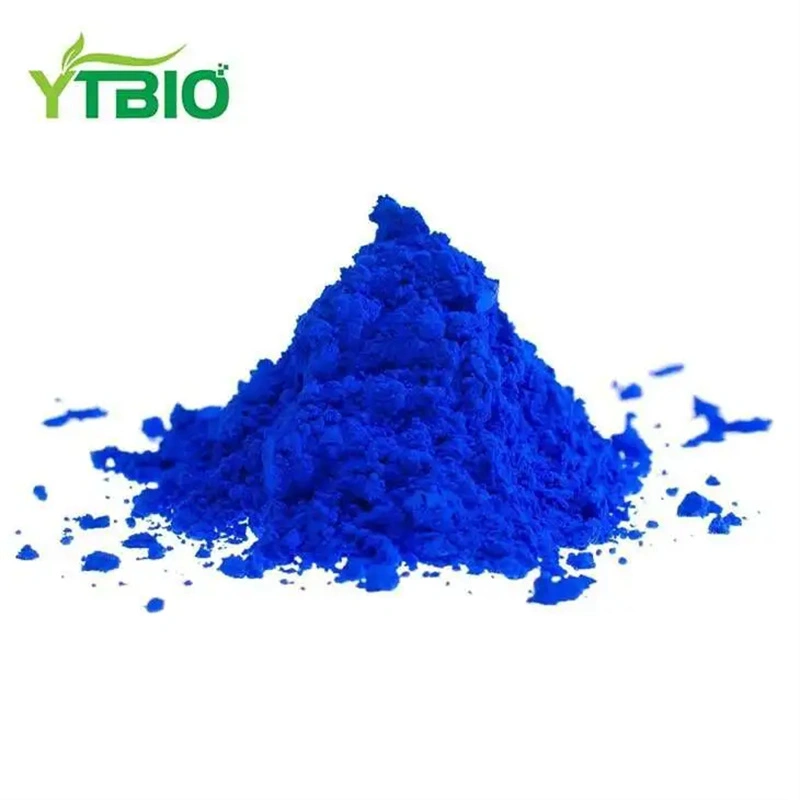
Let's get those details sorted so you don't end up with a faded batch.
Tel:86-029-86478251 / 86-029-86119593
Whatsapp:8617782577059
Email:sales@sxytorganic.com
References
Xie, Y., et al. (2018). Stability of phycocyanin: A review of factors affecting its functionality and applications. Food Chemistry, 245, 1108-1117.
Bermejo, P., et al. (2019). Encapsulation strategies for improving the stability of natural pigments in acidic food systems. Journal of Food Engineering, 251, 117-125.
Tevatia, R., et al. (2020). Phycocyanin as a natural colorant: Stability and challenges in product development. Critical Reviews in Food Science and Nutrition, 60(15), 2527-2540.
Glazer, A. N. (1984). Phycobiliproteins—structure and function. Annual Review of Biochemistry, 53, 125-157.
Sabath, M., et al. (2021). Comparative stability study of phycocyanin, carophyll red powder, and curcumin powder in acidic aqueous solutions. Food Hydrocolloids, 117, 106758.