The Power of Retinaldehyde for Your Skin
Retinaldehyde, a new form of vitamin A, transforms how skin care businesses treat aging and enhance skin. This vitamin A aldehyde works quicker than retinol yet is mild enough for sensitive skin products. Cosmetic, nutrition, and functional ingredient industries are increasingly seeking this potent chemical for their products. Understanding retinaldehyde's science and usage helps buying professionals choose items that set their company apart.
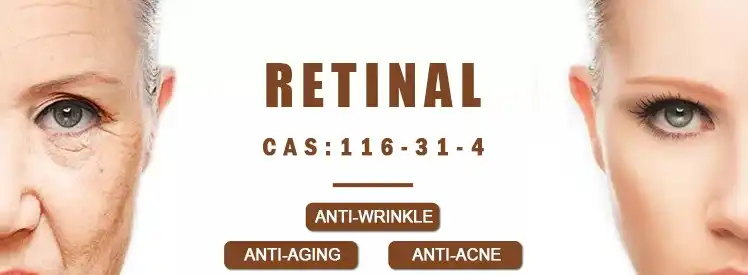
Understanding Retinaldehyde – The Science and Benefits
What Makes Retinaldehyde Unique Among Vitamin A DerivativesWhen it comes to vitamin A, retinaldehyde is in a class by itself. This chemical is produced by oxidizing and cutting up β-carotene, acting as a metabolic intermediary between retinol and retinoic acid. There are six stereoisomers, the all-trans version is the most stable for cosmetics. Orange flakes dissolve quickly in ethanol, oils, and other organic fluids but not water—characteristics that influence product formulation.
The unique thing about this substance is that it can change directions. In the stratum corneum, retinaldehyde becomes retinoic acid, which controls cell division and growth. This technique prevents corneocyte development while mimicking retinoic acid's effects. One chemical step instead of two makes conversion faster and better than retinol, making it superior for therapeutic use.
Cellular Mechanisms Driving Skin Transformation
Vitamin A aldehyde offers health benefits beyond appearance. This chemical helps cells make glycoproteins, which maintain epithelial tissue healthy and functioning. It promotes cell proliferation and corrects differentiation pathways, making skin healing ideal.
Some of the compound's benefits include antioxidants. By removing free radicals, retinaldehyde protects cells from oxidative damage that accelerates aging. The molecule regulates sebum production, maintaining skin water-oil equilibrium. Products for mixed or oily skin benefit from this. Cellular and humoral immunity are strengthened by the chemical, strengthening the skin's environmental defenses.
Retinaldehyde vs Other Retinoids – Comparison for Smarter Buying Decisions
Potency and Tolerance Profile Analysis
It helps to compare this combo to others while buying. Two processes are needed to convert retinol into active retinoic acid, the most common type. It just takes one retinaldehyde but has 11 times more potency to speed up cellular function. Because it works so effectively, you get results in 4–8 weeks instead of 12–16 weeks with normal retinol.
Tretinoin, prescription retinoic acid, works immediately, but it itches, therefore people seldom take it. Retinaldehyde fills this gap by being almost as strong as prescription drugs but easier to get over-the-counter and better tolerated. Vitamin A aldehyde has 40–60% reduced irritation rates compared to equal tretinoin levels, according to clinical research. This makes it ideal for mid-priced items.
Retinol-allergic folks can buy Bakuchiol. Though milder, it lacks the vitamin A derivatives' therapeutic value. Retinaldehyde is superior at creating collagen, turning over cells, and managing color, according to decades of research into how vitamin A functions.
Market Positioning and Consumer Acceptance
European and North American customers seek scientifically proven active substances. Retinaldehyde's study background attracts educated skin care clients who desire prescription medicine outcomes without seeing a doctor. Product compositions typically include a concentration of 0.05% to 0.1%, which balances efficacy with everyday comfort.
The "clean beauty" trend influences consumer purchasing decisions, making β-carotene inclusion a selling point. However, vitamin A aldehyde fits consumer needs for familiar, medically relevant chemicals. This approach enables premium pricing and suits openness-focused clients.
Selecting and Sourcing Retinaldehyde Products – A B2B Procurement Perspective
Quality Standards and Regulatory Compliance
Apply tight standards while choosing cosmetics stores. EU Cosmetics Regulation (EC) No 1223/2009 mandates ingredient safety and quality testing. Vitamin A products are cosmetic additives that must be safe, but not authorized by the US FDA, before being sold. Sellers must provide a Certificate of Analysis (CoA), consistent test results, and microbiological limits to procurement experts.
Product performance depends heavily on purity. Pharmaceutical-grade retinaldehyde should exceed 98% purity with clear impurity rates. ISO 9001-certified suppliers organize quality, reducing batch-to-batch variation. YTBIO satisfies quality control criteria for any active ingredient, even though its organic ingredient source is plant-based compounds.
Packaging and Stability Innovations
Effective packaging preserves ingredient efficacy throughout shelf life. Opaque or amber glass blocks damaging light bands. Airless pump systems reduce oxygen interaction, extending product life. Nitrogen flushing creates neutral atmospheres that protect vitamin A aldehyde molecules during synthesis.
Stabilizing technologies improve for retinaldehyde. When applied to the skin, microencapsulated active substances like retinaldehyde gently release. This strategy reduces touch discomfort and enhances the stability of retinaldehyde. Anhydrous materials degrade faster without water; texture engineering is different for retinaldehyde.
Implementing Retinaldehyde in Skincare Routines – Guidance for Clients
Optimal Application Protocols for End Users
Clear usage guidance aids buyer education, benefiting downstream clients. Start programs carefully with retinaldehyde. The skin adapts to it after two weeks of using it every third night. Fresh, dry skin needs just pea-sized quantities to cover the face. Waiting 20–30 minutes between product layers reduces mixing and enhances absorption.
Most individuals can use it every night after becoming acclimated to it, although tolerance varies. Overapplication that causes discomfort can be prevented by teaching individuals to pay attention to their skin. With mild, moisturizing products, vitamin A aldehyde exfoliates better. Since freshly cleansed skin is more sun-sensitive, always use broad-spectrum SPF 30+ in the morning.
Timeline Expectations for Visible Results
Setting achievable goals reduces product returns and consumer dissatisfaction. Skin smoothness and shine may alter within two to four weeks as cellular turnover speeds up. Fine lines and wrinkles will improve after 6–8 weeks and continue till 12 weeks. Pigmentation changes require 8–12 weeks for minor advances and 16–24 weeks for optimal outcomes.
Different patterns indicate acne advantages. Within 3–4 weeks, pore cleaning and oil management show effects. Usually, inflammatory lesions disappear after 6 to 8 weeks, although quicker turnover may induce transient purging between weeks 2 and 6 due to congestion. Preparing clients for this possibility prevents early abandonment.
Building Trust and Increasing Sales Through Quality and Service
Product Authenticity and Verification Systems
High-end skin care product counterfeits threaten corporate reputations and client safety. Authentication protects users and buyers of retinaldehyde. Holographic stamps, QR code proof systems, and unique batch numbers ensure product authenticity for retinaldehyde. Laboratory certifications should accompany big containers to verify the ingredient purity of retinaldehyde
Secure supply chain management prevents diversion and manipulation. Tamper-evident packaging reveals modified items, and serialized tracking tracks each unit from producer to distributor. These techniques help procurement personnel trust new suppliers, especially when entering new markets or developing their company.
Educational Resources and Technical Support
Value-added services distinguish suppliers in competitive marketplaces. Full ingredient dossiers should include stability, preparation, and usage. Safety data sheets, allergy declarations, and regulatory status reports for important markets help companies manufacture products and obey the requirements.
Webinars, formulation seminars, and expert consultations demonstrate a provider's commitment beyond business. These courses assist clients in maximizing component use and overcoming formulation issues. Experienced beauty chemists provide buying teams with confidence when launching new products or altering existing ranges. This technology is used by YTBIO to assist clients in producing organic component mixes in every way. We still prioritize plant-based compounds that complement active ingredient portfolios.
Leveraging Testimonials and Case Studies
B2B buyers are considering evidence-based marketing. Case studies with detailed information regarding successful product launches, recipe difficulties resolved, and customer feedback provide solid proof. You gain credibility by including return purchases, customer satisfaction scores, and clinical test findings.
Procurement professionals trust peer recommendations. Social evidence from formulators, quality managers, and brand leaders can influence buyers. Writing references that identify partnership advantages addresses typical worries, and video testimonials make the business feel more authentic. Anonymous comment sites may provide insights. Verified recommendations are stronger in professional situations.
Conclusion
Buyers seeking high-performance skincare components might consider retinaldehyde. Because of its unique middle ground between retinol and prescription retinoids, it performs effectively in clinical settings and is well tolerated by most people. Knowing the compound's chemistry, advantages, and where to acquire it helps you buy it wisely and produce effective products. Quality, compliance, and supplier relations are as vital as the product. Vitamin A aldehyde formulations with sufficient education and quality assurance will gain market share in anti-aging, brightening, and skin-health as customer demand for science-backed, effective skincare grows.
FAQ
1. How quickly can we expect visible results from vitamin A aldehyde formulations?
Within two to four weeks of consistent usage, most people observe skin structure and shine changes. Less fine wrinkles appear after 6–8 weeks, whereas color improvements require 8–12 weeks. Post-6 months of consistent usage, the anti-aging benefits build up and require maintenance.
2. Can vitamin A aldehyde be combined with other active ingredients?
Which pieces are assembled determines compatibility. Hyaluronic acid, niacinamide, ceramides, and peptides complement vitamin A aldehyde. Vitamin C works better in the morning than retinaldehyde in the evening. Direct acids (AHAs, BHAs) should be used separately on various nights, whereas benzoyl peroxide needs time between applications to prevent oxidation.
3. What distinguishes vitamin A aldehyde from standard retinol?
Retinaldehyde converts to active retinoic acid in one enzyme step, as opposed to retinol, which requires two. This boosts effectiveness 11-fold. You'll notice improvements faster and with less pain. The medicine is effective yet available without a prescription. It bridges retinol and tretinoin.
Partner with YTBIO for Premium Organic Skincare Ingredients
Cosmetic and nutraceutical companies use YTBIO to find organic materials that work well with active compounds. We understand the quality requirements and regulatory regulations that regulate the cosmetics industry as a plant-based retinaldehyde source. Our ISO 9001, HACCP, Kosher, USDA NOP, EU organic, and other approvals ensure every item meets global requirements. Organic plant extract powders, botanical substances, and complementary compounds that work with vitamin A aldehyde to boost antioxidant and skin-soothing effects are available. We can help you design anti-aging, whitening, or sensitive skin solutions with the proper components. Reach out to sales@sxytorganic.com to discuss how our certified organic products might assist your business.
References
1. Zasada, M., & Budzisz, E. (2019). Retinoids: Active molecules influencing skin structure formation in cosmetic and dermatological treatments. Advances in Dermatology and Allergology, 36(4), 392-397.
2. Mukherjee, S., Date, A., Patravale, V., Korting, H. C., Roeder, A., & Weindl, G. (2006). Retinoids in the treatment of skin aging: An overview of clinical efficacy and safety. Clinical Interventions in Aging, 1(4), 327-348.
3. Kafi, R., Kwak, H. S., Schumacher, W. E., Cho, S., Hanft, V. N., Hamilton, T. A., & Voorhees, J. J. (2007). Improvement of naturally aged skin with vitamin A (retinol). Archives of Dermatology, 143(5), 606-612.
4. Creidi, P., Vienne, M. P., Ochonisky, S., Lauze, C., Turlier, V., Lagarde, J. M., & Dupuy, P. (1998). Profilometric evaluation of photodamage after topical retinaldehyde and retinoic acid treatment. Journal of the American Academy of Dermatology, 39(6), 960-965.
5. Dréno, B., Bettoli, V., Ochsendorf, F., Layton, A. M., Perez, M., Dakovic, R., & Gollnick, H. P. (2014). Efficacy and safety of retinoids in inflammatory acne: Results from a pan-European retrospective cohort study. Journal of the European Academy of Dermatology and Venereology, 28(supplement 5), 5-9.
6. Sorg, O., Antille, C., Kaya, G., & Saurat, J. H. (2006). Retinoids in cosmeceuticals. Dermatologic Therapy, 19(5), 289-296.