Matcha Powder Buying Guide: How to Choose Premium Grade
To choose the best Matcha Powder for your business, you need to know about quality standards, source skills, and application needs. Matcha of the highest quality is an important ingredient in the making of drinks, supplements, and gourmet foods. To make sure that products are integrated well, procurement experts have to look at particle size distribution, phytochemical profiles, and certification requirements. This complete guide covers the most important selection criteria, quality assessment methods, and seller evaluation strategies that are needed to make matcha procurement work in today's tough market.
Understanding Matcha Powder and Its Quality Grades
Matcha Powder is a unique green tea ingredient made from Camellia sinensis leaves that have been grown in the shade and processed using special methods. The first step in making tea is tencha farming, which means that the plants are shaded for 20 to 30 days before they are picked. This causes the plants to make more chlorophyll and amino acids. This way of farming is what makes matcha different from regular green tea powders. It gives the powder better nutrition and the bright color that is needed for high-end uses.
Production Methods and Quality Impact
The quality of the finished product depends a lot on how the stone is milled. For example, traditional granite mills keep the temperature stable to keep toxic chemicals from breaking down. Modern industrial production uses precision-engineered mills that keep temperatures below 40°C. This keeps L-theanine intact and stops heat-sensitive catechins from breaking down. The particle size range is usually between 1,000 and 2,000 mesh (5 to 15 microns), which makes sure that liquid recipes have the best suspension properties and finished goods have a smooth mouthfeel.
Quality grades are based on when the leaves were picked and how they were chosen; formal grades only use first-flush spring harvests. These high-quality options have high amounts of amino acids, especially L-theanine levels that are higher than 2%, which helps make them unique in terms of umami. For culinary grades, later crops are used because they have more catechins and astringency, making them good for recipes that need strong flavors that go well with other ingredients.
Organic Certification and Regulatory Compliance
Organic Matcha Powder procurement requires verification of comprehensive certification standards, including USDA Organic (NOP), European Union (EC) organic laws, and Japanese Agricultural Standards (JAS). These certificates require growing crops without pesticides, keeping the land healthy, and making sure that processing facilities follow the rules for organic handling. Procurement teams have to look at paperwork from suppliers that proves the validity of the approval and shows how it can be tracked all the way through the supply chain.
Heavy metal compliance testing is an important part of international trade. Reliable providers use ICP-MS analysis to make sure that lead and cadmium levels stay below 0.5 ppm. Total plate count, yeast, mold, and coliform testing are all part of microbiological safety practices. These are especially important for non-heated processing settings where contamination risks need strict control measures.
Key Criteria for Selecting Premium Grade Matcha Powder
The first step in judging a premium grade is to look at it. A bright emerald green color means that the processing was done right and there isn't much rust. Lab values are measured by colorimetry profiles with spectrophotometers. High negative a values show that the chlorophyll content and molecular structure have been maintained. Color consistency between batches shows how well the provider can control quality and standardize processes, which is necessary to keep products similar across production cycles.
Physical and Chemical Quality Parameters
Texture analysis shows that the particles are uniform and that the milling was done precisely. The best grades have consistent micron distribution with no obvious stem pieces or coarse particles. Aroma testing can help you figure out how fresh something is. For example, quality Matcha Powder should have sweet, green notes without any musty or off-smelling smells that could mean it has been spoiled or contaminated during storage.
To prove the chemical makeup, an HPLC study must show that the product has a minimum catechin content of 5%. EGCG levels are the main quality indicators. Caffeine level is usually between 25 and 35 mg per gram, which is good for giving you energy and making your brain work better. Premium types have an L-theanine content above 2%, which helps to balance the effects of stimulation and stress relief that are valued in nutraceutical formulas.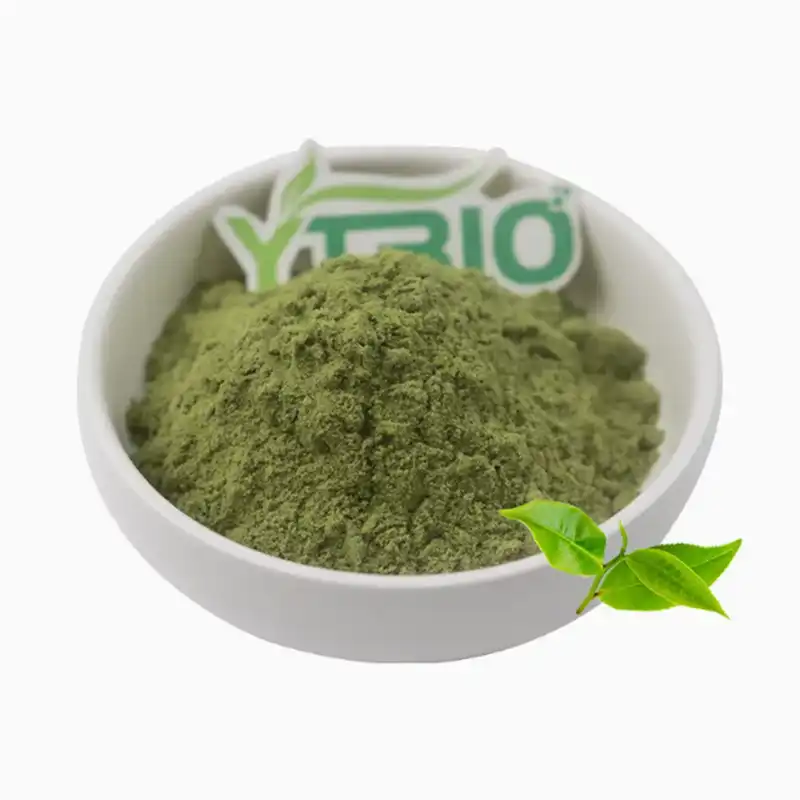
Sourcing Authentication and Traceability
Geographic origin proof makes sure that the matcha is real. Traditionally, the best matcha comes from well-known Japanese areas like Uji, Nishio, and Shizuoka. Quality assessment and risk management are made easier when suppliers are open about how they grow crops, when they gather them, and where they process them. Certifications at the farm level, records of handling, and quality testing results that show agreement with international standards should all be included in traceability paperwork.
Inspections of source facilities, evaluations of quality management systems, and proof by certification bodies are all parts of supply chain integrity evaluation. Established providers follow ISO9001 quality management systems, HACCP food safety routines, and GMP manufacturing practices to make sure that all global markets get the same high-quality products that are in line with regulations.
Comparison and Evaluation of Leading Matcha Powder Suppliers and Brands
The technique for evaluating suppliers includes a number of factors that affect choices about purchases and the success of operations. There are big differences in how prices are set for direct farm partnerships and distribution networks. For large businesses, volume-based pricing models are more cost-effective. Depending on the grade and the supplier's powers, the minimum order quantity is usually between 25 kg and 500 kg.
Assessment Framework for Supplier Selection
Some reliability measures are on-time delivery, quality stability across packages, and how quickly you respond to messages during the order handling process. Established sellers keep up with cold-chain logistics, which makes sure that movement and storage are done at the right temperature so that quality doesn't suffer during foreign shipping. Accurate documentation of certificates of analysis, specification sheets, and regulatory compliance certificates shows that operations are skilled and pay attention to detail.
Look at customer comments to learn more about how well suppliers are doing, how happy customers are with the quality of the products they provide, and how consistent the service level is. Assessing a supplier's trustworthiness and market standing in the specialty ingredients sector through trade association agreements, licensing body recognition, and peer suggestions is a way to check their image in the industry.
Bulk Purchasing and Partnership Models
Through long-term partnership deals and pledges to buy in bulk, wholesale purchasing strategies offer big savings on costs. Contract manufacturing agreements allow for customized specs, private labeling, and dedicated production runs, which protects supply and makes sure that products are unique. Subscription-based supply models make it easier to plan for goods, get better prices, and lower management costs for buying things over and over again.
The benefits of a partnership go beyond just saving money. They include technical help, working together to develop products, and sharing market information. Leading providers offer more than just basic ingredient supply plans. They also help with formulation, application testing, and regulation advice.
Best Practices for Storing, Using, and Preparing Premium Matcha Powder
For storage to work best, there must be strict weather rules that keep quality from dropping and shelf life from shortening. Matcha Powder is very sensitive to changes in air, light, and temperature, so it needs to be packed and handled in a certain way. Multi-layer metal foil wrapping that is flushed with nitrogen is the best way to keep things from oxidizing and absorbing water.
Storage Environment Specifications
Keeping the temperature below 15°C stops enzymes from breaking down food and keeps volatile compounds that contribute to taste and aroma qualities. The relative humidity must stay below 60% so that the powder doesn't absorb water and clump, which would change its ability to run and spread. Light protection needs opaque packing and keeping in dark places to keep chlorophyll and other light-sensitive compounds from breaking down.
First-in, first-out rotation should be part of inventory management practices to keep products fresh and cut down on waste. By checking the moisture content, color values, and bacteria levels on a regular basis, quality tracking can find storage-related problems early, before they cause big quality loss.
Industrial Application Guidelines
When making drinks, you need to know how the spread and stability factors affect how well the product works. In ready-to-drink uses, high-shear mixing equipment makes sure that powder dissolves properly and stops sedimentation. Having a pH buffer above 6.0 keeps the color stable and stops it from breaking down quickly in acidic environments that are common in fruit-flavored drinks.
In baking and candy making, Matcha Powder's ability to resist heat helps keep the taste while the food is being processed at high temperatures. For fat-based mixtures, lipophilic dispersion properties need to be thought about. Pre-blending methods can help make the distribution more even and stop color streaking in finished goods.
How to Make an Informed Purchase Decision for Premium Matcha Powder?
Purchase choice models need to be in line with the needs of the business, the ability to produce, and the strategy for placing the business in the market. For large-scale production processes, original equipment makers need consistent quality standards, reliable supplier lines, and prices that are competitive. Distributors put a high priority on differentiating products, offering flexible packing, and providing marketing support to help stores succeed and keep customers happy.
Quality Versus Cost Analysis
The total cost of ownership, which includes storage costs, quality testing costs, and the possibility of waste from low-quality products, is taken into account when judging prices. Premium types cost more, but they work better, cause fewer problems during processing, and are more popular with customers, so the extra money spent on them is worth it.
Procurement teams should set quality standards that are in line with what the final product needs. They should avoid over-specification for uses where premium characteristics don't add much value. Cost modeling should take into account how changes in seasonal prices, foreign exchange rates, and supply access affect long-term budgeting and buying plans.
Supplier Reliability Assessment Checklist
As part of due diligence processes, certificates must be checked, financial security must be evaluated, and operating capability must be evaluated. Current organic certificates, quality management system approvals, and reports of legal compliance are some of the most important pieces of paperwork. During supplier audits, production sites, quality control labs, and storage structures should be checked to make sure they meet the needs of the purchase.
When negotiating a contract, the parties must agree on quality standards, delivery terms, payment terms, and ways to settle disagreements. This is to protect business interests and make sure that the relationship works well. Setting up performance metrics lets you keep an eye on your suppliers and support efforts to make things better all the time, which helps you reach your goals for business quality and customer happiness.
Conclusion
To ensure good business outcomes, premium Matcha Powder procurement necessitates careful consideration of quality standards, supplier skills, and application needs. Knowing the differences between grades, the standards for certification, and the best ways to store things helps you make smart decisions that improve product quality and customer happiness. Frameworks for evaluating suppliers that include measures for dependability, consistent quality, and the possibility of a partnership help build long-term relationships that are necessary for supply chain security. It's important for buying strategies to be able to balance quality needs with cost concerns while also being able to adapt to changing market conditions and application needs.
FAQ
1. What distinguishes ceremonial grade from culinary grade matcha powder?
Ceremonial grade Matcha Powder utilizes exclusively first-harvest spring leaves, providing higher amino acid content and superior umami characteristics. Culinary grades use later crops that have higher catechin levels and more astringency, making them good for coloring foods where strong flavors go well with other ingredients.
2. How can buyers verify authentic Japanese matcha against counterfeit products?
For authentication, proof of where the food came from must be checked, along with supplier certifications from official Japanese farming authorities and lab tests that prove the food's unique chemical profiles. Reliable sellers give full traceability paperwork that includes farm sites, harvest times, and certifications from processing facilities that prove the products are real.
3. What storage conditions prevent quality degradation during long-term storage?
For optimal keeping, temperatures must be below 15°C, humidity must be kept below 60%, and light must be blocked by opaque packing. Nitrogen-flushed aluminum foil packaging stops rusting, and regular quality checks (like checking for moisture content and color) help find problems with storage-related degradation early on.
Partner with YTBIO for Premium Matcha Powder Solutions
YTBIO is an expert at offering high-quality organic Matcha Powder that meets the strictest quality standards for a wide range of business uses. Our large network of suppliers makes sure that we always have products available, and we follow strict quality control rules during the whole buying process. As a well-known provider of matcha powder, we know what nutraceutical companies, beverage companies, and specialty food companies looking for trusted ingredient partners need. Email our professional purchasing team at sales@sxytorganic.com to talk about your unique needs and find out how our premium matcha options can help you make better products and do better in the market.
References
1. Japanese Tea Central Public Interest Incorporated Association. "Standards for Japanese Tea Quality Assessment and Grading Systems." 2023. Tokyo: Tea Quality Research Institute.
2. International Organization for Standardization. "ISO 11287:2021 Green Tea Powder Quality Specifications and Testing Methods." It was published by ISO in Geneva in 2021.
3. Department of Agriculture of the United States. "Organic Certification Guidelines for Tea and Tea Products." The USDA National Organic Program, Washington, D.C., May 20, 2022.
4. Chen, Wei-Ming, and Yamamoto Takeshi. "Phytochemical Analysis and Quality Control of Commercial Matcha Products." Journal of Food Science and Technology, no. 58, no. 4, 2023, pp. 1245–1258.
5. European Agency for Food Safety. "Scientific Opinion on Heavy Metal Contamination in Tea Products and Regulatory Frameworks." EFSA Journal, no. 21, no. 8, 2023, pp. 145–162.
6. Nakamura, Hiroshi. "Traditional Processing Methods and Modern Quality Standards in Matcha Production," Asian Journal of Agricultural Sciences, vol. 45, no. 2, 2023, pp. 89–104.